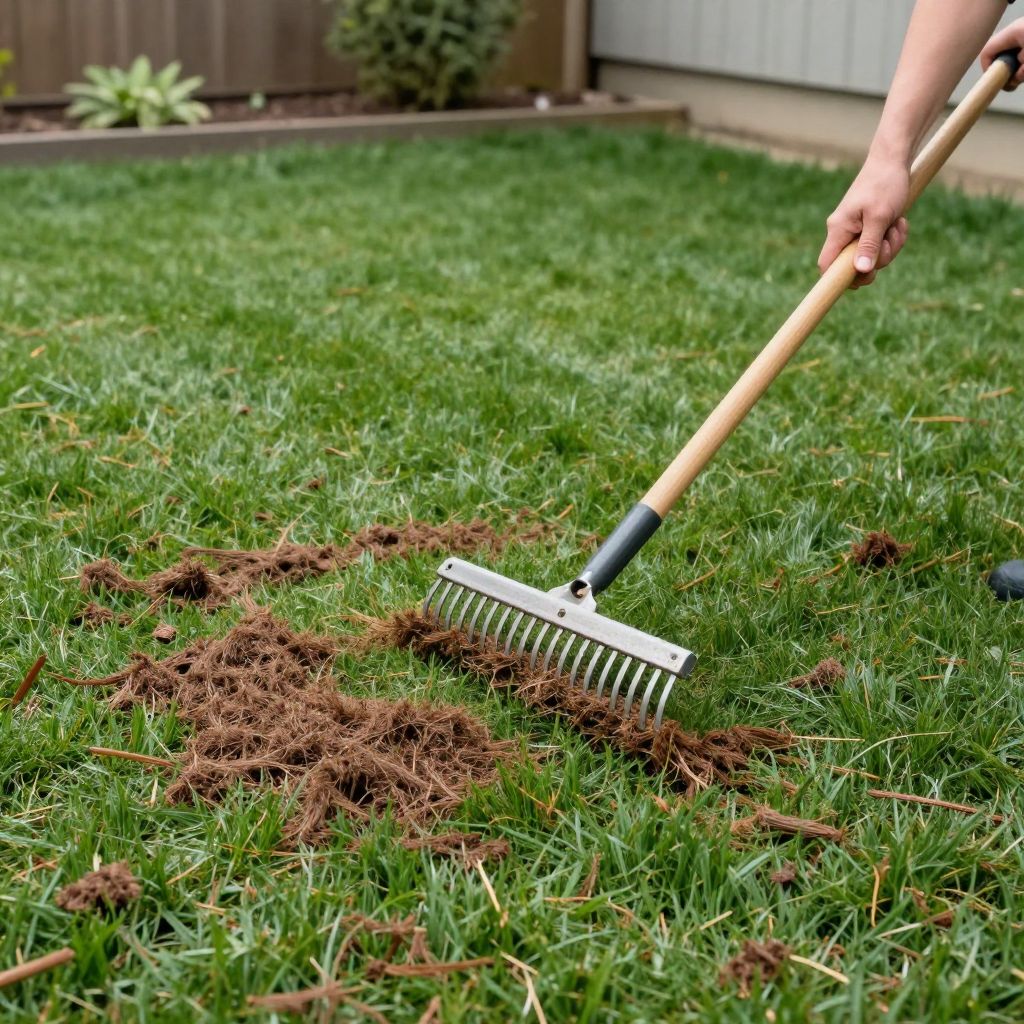
If your lawn feels spongy, looks patchy, or seems to dry out too fast, you may be wondering what is dethatching lawn and whether your grass actually needs it. Dethatching is a lawn-care task that removes the layer of dead stems, roots, and organic debris that can build up between the grass blades and the soil.
Done at the right time, it can help water, air, and nutrients reach the root zone more easily. Done at the wrong time, it can stress turf and make thinning worse, so it helps to know what you are looking at before you start.
What is dethatching lawn?
Dethatching a lawn means removing excess thatch, the woven layer of dead and living plant material that sits above the soil surface and below the green grass blades. A thin thatch layer is normal, but when it becomes too thick, it can block moisture, reduce airflow, and make grass less healthy.
What thatch is, and when it becomes a problem
Thatch is made up of dead grass stems, stolons, rhizomes, and roots that have not fully broken down. It is not the same as grass clippings left after mowing, which usually decompose quickly if you mow properly.
A little thatch can actually protect the soil surface. The problem starts when the layer becomes thick enough to interfere with lawn growth and maintenance.
Signs your lawn may need dethatching
- The lawn feels soft, springy, or spongy underfoot.
- Water runs off instead of soaking in.
- The turf looks thin, dull, or patchy despite regular care.
- You can see a dense brown mat between the grass and soil.
- A screwdriver or trowel is hard to push into the soil because of the mat layer.
How much thatch is too much?
In many lawns, a thatch layer under about 1/2 inch is usually not a concern. Once it gets thicker than that, especially if the lawn is struggling, dethatching may help. If you are unsure, lift a small section of turf and inspect the layer at the soil surface.
How to tell dethatching from aeration
Dethatching and aeration are related but not the same. Dethatching removes the surface mat of organic debris, while aeration punches holes into compacted soil to improve air and water movement belowground.
If your lawn has both a thick thatch layer and compacted soil, you may need both tasks at different times. Many homeowners confuse the two because both are lawn-renewal methods, but they solve different problems.
Use dethatching when:
- The problem is a thick surface layer of dead material.
- Water is not penetrating the lawn well.
- The turf feels cushioned or matted.
Use aeration when:
- The soil is hard, dense, or compacted.
- Roots are shallow and the lawn dries quickly.
- You need better root-zone air exchange.
Best time to dethatch a lawn
The best time depends on your grass type and local climate. In general, dethatch when the grass is actively growing and can recover quickly, not when it is stressed by heat, drought, or cold.
Cool-season grasses usually recover best in early fall or, in some regions, early spring. Warm-season grasses often respond better in late spring through early summer, once they are growing strongly.
Good timing depends on these conditions
- Active growth: The lawn should be able to regrow quickly after treatment.
- Mild weather: Avoid extreme heat, drought, or frost risk.
- Moist soil: Slightly moist soil is easier on roots and easier to work with.
If you are unsure of your grass type, watch how it grows through the seasons before choosing a timing window. Local extension advice or a garden center familiar with your region can also help.
How to dethatch a lawn step by step
You can dethatch by hand on a small lawn or use a powered dethatching machine, sometimes called a power rake or vertical mower. The goal is to lift and remove the thick mat without tearing up healthy turf more than necessary.
- Mow the lawn slightly shorter than usual, but do not scalp it. A lower cut helps the dethatching tool reach the thatch layer more effectively.
- Water lightly a day or two before if the soil is very dry. The lawn should be moist, not soggy.
- Set the dethatching tool correctly. The tines or blades should reach the thatch layer, not dig deeply into the soil.
- Work in straight passes across the lawn. For heavy thatch, make a second pass at a right angle.
- Rake up the debris as you go. Remove loosened material so it does not settle back into the grass.
- Inspect the turf afterward. Some thinning is normal, but the lawn should not look shredded.
- Water and recover. Keep the lawn evenly moist while it regrows, especially in warm weather.
Tools you may use
- Leaf rake or dethatching rake for small areas
- Power dethatcher or vertical mower for larger lawns
- Lawn mower
- Garden fork or hand trowel for checking thatch depth
- Tarp, wheelbarrow, or bags for debris removal
What to do after dethatching
After dethatching, your lawn may look rough for a short time. That is normal, because you have opened the canopy and removed some of the material protecting the soil surface.
Good aftercare helps the turf recover and fill in the exposed areas.
Helpful recovery steps
- Water evenly so the root zone stays moist while the grass recovers.
- Avoid heavy foot traffic for a short period if possible.
- Apply compost lightly only if your lawn needs soil improvement and you can spread it thinly without smothering the grass.
- Overseed thin areas if the lawn has bare patches and the season is right for your grass type.
- Resume mowing carefully once the grass is growing again, and keep blades sharp.
If your lawn was already stressed before dethatching, focus on recovery first. Do not stack multiple major lawn treatments at the same time unless you know the turf can handle it.
Common mistakes to avoid
Dethatching can help a lawn, but it can also create problems if you overdo it. The most common mistake is treating every lawn as if it needs the same level of intervention.
- Dethatching when the lawn is dormant or already heat-stressed.
- Cutting too deep and damaging crowns and roots.
- Confusing thatch with soil compaction and using the wrong fix.
- Removing too much at once from a weak or newly established lawn.
- Leaving debris on the surface so it settles back into the turf.
When not to dethatch
Avoid dethatching if the lawn is thin because of drought, disease, insect damage, or poor soil conditions. In those cases, the grass may need watering, pest control, improved drainage, or overseeding instead of aggressive mechanical treatment.
How to prevent excessive thatch in the future
Prevention is often easier than repeated dethatching. Healthy lawn care practices help grass decompose its own debris naturally and keep the thatch layer under control.
- Mow at the correct height for your grass type.
- Do not remove more than about one-third of the grass blade at one mowing.
- Use a sharp mower blade for clean cuts.
- Avoid overwatering, which can encourage shallow roots and weak growth.
- Do not overapply nitrogen fertilizer, which can push fast top growth and more thatch.
- Improve drainage and relieve compaction when needed.
Healthy soil biology also helps break down organic matter. If your lawn is compacted, waterlogged, or growing in poor soil, thatch can build up faster than it can decompose.
Troubleshooting: what if the lawn still looks bad?
If the lawn does not improve after dethatching, the issue may be something else. Thin turf, poor color, or patchy growth can come from compacted soil, grub damage, fungal disease, drought stress, shade, or poor grass selection for the site.
Check for these other causes
- Compaction: Soil feels hard and roots stay shallow.
- Poor drainage: The lawn stays wet and may develop disease.
- Pests: Grubs or other insects can loosen turf or create dead patches.
- Shade: Grass thins where sunlight is limited.
- Wrong grass type: The lawn may not suit your climate or light conditions.
In these cases, dethatching is only one part of the solution. You may need to adjust mowing, watering, drainage, or overseeding to get lasting improvement.
Conclusion
What is dethatching lawn? It is the process of removing excess thatch so your grass can breathe, absorb water, and grow more evenly. Check your lawn for a thick spongy layer, choose the right season for your grass type, and dethatch only when the turf is actively growing and ready to recover.
If you want to improve your lawn further, consider reading more about how to aerate a lawn and how to overseed patchy grass for the next steps in lawn recovery.