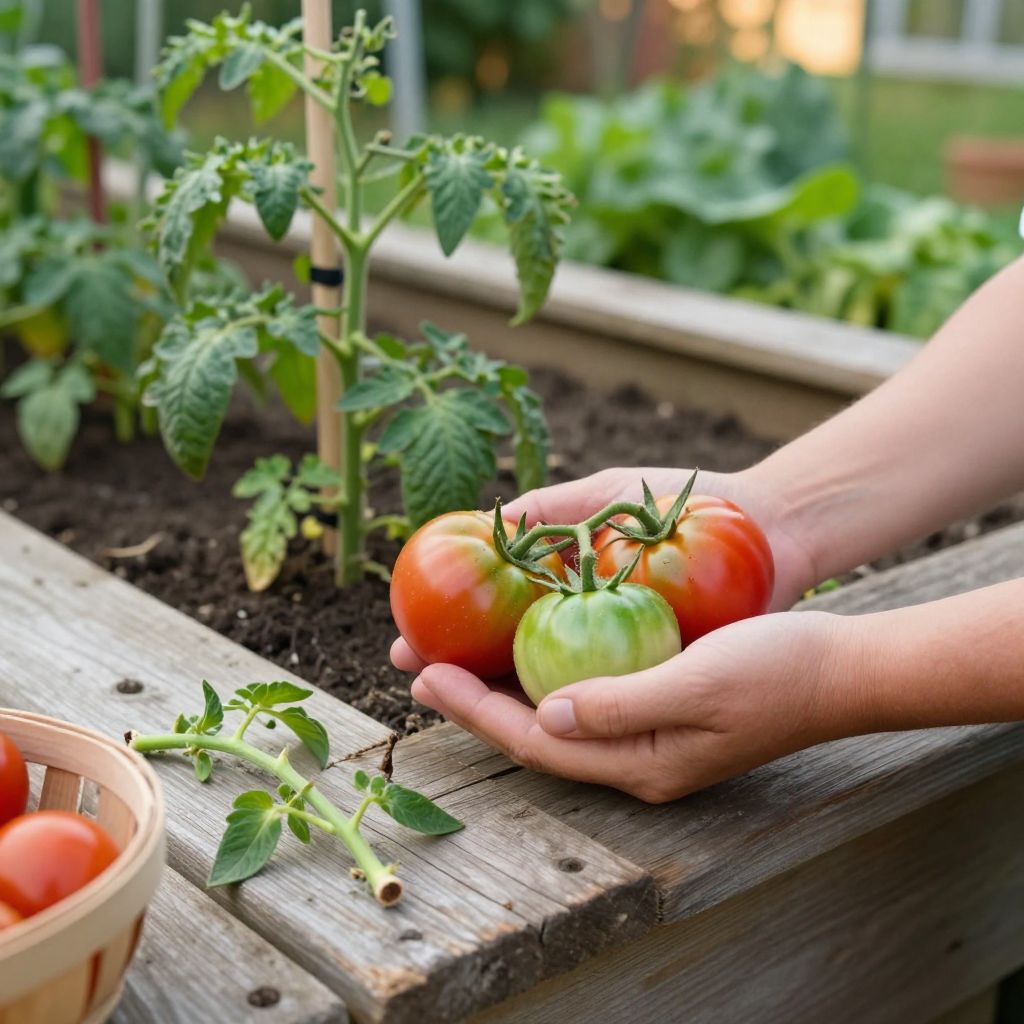
Do tomatoes ripen off the vine? Yes, they can, but only if they have already started the ripening process. Fully green tomatoes usually won’t develop the same flavor or color indoors, while mature green or breaker-stage fruit can finish ripening after harvest.
The best results come from picking at the right stage and giving the fruit the right conditions. If you want better flavor, fewer losses to pests or frost, and a longer harvest window, it helps to know when to leave tomatoes on the plant and when to bring them inside.
Do tomatoes ripen off the vine?
Tomatoes can ripen off the vine if they are mature enough when picked. Fruit that has begun changing color, or that has reached mature green stage, will often soften and color up indoors. Immature green tomatoes usually stay hard, may shrivel, and rarely develop full flavor.
Which tomatoes will ripen after harvest?
Not every tomato is ready to finish ripening indoors. The key is maturity, not just size.
Good candidates for off-vine ripening
- Breaker-stage tomatoes: just starting to show a blush of pink, red, yellow, or orange.
- Turning tomatoes: fruit with noticeable color change on part of the skin.
- Mature green tomatoes: full-sized fruit that has stopped growing and feels firm but not rock-hard.
Poor candidates
- Small, hard green tomatoes that are clearly underdeveloped.
- Fruit picked too early because of impatience or fear of pests.
- Damaged tomatoes with deep cracks, rot, or heavy pest injury.
A simple rule: if the tomato has reached full size for its variety and shows the first hint of color, it has a good chance of ripening indoors.
How tomatoes ripen: what the plant is doing
Tomatoes are climacteric fruit, which means they continue ripening after harvest. Once the fruit reaches maturity, it produces ethylene, a natural plant hormone that triggers softening and color development. That is why a tomato can ripen on the counter, in a paper bag, or in a box.
However, off-vine ripening is not the same as vine ripening. Sunlight does not “force” ripening, and extra heat can damage flavor. The plant supplies sugars and other compounds while the fruit is developing, so tomatoes picked too early often taste bland even if they eventually turn red.
Best conditions for ripening tomatoes indoors
If you want tomatoes to finish ripening after harvest, give them moderate warmth, good air circulation, and protection from direct sun. The goal is steady ripening, not cooking the fruit.
What works best
- Temperature: around 65–75°F is generally ideal.
- Light: indirect light is fine; bright windows help you monitor fruit, but direct hot sun is unnecessary.
- Humidity: moderate humidity helps prevent shriveling.
- Airflow: enough circulation to reduce mold, but not so much that fruit dries out quickly.
What to avoid
- Refrigeration before ripening, which can dull flavor and texture.
- Very hot spots such as a sunny car, radiator, or enclosed porch in midsummer.
- Stacking fruit too tightly, which encourages rot.
How to ripen tomatoes off the vine step by step
Use a simple, low-tech method. The goal is to reduce decay while letting the fruit continue its natural ripening process.
- Harvest at the right stage. Choose mature green, breaker, or turning fruit.
- Handle gently. Bruises speed up decay and create soft spots.
- Sort by ripeness. Keep the most advanced tomatoes together so you can check them first.
- Place them in a single layer in a shallow box, tray, or cardboard carton.
- Check daily or every couple of days for color change and any signs of rot.
- Remove ripe fruit promptly so it does not over-soften or spread mold to others.
Paper bag method
A paper bag can speed ripening by trapping ethylene around the fruit. Add one or two tomatoes per bag, then fold the top loosely closed. Check often, because enclosed fruit can ripen faster and spoil sooner.
Box or countertop method
A shallow box lined with newspaper or a clean towel works well for larger harvests. This is often the easiest method for gardeners bringing in a late-season crop before frost.
Should you leave tomatoes on the vine longer?
When weather is still warm and the plant is healthy, leaving tomatoes on the vine usually gives the best flavor and texture. The fruit can continue building sugars, acids, and aroma compounds until it reaches maturity.
That said, there are good reasons to harvest early:
- Frost or cold nights are approaching.
- Birds, squirrels, hornworms, or other pests are damaging fruit.
- Rainy weather is causing cracking or disease pressure.
- The plant is declining and fruit is unlikely to finish safely outdoors.
If you are unsure, harvest a few tomatoes at breaker stage and leave a few on the plant. Compare the flavor and texture so you can judge what works best in your climate.
Why some tomatoes fail to ripen well off the vine
When off-vine ripening goes wrong, the problem is usually harvest timing or storage conditions, not the tomato itself.
Common problems and fixes
- Fruit stays green: it was probably picked too early. Next time, wait for mature size and first color change.
- Fruit turns soft but tastes bland: it may have been underdeveloped at harvest or grown in low light or poor soil.
- Wrinkling or shriveling: the storage area is too dry or too warm. Move fruit to a cooler, slightly more humid location.
- Mold or rot: fruit was damaged, crowded, or stored with wet skins. Remove affected tomatoes immediately.
- Uneven ripening: turn fruit occasionally, but do not over-handle it.
Growing tomatoes for better ripening on the plant
Off-vine ripening is useful, but the best-tasting tomatoes still start with healthy plants. Strong growth and good fruit development make a big difference in whether harvests finish well.
Planting and site basics
- Sunlight: choose a spot with at least 6 to 8 hours of direct sun.
- Soil: use fertile, well-drained soil enriched with compost.
- Drainage: avoid soggy beds, which stress roots and reduce fruit quality.
- Spacing: give plants room for air movement to reduce disease.
Care that supports ripening
- Water deeply and consistently so fruit develops evenly.
- Mulch to help regulate moisture and reduce soil splash.
- Support plants with cages, stakes, or trellises to keep fruit off the ground.
- Remove diseased leaves if needed, but avoid stripping too much foliage.
Healthy leaves matter because they feed the fruit. If a plant loses too much foliage to disease, drought, or pests, the tomatoes may still ripen, but the harvest can be smaller and less flavorful.
Pruning, pests, and disease: what affects ripening
Several garden problems can push you toward harvesting tomatoes early. Watching for them helps you decide whether to leave fruit on the vine or bring it inside.
Pruning considerations
Light pruning can improve airflow, especially in humid climates, but heavy pruning can expose fruit to sunscald and reduce the plant’s ability to feed the crop. Remove only what is necessary, such as lower leaves touching soil or obviously diseased foliage.
Common pests
- Hornworms can strip foliage and damage fruit quickly.
- Birds often peck at ripening tomatoes.
- Squirrels and other wildlife may take nearly ripe fruit.
Common diseases
- Early blight and septoria leaf spot can weaken plants and reduce ripening.
- Fruit rots can spread in wet weather or when tomatoes touch damp soil.
- Cracking may happen after irregular watering or heavy rain after dry spells.
If disease pressure is high, it is often smarter to harvest mature fruit and ripen it indoors than to leave it on a declining plant.
Can green tomatoes ripen after frost?
Tomatoes exposed to frost or near-freezing temperatures do not ripen well afterward. Cold injury can damage the fruit and stop the ripening process. If frost is forecast, pick any mature green or partially colored tomatoes before the temperature drops.
After harvest, sort them carefully. Fruit that feels firm and healthy can often finish ripening indoors, while frost-damaged tomatoes are best used quickly or discarded if they begin to rot.
Quick checklist for harvesting tomatoes to ripen indoors
- Pick fruit that is full-sized and mature.
- Look for breaker or turning color.
- Handle gently to avoid bruising.
- Store in a single layer if possible.
- Keep them at room temperature, not in the refrigerator.
- Check daily and remove any fruit that softens too fast or shows mold.
Conclusion: the best answer for home gardeners
Yes, tomatoes ripen off the vine, but the fruit must already be mature enough to finish well. For the best flavor, leave tomatoes on the plant as long as weather, pests, and disease allow, then harvest mature green or breaker-stage fruit before cold damage sets in.
If you want to improve next season’s harvest, focus on strong sunlight, even watering, good soil, and healthy foliage so more of your tomatoes can ripen naturally on the vine. For more practical tomato growing guidance, you may also find it helpful to read about how to grow tomatoes in containers and common tomato diseases and how to prevent them.