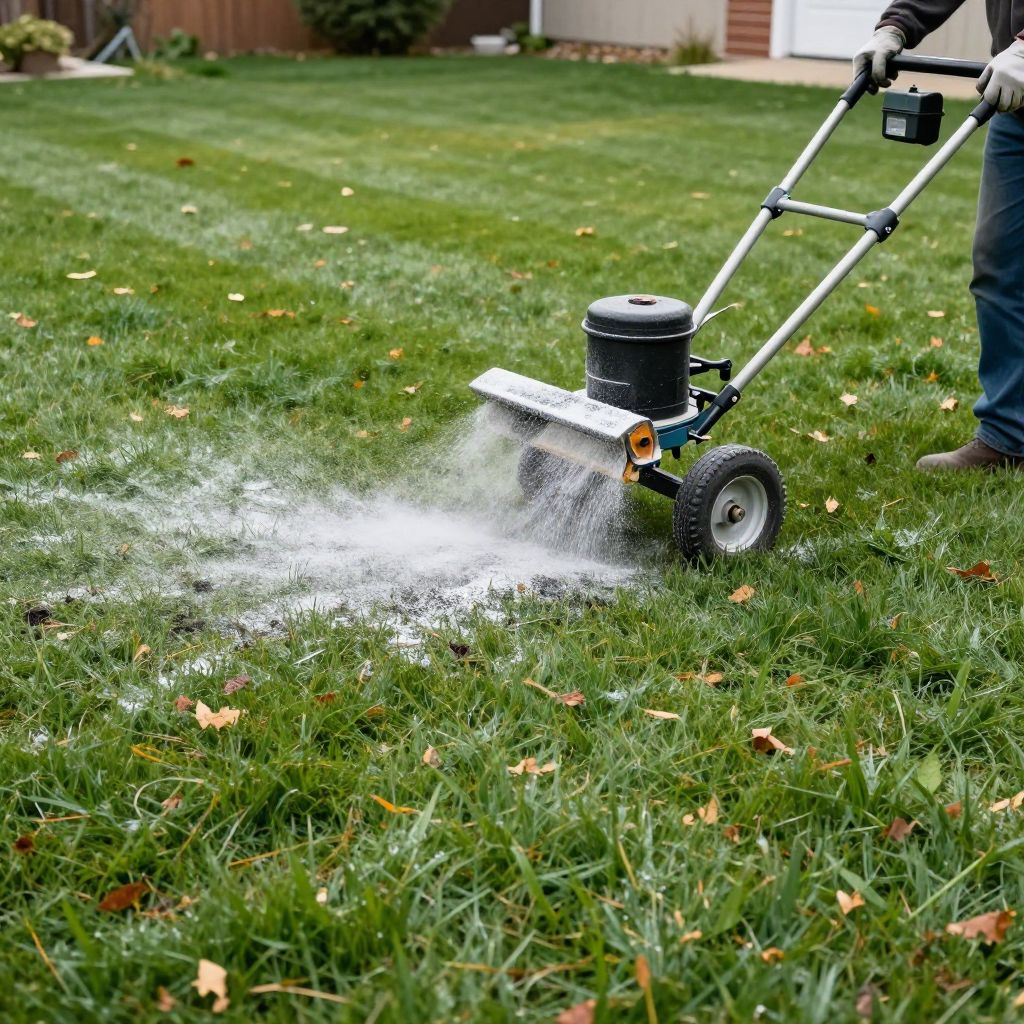
When should you apply lime to your lawn? The best time is usually when soil tests show your turf needs it, and the ideal season is often fall or early spring when the lawn is actively growing and the soil is workable. Lime does not act instantly, so timing it around weather and soil conditions matters more than picking a calendar date.
If you apply it at the right time and in the right amount, lime can help correct acidic soil so grass uses nutrients more efficiently. But lime is not a cure-all, and too much can create new problems, so it’s worth understanding when, why, and how to use it.
When To Apply Lime To Lawn?
Apply lime to your lawn after a soil test confirms the pH is too low, ideally in fall or early spring when grass is growing and rain can help move the material into the soil. Avoid applying lime to frozen ground, waterlogged soil, or during drought stress. The exact timing depends on your climate, grass type, and soil condition.
Why lawn pH matters
Grass grows best when soil pH is in a range where roots can absorb nutrients efficiently. If soil is too acidic, lawn grass may struggle to take up nitrogen, phosphorus, potassium, and other nutrients even when fertilizer is present.
That can lead to thin turf, slow growth, pale color, moss pressure, and poor recovery from wear. Lime helps raise pH gradually, making the soil environment more favorable for healthy grass growth.
Signs your lawn may need lime
- A soil test shows low pH, often below the preferred range for your grass type.
- Grass looks weak even after proper feeding and watering.
- Moss is spreading in shady or damp areas, especially where soil is acidic.
- Weeds that tolerate acidic soil are becoming more noticeable.
- The lawn has compacted, tired-looking patches that do not improve much with routine care.
The most reliable way to know if your lawn needs lime is a soil test. Visual symptoms can suggest a problem, but they cannot tell you how much lime to apply or whether another issue is actually causing the trouble.
Best seasons for applying lime
Fall
Fall is often the best time to apply lime because soil is still warm, moisture is usually more consistent, and lime has time to react over the winter. If you overseed in fall, lime can help create better soil conditions for new grass establishment.
Fall application also works well because lawn traffic often decreases, so the product can settle in with less disturbance. In many regions, this is the most practical window for long-term soil correction.
Early spring
Early spring is another good option if the soil is workable and the lawn is beginning active growth. This timing can help prepare the soil before the main growing season starts.
Use caution if spring weather is wet. If the ground is soggy, wait until you can walk on it without compacting the soil or leaving deep footprints.
Late spring and summer
You can apply lime in late spring or summer if needed, but it is usually less ideal than fall or early spring. Hot, dry conditions can stress turf, and lime works more slowly when soil moisture is inconsistent.
If you must apply during summer, do it when rain is expected or irrigate lightly afterward, and avoid applying during heat waves or drought stress.
When not to apply lime
There are times when lime should wait, even if your lawn needs it. Good timing protects both the turf and the soil structure.
- Frozen ground: Lime cannot work into frozen soil and may wash away.
- Waterlogged soil: Heavy equipment or foot traffic can compact wet soil.
- During drought stress: Turf already under stress is less able to recover.
- Right before heavy rain: A downpour can move lime off target, especially on sloped lawns.
- Without a soil test: You may correct the wrong problem or over-lime the soil.
If your lawn is newly seeded or newly sodded, check the product label and follow the establishment guidance for that turf. Young lawns are more sensitive to disturbance, and timing should be chosen carefully.
How to apply lime correctly
1. Test the soil first
Start with a soil test from a local extension service, garden center, or reputable lab. The test should tell you the current pH and, ideally, how much lime is needed to move the soil toward the target range.
Different grasses prefer slightly different pH levels, so do not assume every lawn needs the same treatment. A test also helps you avoid applying lime to a lawn that is already in a suitable range.
2. Choose the right type of lime
Most home lawns use agricultural lime, usually ground limestone. It is commonly sold as calcitic lime or dolomitic lime.
- Calcitic lime mainly supplies calcium.
- Dolomitic lime supplies calcium and magnesium.
If your soil test mentions low magnesium, dolomitic lime may be appropriate. If magnesium is already adequate, calcitic lime is often enough. Follow the soil test recommendation rather than guessing.
3. Apply evenly
Use a broadcast spreader for even coverage on larger lawns. A drop spreader can work well for smaller, more precise areas.
- Calibrate the spreader according to the bag instructions.
- Apply half the product in one direction.
- Apply the other half perpendicular to the first pass for even distribution.
- Rake lightly if needed on bare or thin spots to help it contact the soil.
Uneven application can create patchy pH changes, so take your time. Overlapping too heavily in one area is a common mistake.
4. Water it in if needed
Light watering after application can help move lime off the grass blades and into the soil. If rain is expected soon and not too heavy, natural moisture may do the job.
Do not flood the lawn. The goal is to settle the material into the topsoil, not wash it away.
How much lime should you use?
The correct amount depends on your soil test, soil texture, and current pH. Sandy soils usually need less lime than clay soils to shift pH, while heavy soils may need more to make a meaningful change.
As a general rule, do not apply more than the label or soil test recommends. If the test calls for a large correction, it is often better to split the application into two treatments spaced apart rather than applying everything at once.
That approach reduces the risk of over-liming and gives the soil time to respond gradually.
How long lime takes to work
Lime does not change soil pH overnight. Fine-textured lime products usually work faster than coarse material, but the change still happens gradually over weeks to months.
Moisture, soil type, and temperature all affect how quickly lime reacts. Warm, moist, biologically active soil tends to respond faster than cold, dry soil.
If your lawn needs a significant pH adjustment, retest the soil later rather than assuming one application solved everything. Many lawns need periodic correction, not a one-time fix.
Common mistakes to avoid
- Applying lime without a soil test and guessing at the need.
- Using lime to solve problems caused by compaction, shade, poor drainage, or pests.
- Spreading too much at once and pushing pH too high.
- Applying on frozen, muddy, or drought-stressed ground.
- Expecting instant results and overcorrecting with a second application too soon.
- Ignoring the difference between lawn lime and other soil amendments.
Remember that yellowing grass, moss, or thin turf can have multiple causes. Lime helps only when acidity is part of the problem.
Other lawn care tasks that pair well with liming
Lime works best as part of a broader lawn care plan. If your soil test also points to compaction, poor drainage, or low fertility, address those issues too.
- Aerate compacted soil so water, air, and amendments move more freely.
- Topdress lightly with compost if your soil is thin or low in organic matter.
- Overseed thin areas during the right season for your grass type.
- Mow at the proper height for your turf to reduce stress and encourage dense growth.
- Water deeply but not constantly, adjusting for rainfall and soil type.
If you are renovating a lawn, lime is often most useful before seeding or during a renovation window, because it can improve the soil environment before new grass gets established.
Special situations: shade, clay soil, and new lawns
Shady lawns
Shade often increases moss and weak turf, but low light is not solved by lime alone. If the soil test shows acidity, lime may help, yet you may also need to thin tree canopy, improve airflow, and choose a grass better suited to shade.
Clay soils
Clay soils can hold lime well, but they also compact easily. If drainage is poor, aeration and organic matter are important companions to liming.
Do not assume clay means “more lime.” Always rely on the soil test, because clay’s buffering capacity affects how much pH change is needed.
New lawns
For a newly seeded or sodded lawn, soil preparation matters a great deal. If a soil test recommends lime, it is often best incorporated before planting or applied carefully around establishment time according to the renovation plan.
Once the grass is rooted, future lime applications can be made as needed based on follow-up testing.
Conclusion
The best answer to when to apply lime to lawn is: after a soil test confirms low pH, and usually in fall or early spring when the soil is workable and the grass is actively growing. Apply it evenly, avoid overdoing it, and give it time to work. If you are unsure, test first and adjust your timing to your local weather and lawn conditions.
For more lawn care planning, it also helps to read about soil testing for lawns and how to aerate a lawn so you can match lime application with the rest of your turf care routine.