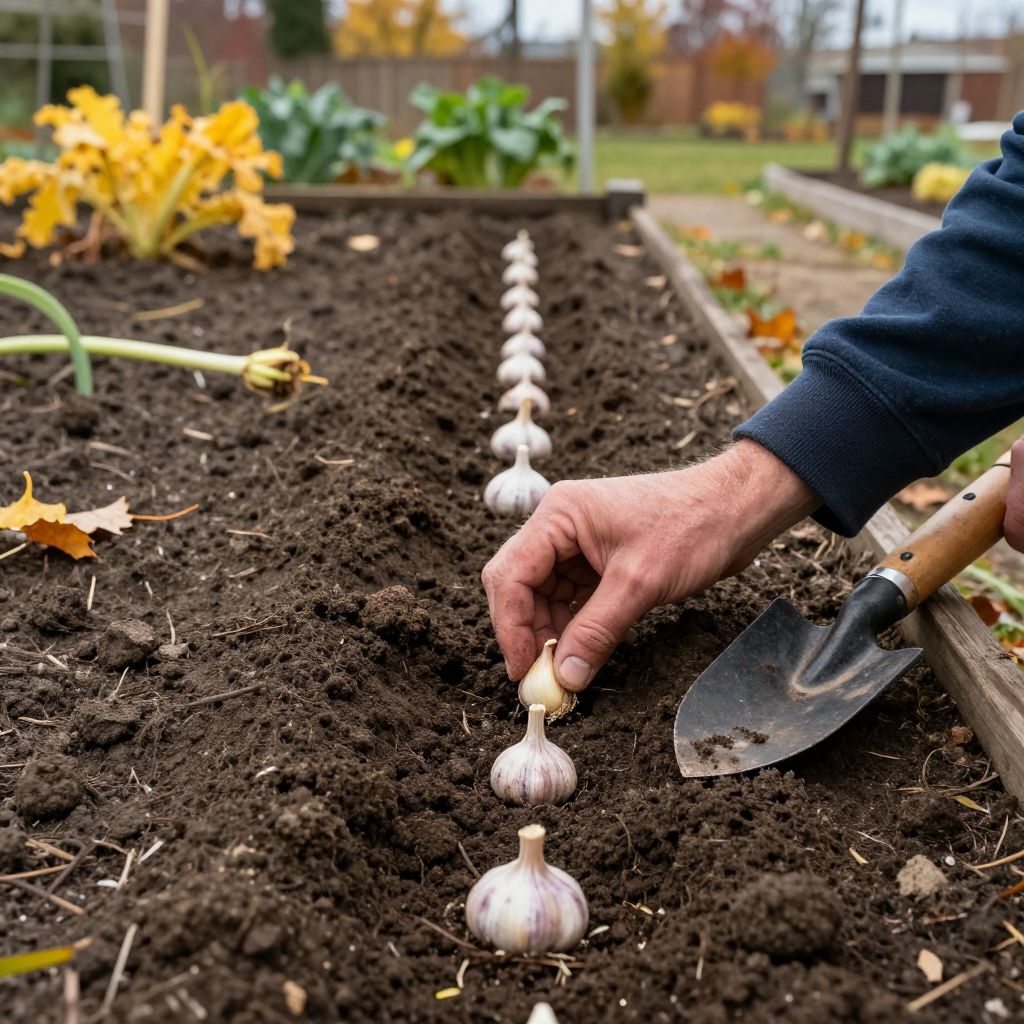
Wondering when to plant garlic in Ohio so it has time to root before winter but doesn’t sprout too early? The best planting window is usually in mid-October through early November, depending on your part of the state and the weather that year. You want cloves in the ground after the heat of summer, but before the soil freezes hard.
Garlic is one of the easiest crops to time well once you understand its fall-planted cycle. Planting at the right moment helps bulbs size up in spring, while planting too early can lead to excessive top growth and planting too late can limit root development.
When to plant garlic in Ohio?
In most of Ohio, plant garlic in mid-October to early November, about 4 to 6 weeks before the ground freezes. Northern Ohio often benefits from planting a little earlier, while southern Ohio can usually plant a bit later. The goal is to let cloves root well without sending up much top growth before winter.
Why fall planting works best
Garlic needs a cold period to develop into full bulbs, which is why it is planted in autumn rather than spring in Ohio. Fall planting gives cloves time to establish roots, then they resume growth quickly when temperatures warm in spring.
What happens if you plant too early?
If you plant garlic too early, especially in warm September weather, it may produce too much leafy growth before winter. That extra growth can be damaged by freezing weather and may reduce bulb quality.
What happens if you plant too late?
Planting too late can leave cloves with little root development before the soil gets cold. The plants may still grow, but bulbs are often smaller and less uniform.
How to choose the right planting time for your part of Ohio
Ohio’s weather varies enough that local conditions matter. Use your first hard freeze, soil temperature, and forecast as guides rather than relying on the calendar alone.
- Northern Ohio: often best planted in early to mid-October.
- Central Ohio: often best planted in mid-October.
- Southern Ohio: often best planted in late October to early November.
If your soil is still warm, wait a little longer. If a hard freeze is forecast and you have not planted yet, get cloves in as soon as possible.
Best garlic varieties for Ohio gardens
Most Ohio gardeners do best with hardneck garlic, which generally handles cold winters well and produces scapes in spring. Softneck types can be grown in some gardens, but hardneck varieties are usually the more reliable choice for winter conditions and flavor.
Hardneck vs. softneck
- Hardneck garlic: better suited to cold climates, often produces larger cloves and a flowering stalk called a scape.
- Softneck garlic: often stores longer, but can be less dependable in colder regions.
When buying seed garlic, choose healthy, disease-free bulbs from a reputable source. Grocery-store garlic may have been treated to prevent sprouting or may carry disease.
How to plant garlic step by step
Garlic is simple to plant, but a few details make a big difference in bulb size and health.
- Prepare the bed: Choose a sunny site with well-drained soil.
- Loosen the soil: Work it to a depth of at least 8 to 10 inches so bulbs can expand easily.
- Add compost: Mix in finished compost to improve structure and fertility.
- Separate the bulb: Break the head into individual cloves just before planting.
- Plant each clove upright: Set the pointed end up and the flat base down.
- Set the depth: Plant cloves about 2 inches deep, or a little deeper in colder or lighter soils.
- Space properly: Leave about 4 to 6 inches between cloves and 12 to 18 inches between rows.
- Water after planting: Give the bed a thorough watering if the soil is dry.
- Mulch: Apply 3 to 6 inches of straw or shredded leaves after planting or once the ground begins to cool.
Soil, sun, and drainage requirements
Garlic grows best in full sun and loose, fertile soil that drains well. Heavy, wet soil can cause rot, especially in winter and early spring.
Ideal growing conditions
- Sunlight: at least 6 hours of direct sun daily
- Soil: fertile, loose, and well-drained
- pH: slightly acidic to neutral is generally suitable
- Moisture: evenly moist, but never soggy
If your soil stays wet after rain, consider raised beds or a higher, better-drained spot. Garlic does not like sitting in waterlogged ground.
Mulching garlic for Ohio winters
Mulch is especially helpful in Ohio because it buffers temperature swings and helps prevent winter heaving. A good mulch layer also reduces weeds and helps conserve moisture in spring.
Use clean straw, shredded leaves, or similar loose organic mulch. Apply it after planting or once the soil has cooled, but before the ground freezes solid.
- Too little mulch: cloves may be exposed to freeze-thaw cycles.
- Too much packed mulch: can smother shoots or hold excessive moisture.
- Best approach: a fluffy 3 to 6 inch layer.
Watering and feeding garlic
Garlic needs steady moisture while it is actively growing, but it should not be kept constantly wet. In fall, natural rainfall is often enough after planting unless the soil is dry.
In spring, water during dry spells so the soil stays evenly moist. As bulbs mature in early summer, reduce watering to help them cure properly.
Fertilizing tips
Garlic benefits from fertile soil, but too much nitrogen can push leafy growth at the expense of bulb formation. Compost at planting time is often enough for many home gardens, though poor soils may need additional balanced feeding based on a soil test.
Spring care: what to do after winter
When garlic starts growing again in spring, remove or thin mulch if shoots are struggling to emerge. Keep weeds down, because garlic does not compete well with aggressive weeds.
If scapes appear on hardneck garlic in late spring, you can remove them once they curl. This often helps the plant channel energy into bulb growth.
Common spring tasks
- Check for winter heaving and gently firm plants back into the soil if needed.
- Keep the bed weed-free.
- Water during dry periods.
- Watch for disease or insect damage.
Common garlic problems in Ohio
Most garlic problems are caused by poor drainage, planting too late or too early, or using diseased planting stock. Catching issues early makes a big difference.
Rot and poor emergence
If cloves fail to sprout or collapse in the soil, excess moisture or rot may be the cause. Plant only in well-drained beds and avoid overwatering in cool weather.
Small bulbs
Small bulbs often result from shallow soil, crowding, weak sunlight, or planting too late. Garlic needs room, light, and a long cool season to size up properly.
Pests and diseases
Garlic is fairly tough, but it can still be affected by fungal diseases, nematodes, and bulb rot. Rotate garlic and other alliums to a different bed every few years if possible, and avoid planting in the same spot where onions, leeks, or garlic recently grew.
When to harvest garlic in Ohio
Garlic is usually ready in early to mid-summer, depending on variety and planting conditions. Harvest when the lower leaves begin to brown while several upper leaves are still green. That timing helps ensure full-size bulbs with good storage quality.
Lift bulbs carefully with a garden fork rather than pulling hard on the stems. Brush off loose soil, then cure them in a dry, airy place out of direct sun.
Curing and storage
- Keep bulbs in a shaded, dry, well-ventilated area.
- Allow them to cure until the necks dry and wrappers become papery.
- Trim roots and tops after curing, unless you want to braid softneck garlic.
Common mistakes to avoid
- Planting in soggy soil or a low spot.
- Using supermarket garlic instead of true seed garlic.
- Planting cloves upside down or too shallow.
- Waiting until the ground is frozen solid.
- Overfertilizing with nitrogen in spring.
- Skipping mulch before winter.
Final thoughts
If you are planning when to plant garlic in Ohio, aim for mid-October through early November in most gardens, adjusting slightly for your local climate and the season’s weather. Prepare a sunny, well-drained bed, plant healthy cloves at the right depth, and mulch well for winter protection.
For more seasonal planting guidance, you may also want to read about how to plant onions and fall mulching tips for vegetable gardens.