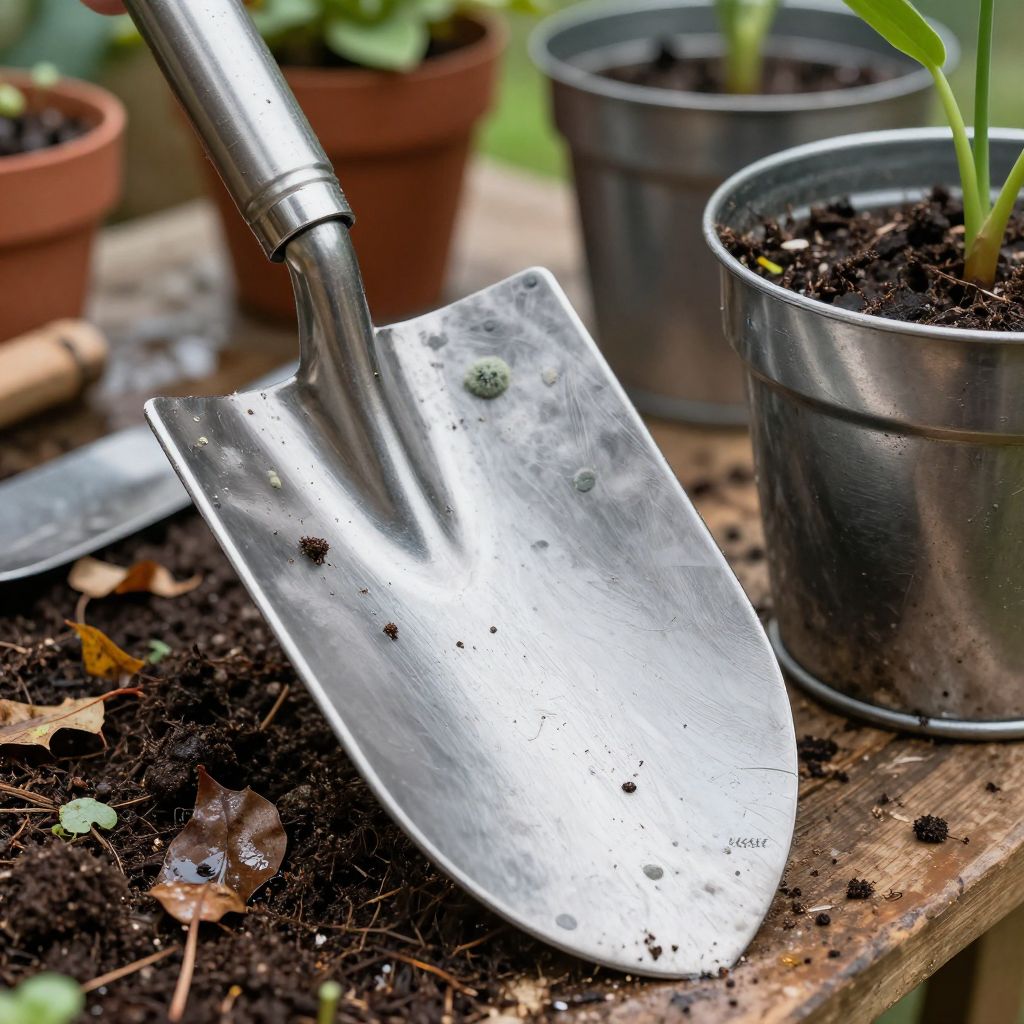
Can mold grow on stainless steel? If you’re seeing a slimy film, dark spots, or a musty smell on garden tools, pots, or watering equipment, the short answer is yes—mold can grow on stainless steel if moisture, organic residue, and shade are present.
Stainless steel resists rust better than many metals, but it is not mold-proof. In a garden setting, the real issue is usually the buildup of soil, sap, algae, fertilizer residue, or plant debris that gives mold something to feed on.
Can mold grow on stainless steel?
Yes. Mold can grow on stainless steel when the surface stays damp and has a film of organic material for spores to colonize. The metal itself does not “feed” mold, but dirt, compost dust, plant sap, and stagnant moisture on the surface can support growth, especially in warm, shaded, poorly ventilated areas.
Why stainless steel still gets moldy in the garden
Gardeners often choose stainless steel for pruners, trowels, buckets, sinks, and plant labels because it is durable and easy to clean. But even a high-quality stainless surface can develop mold or mildew if it is left dirty and wet.
Common garden conditions that encourage mold
- Constant moisture from rain, hose spray, or wet potting benches.
- Organic residue such as potting mix, algae, leaf bits, sap, and compost dust.
- Poor airflow in sheds, greenhouses, corners of patios, or under benches.
- Shade and warmth, which help fungal growth on damp surfaces.
- Long storage without cleaning, especially after working with diseased plants or compost.
If you store stainless tools indoors, mold is less likely but still possible in humid basements, garages, or closed toolboxes. The key factor is not the metal alone; it is the moisture and grime sitting on it.
How to tell mold from rust, mineral deposits, or sap
Before you treat the problem, make sure you are actually dealing with mold. Stainless steel can show several kinds of surface buildup that look similar at first glance.
What mold usually looks like
- Fuzzy, dusty, or slimy patches
- White, gray, green, or black spotting
- A musty smell, especially in enclosed storage
- Growth that wipes off with cleaning
What is often mistaken for mold
- Mineral scale: chalky white film from hard water.
- Sap or resin: sticky amber or brown residue from pruning.
- Soil staining: brown smears from potting mix or compost.
- Rust on non-stainless parts: screws, springs, or joints may corrode even when the blade is stainless.
If the spot is sticky rather than fuzzy, or if it only appears on joints and fasteners, you may be dealing with sap or corrosion rather than mold.
How to clean mold off stainless steel garden tools and surfaces
Cleaning is usually straightforward if you act early. For most garden tools and surfaces, warm water, mild soap, and thorough drying are enough to remove mold and help prevent it from returning.
Step-by-step cleaning method
- Brush off loose soil, leaves, and debris first.
- Wash the surface with warm water and a small amount of dish soap.
- Scrub gently with a soft brush, sponge, or microfiber cloth.
- Rinse well so no soap or residue remains.
- Dry completely with a clean towel.
- Leave the item open to air-dry in a sunny, ventilated place if possible.
For stubborn growth
If mold is still visible after washing, use a cleaner that is safe for stainless steel and follow the label directions. Test any stronger cleaner on a small area first, especially on brushed or polished finishes.
- Use a non-abrasive pad, not steel wool.
- Wipe in the direction of the grain if the steel has one.
- Rinse and dry thoroughly after cleaning.
Avoid leaving bleach or harsh cleaners on stainless steel for long periods. They can damage the finish and, in some cases, encourage pitting or discoloration.
How to prevent mold on stainless steel in a gardening space
Prevention is mostly about reducing moisture and removing food sources for mold. A clean, dry stainless surface is far less likely to develop problems than one left in a damp shed or beside a compost pile.
Good habits for tools, pots, and benches
- Rinse off soil and sap after each use.
- Dry tools before storing them.
- Keep storage areas well ventilated.
- Do not leave stainless items sitting in standing water.
- Wipe down potting benches after handling compost or wet potting mix.
- Store tools off the floor so they are less exposed to dampness.
For greenhouses and indoor growing areas
Humidity helps plants, but too much moisture can also encourage mold on metal surfaces, shelves, and trays. If you garden indoors or in a greenhouse, balance humidity with airflow.
- Open vents or doors when weather allows.
- Use a fan to keep air moving around benches and shelves.
- Empty saucers and trays so water does not sit under containers.
- Clean algae and potting mix spills quickly.
In humid climates, stainless steel may need more frequent wiping than in dry climates. In rainy seasons, check tools and fixtures more often because damp storage can allow mold to return quickly.
What to do with stainless steel pots, sinks, and garden fixtures
Stainless steel is common in propagation trays, sink basins, worktables, watering cans, and decorative planters. These items can collect mold if they stay wet or collect organic residue from plants and soil.
Stainless steel pots and planters
Before reusing a stainless planter, wash out old potting mix and scrub the rim, base, and drainage holes. Let the container dry fully before refilling it.
If you grow moisture-loving plants, make sure the pot still drains freely. Standing water under a planter can encourage mold on the outside surface and around the base.
Garden sinks and wash stations
Sink basins often develop a film from soil, fertilizer, and plant debris. Clean them regularly, especially after repotting or washing harvested produce.
- Remove debris from drains and strainers.
- Wipe the basin dry after use when practical.
- Do not let wet compost or mulch sit in the sink overnight.
Benches, shelves, and frames
Stainless steel frames are durable, but mold can still grow on dust, algae, or wooden components attached to them. Clean the metal and the surrounding surfaces together so the problem does not keep spreading from one area to another.
Does mold on stainless steel harm plants?
Usually, mold on the metal itself is more of a maintenance issue than a direct plant disease. However, it can signal that your growing area is too damp, too crowded, or not clean enough, which may also favor fungal problems on seedlings, cuttings, and potting media.
When to pay closer attention
- Seedling trays stay wet for long periods.
- Cuttings are rotting or damping off.
- Compost or potting mix smells sour or stale.
- Leaves are staying wet overnight in a closed space.
If you notice mold on stainless surfaces and also on pots, seed trays, or soil, improve airflow and watering habits right away. The metal may be the easiest place to see the problem, but the real cause is often the growing environment.
Common mistakes to avoid
Many mold problems around stainless steel come from a few simple oversights. Avoiding these mistakes will help keep your tools and work areas cleaner for longer.
- Storing tools while still wet, which traps moisture in joints and handles.
- Leaving potting mix on surfaces, which gives mold a food source.
- Using abrasive scrubbers that scratch the finish and make cleaning harder later.
- Ignoring hidden spots like hinges, seams, undersides, and drain edges.
- Assuming stainless steel never needs care; it still needs routine cleaning.
When mold is a sign of a bigger problem
If mold keeps returning quickly, look beyond the metal. Persistent growth may mean your gardening space has chronic moisture issues, poor drainage, or too little airflow.
Check these problem areas
- Leaking hoses, faucets, or fittings
- Wet mulch or compost stored too close to tools
- Condensation in a greenhouse or shed
- Blocked drainage under pots and benches
- Overcrowded shelving that prevents air movement
For outdoor spaces, try to keep stainless tools and fixtures under cover but not sealed in a damp container. For indoor growing spaces, ventilation matters just as much as cleanliness.
Simple maintenance routine for gardeners
A little routine care goes a long way. You do not need a complicated schedule—just a consistent habit after messy gardening tasks.
- Knock off soil and plant debris after use.
- Wash stainless surfaces with soap and water when needed.
- Dry thoroughly before storage.
- Inspect joints, seams, and handles for hidden buildup.
- Improve airflow in damp storage areas.
For busy gardeners, keeping a dry cloth near the potting bench makes it easier to wipe down tools immediately after use. That small step prevents most mold buildup before it starts.
Conclusion
So, can mold grow on stainless steel? Yes, but usually only when moisture and organic residue are present. Stainless steel is a strong choice for garden tools and work surfaces, yet it still needs cleaning, drying, and good airflow to stay mold-free. Start by washing and drying any affected item today, then adjust your storage and watering habits to keep the problem from returning.
If you want to keep your gardening gear in top shape, it also helps to read more about tool cleaning, greenhouse airflow, and preventing dampness around pots and benches.