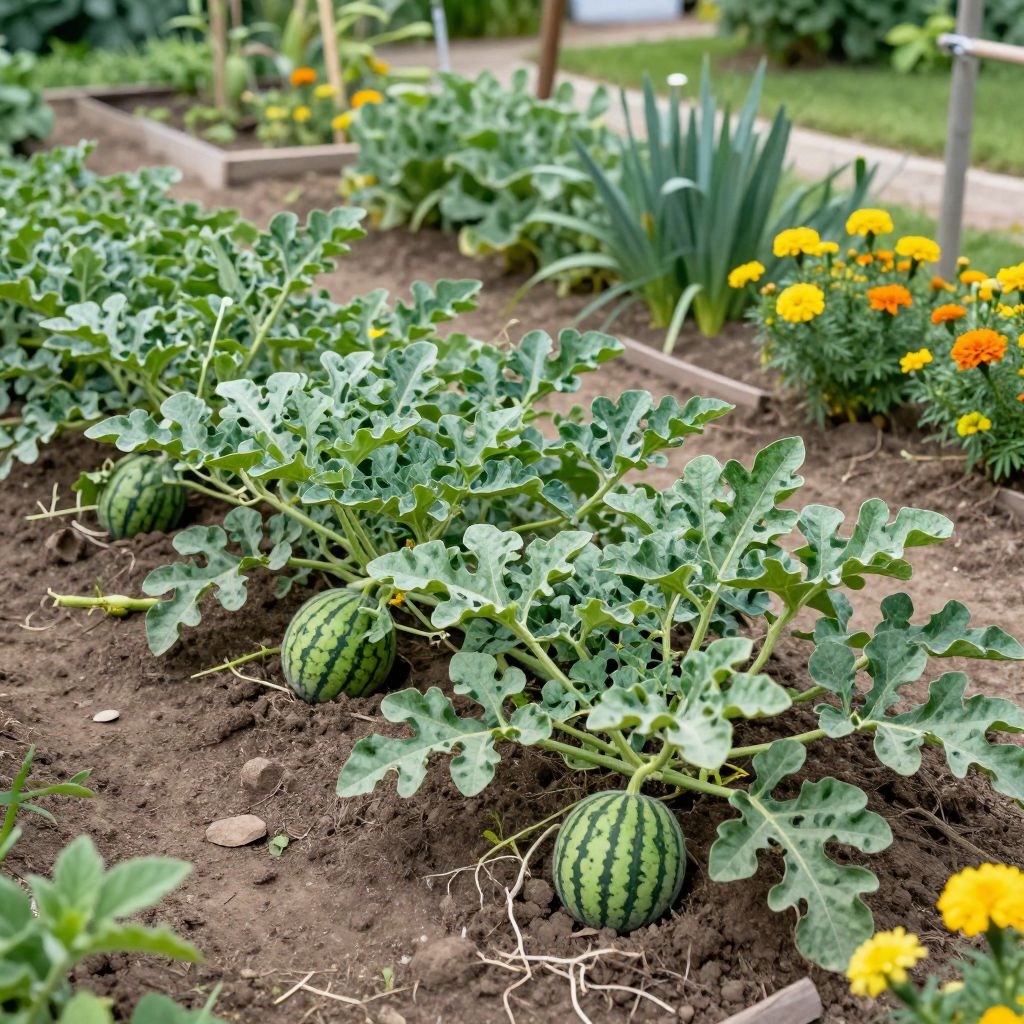
Wondering what to plant with watermelon so your vines stay healthy and your harvest improves? The best companions are plants that don’t crowd the melons, attract pollinators, help deter pests, or make good use of space before the vines sprawl. Choose low, compatible plants and avoid anything that competes heavily for light, water, or root room.
Watermelon is a warm-season crop with long vines, shallow roots, and a strong need for sun and airflow. That means companion planting works best when you pair it with plants that stay compact, mature quickly, or support beneficial insects without shading the melon patch.
What To Plant With Watermelon?
Plant watermelon with low-growing, pollinator-friendly, and pest-reducing companions such as bush beans, nasturtiums, radishes, marigolds, dill, and sweet alyssum. These plants usually fit between young vines, support beneficial insects, and avoid heavy competition. Give watermelon full sun, rich soil, and plenty of room so companions never smother the crop.
Best Companion Plants for Watermelon
1. Bush beans
Bush beans are a practical companion because they stay relatively compact and can add nitrogen to the soil through their root relationships with beneficial bacteria. They work best along the edge of the bed or in open spaces before watermelon vines spread.
Keep them far enough from the melon crown that you can still water and weed easily. Avoid pole beans, which climb and can tangle with vines or shade the patch.
2. Nasturtiums
Nasturtiums are one of the most useful companion flowers for watermelon. Their trailing growth can act as a living mulch, and their bright flowers help attract pollinators while sometimes drawing aphids away from your melons.
Use them at the bed edge or in nearby borders, not directly under dense watermelon runners. They are especially helpful in smaller gardens where you want a decorative plant that still earns its place.
3. Radishes
Radishes mature quickly, so they can be planted between young watermelon plants before the vines take over. They help make efficient use of early-season space and are usually harvested long before the melons need the area.
This is a good choice if you want a short-term companion rather than a season-long partner. Once the watermelon canopy expands, radishes should be out of the way.
4. Marigolds
Marigolds are commonly used around vegetable beds because they are compact, colorful, and easy to tuck along borders. They may help support beneficial insect activity and can make the planting area easier to monitor for pests.
Choose shorter varieties and place them where they won’t be shaded out. They are better as border plants than as dense in-row companions.
5. Sweet alyssum
Sweet alyssum is a low, flowering plant that attracts small beneficial insects, including hoverflies and parasitic wasps, which can help keep some pest populations in check. It also works well as a soft edging plant around a melon bed.
Because it stays low, it is less likely to interfere with watermelon vines. It can be especially useful in mixed vegetable gardens where pollinator support matters.
6. Lettuce and other quick greens
Leaf lettuce, spinach, and similar quick greens can be planted early in the season while watermelon plants are still small. They help you use the open space before the vines spread, then can be harvested before they become crowded.
These greens are best treated as temporary companions. Once the watermelon canopy thickens, they may bolt or lose quality from too much shade.
Plants to Avoid Near Watermelon
Not every garden plant makes a good neighbor for watermelon. The biggest problems are competition, shading, and shared pest or disease pressure.
- Potatoes and other heavy feeders can compete strongly for nutrients and moisture.
- Other sprawling cucurbits such as squash or cucumbers may crowd the bed and make pest control harder.
- Tall, dense plants can shade watermelon, which needs full sun to produce well.
- Plants with very aggressive root systems can reduce water and nutrient availability in the root zone.
If you are short on space, it is usually better to keep watermelon in its own bed or large mound rather than forcing it into a crowded mixed planting. Airflow matters, especially in humid climates where fungal diseases spread more easily.
How to Plan a Watermelon Companion Planting Bed
Give watermelon the main space
Watermelon vines need room to run. Whether you grow them in rows, hills, or a large raised bed, make the melon the dominant crop and treat companions as edge plants or temporary fillers.
A common mistake is planting too many companions too close to the crown. That can trap moisture, block sunlight, and make harvesting harder.
Use the edges and gaps wisely
Good companion plants for watermelon usually belong around the perimeter, between young plants, or in nearby border strips. This lets you benefit from flowers and quick crops without creating competition in the center of the bed.
As vines spread, you may need to remove or harvest companion plants so the melons can continue to breathe and grow.
Match growth speed to watermelon’s growth habit
Because watermelon starts slowly and then suddenly sprawls, the best companions are either fast-maturing or naturally low-growing. That timing lets you harvest early crops before the melon vines occupy the space.
Slow, tall, or root-hungry plants are usually a poor fit.
Soil, Sun, and Watering Needs for Watermelon
Companion planting works best when the watermelon itself is growing well. Start with loose, fertile soil that drains well and receives full sun for most of the day. Watermelon roots dislike soggy conditions, but the plant also struggles if the soil dries out too sharply during flowering and fruit set.
- Sun: full sun is best for strong growth and sweet fruit.
- Soil: rich, well-drained soil with plenty of organic matter.
- Drainage: avoid low spots where water collects after rain.
- Mulch: use straw, shredded leaves, or similar mulch to reduce weeds and conserve moisture.
Compost is helpful before planting, especially in poor or sandy soil. Work it into the bed so the roots have access to steady nutrition without relying on frequent heavy feeding later.
How to Plant Companions With Watermelon
- Prepare the bed first by loosening the soil and adding compost if needed.
- Plant watermelon in hills, rows, or mounds with enough spacing for the mature vine spread.
- Place companion plants along the edges or in the open spaces between young melons.
- Water deeply after planting so roots settle in evenly.
- Mulch around the plants, but keep mulch a little away from the stems to reduce rot.
- As the vines expand, thin, harvest, or remove companions that start to crowd the melons.
If you are direct-sowing watermelon, wait until the soil is warm enough for reliable germination in your area. In cooler climates, many gardeners get better results by starting with transplants or using black plastic or landscape fabric to warm the bed early in the season.
Seasonal Tips for Better Companion Planting
Early season
Use fast crops like radishes and leafy greens before watermelon vines get large. This helps you get a harvest from the bed while the melons are still establishing.
Midseason
Once flowering begins, keep the area open enough for pollinators to find the blossoms. Companion flowers such as marigolds, nasturtiums, and sweet alyssum can support beneficial insects nearby without blocking access.
Late season
By the time fruits are sizing up, the main job is maintaining airflow, moisture balance, and weed control. Remove any companion plants that are now competing for light or making it hard to inspect the vines.
Common Problems and How to Fix Them
Too much shade
If companion plants are shading the watermelon, move them or remove them. Watermelon fruit quality drops when vines are forced to grow in reduced light.
Poor pollination
Watermelon depends on pollinators for fruit set. If you see flowers but few fruits, add more pollinator-friendly plants nearby and avoid broad-spectrum insecticides during bloom.
Fungal disease
Dense planting can trap humidity and encourage powdery mildew or other fungal issues. Improve spacing, water at the base, and avoid wetting the leaves late in the day.
Companions getting swallowed by vines
This is normal with watermelon. Harvest small crops early and accept that some companions are temporary. The melon should always be the priority crop.
Best Companion Planting Strategy for Small Gardens
If your space is limited, keep the plan simple: grow one or two watermelon plants, then use the border area for compact flowers and quick crops. A small bed can still be productive if you resist overcrowding.
For containers or very tight spaces, watermelon is usually a challenging crop unless you have a large planter, strong sun, and a way to support or direct the vines. In that situation, fewer companions are better than more.
Final Takeaway
The best answer to what to plant with watermelon is: choose low, helpful companions that support pollination, discourage some pests, or fill space early without crowding the vines. Bush beans, nasturtiums, radishes, marigolds, sweet alyssum, and quick greens are all good places to start. Plan for airflow, full sun, and plenty of room, then adjust the planting as the vines grow.
If you want to plan the rest of your vegetable bed, you may also find it useful to read more about companion planting basics and growing watermelon successfully.