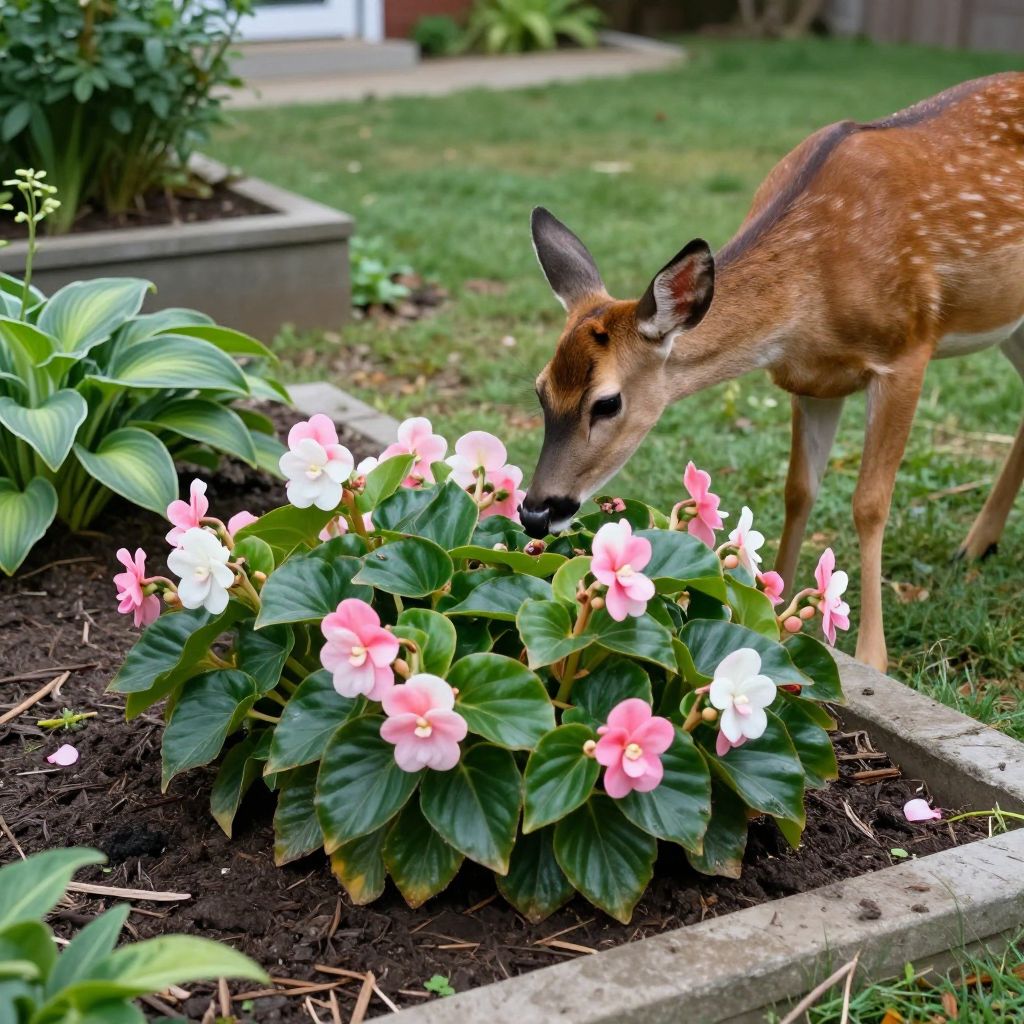
Are begonias deer resistant? In most gardens, deer usually leave begonias alone, but they are not truly deer-proof. When deer are hungry or other food is scarce, they may still nibble begonias, especially tender new growth and flowers.
If you want to use begonias in a deer-prone yard, the best approach is to treat them as a lower-risk plant, not a guaranteed safe one. Good placement, companion planting, and basic deer deterrents can make a big difference.
Are begonias deer resistant?
Yes, begonias are generally considered deer resistant because their leaves and stems are often less appealing than many other ornamentals. However, deer resistance is not the same as deer immunity. In high-pressure areas, deer may browse begonias, especially if they are newly planted, very tender, or the deer are especially hungry.
Why deer usually avoid begonias
Deer tend to prefer plants with soft, highly palatable foliage, and begonias are not usually at the top of their menu. Many gardeners find that begonias are passed over in favor of hostas, impatiens, tulips, and other favorites.
What makes begonias less attractive
- Texture: Many begonias have fleshy, waxy, or fibrous leaves that are less appealing to deer.
- Growth habit: Some types grow in a way that is not as easy for deer to graze repeatedly.
- Garden context: Deer often choose the most tender and accessible plants first.
That said, deer feeding behavior changes with season, population pressure, and what else is available nearby. A plant that is ignored one year may be sampled the next.
Which begonias are most likely to be left alone?
There are many kinds of begonias, and deer resistance can vary a little by type, but most are considered moderately deer resistant rather than highly resistant. Wax begonias, tuberous begonias, and many fibrous-rooted bedding begonias are often less attractive than more tender garden plants.
Common begonia types in the landscape
- Wax begonias (Begonia semperflorens group): commonly used in beds and containers.
- Tuberous begonias: often grown for showy flowers in part shade.
- Fibrous-rooted begonias: useful for edging, pots, and shaded borders.
- Rex begonias: usually grown as foliage plants, often indoors or in sheltered spots.
In general, the more sheltered and ornamental the planting, the more likely begonias are to stay intact. But if deer are browsing everything else, even “resistant” plants can be damaged.
How to grow begonias so deer damage is less likely
Healthy begonias recover better from minor browsing, so strong plant growth matters. Give them the right light, soil, and moisture, and they will be less stressed and more able to replace damaged foliage.
Planting location
Most outdoor begonias do best in bright shade or filtered light. Too much hot sun can scorch leaves, while deep shade may reduce flowering. If deer pressure is heavy, place begonias closer to the house, patio, or other areas with more human activity.
Soil and drainage
Begonias prefer loose, well-drained soil rich in organic matter. Heavy, soggy soil can lead to rot, especially around tuberous types. Mix in compost to improve structure, but avoid making the planting area waterlogged.
Watering
Water when the top layer of soil begins to dry, especially for container-grown plants. Keep the soil evenly moist, but not saturated. Wet foliage and stagnant conditions can encourage disease, so water at the base when possible.
Mulch and compost
A light mulch layer can help conserve moisture and keep roots cooler. Keep mulch a little away from stems so the crown does not stay damp. Compost is useful at planting time, but avoid overfeeding with nitrogen, which can make soft growth more tempting to deer and more prone to disease.
Best ways to protect begonias from deer
If deer visit your yard regularly, rely on more than plant choice alone. The most successful strategy is to combine resistant plants with physical barriers and deterrents.
1. Use deer fencing when possible
Fencing is the most dependable protection. Even a simple barrier can help if it keeps deer from reaching the planting bed. For small gardens or containers, fencing around the entire area is often more practical than trying to protect each plant individually.
2. Place begonias near less accessible spots
Deer are less likely to browse plants close to doors, walkways, decks, or other busy areas. If you have a choice, tuck begonias into spots that are easy for you to see and difficult for deer to approach quietly.
3. Rotate deterrents
Deer can become accustomed to scent-based repellents. If you use one, follow the label and reapply as directed, especially after rain. Rotating products or combining methods often works better than using the same deterrent alone.
4. Pair begonias with less palatable plants
Bordering begonias with strongly scented or coarse-textured plants may reduce browsing pressure. This does not guarantee protection, but it can make the bed less appealing overall.
5. Protect new plantings first
Freshly planted begonias are often the most vulnerable because they have tender growth and less established roots. Use temporary protection during the first few weeks after planting, especially in spring and early summer.
Indoor begonias and deer
Indoor begonias are usually safe from deer, of course, but they still need the right care to stay healthy. If you move begonias outdoors for summer, remember that deer may browse them once they are outside.
Indoor care basics
- Give bright, indirect light.
- Use a pot with drainage holes.
- Water only when the top of the mix begins to dry.
- Avoid cold drafts and harsh direct sun.
If you overwinter begonias indoors, inspect them before moving them back outside. Tender new growth is especially attractive to deer once plants return to the garden.
Common begonia problems that can be mistaken for deer damage
Not every missing leaf is caused by deer. Slugs, snails, caterpillars, wind, heat stress, and accidental breakage can all leave begonias looking chewed or ragged.
How to tell the difference
- Deer damage: torn, angled bites; whole stems or flower clusters removed; browsing higher off the ground.
- Slugs/snails: irregular holes, often with slime trails and damage on lower leaves.
- Heat or sun stress: scorched edges, faded foliage, wilting in afternoon sun.
- Rot or disease: blackened stems, collapsing growth, soft spots, or mold.
If you suspect deer, check for hoofprints, droppings, and repeated damage to nearby plants. Deer often browse a pattern across several plants rather than damaging just one leaf.
What to do if deer have already eaten your begonias
Light browsing does not always kill begonias. Many plants can recover if the roots are healthy and the growing conditions are good. Focus on helping the plant regrow rather than overcorrecting with fertilizer or extra water.
Recovery steps
- Trim away shredded stems or badly damaged leaves with clean pruners.
- Check the soil moisture and water only if the root zone is drying out.
- Keep the plant out of harsh afternoon sun while it recovers.
- Watch for repeated browsing and add protection if needed.
- Do not overfertilize; soft regrowth can be more vulnerable to pests and deer.
If a begonia has been heavily eaten down to the crown, give it time before removing it. Some plants resprout once conditions improve, especially in warm weather.
Seasonal considerations for deer-prone gardens
Deer feeding habits change through the year. In spring, they often target tender new growth. In summer, they may browse ornamentals if nearby forage is limited. In fall and winter, pressure can increase when natural food becomes scarce.
How to adapt your care
- Protect new transplants early in the season.
- Keep containers closer to the house or on raised areas.
- Refresh deterrents after rain or heavy irrigation.
- Inspect plants more often during dry spells and late-season browsing periods.
In colder climates, tuberous begonias are often lifted or stored for winter, while some bedding types are treated as annuals. Deer pressure may be lower when plants are dormant, but the next season’s new growth can be vulnerable again.
Practical mistakes to avoid
Begonias are easy to grow when their basic needs are met, but a few common mistakes can make them weaker and more appealing to pests or browsing animals.
- Planting in full hot sun, which stresses leaves and reduces vigor.
- Overwatering, especially in containers without good drainage.
- Letting plants become overcrowded, which reduces airflow and increases disease risk.
- Depending on one deer deterrent only in a high-pressure area.
- Ignoring new growth, which is often the first part deer target.
Conclusion: should you plant begonias if deer are a problem?
Yes, you can still grow begonias in a deer-prone garden, especially if you choose a good site and use simple protection. They are generally deer resistant, but not deer proof, so think of them as a smart choice for lower-risk planting rather than a guarantee.
If you already grow begonias, start by improving their site and adding one layer of deer protection this season. For more plant choices and shade-garden ideas, look for related gardening guides on container care, shade annuals, and deer-resistant landscaping.