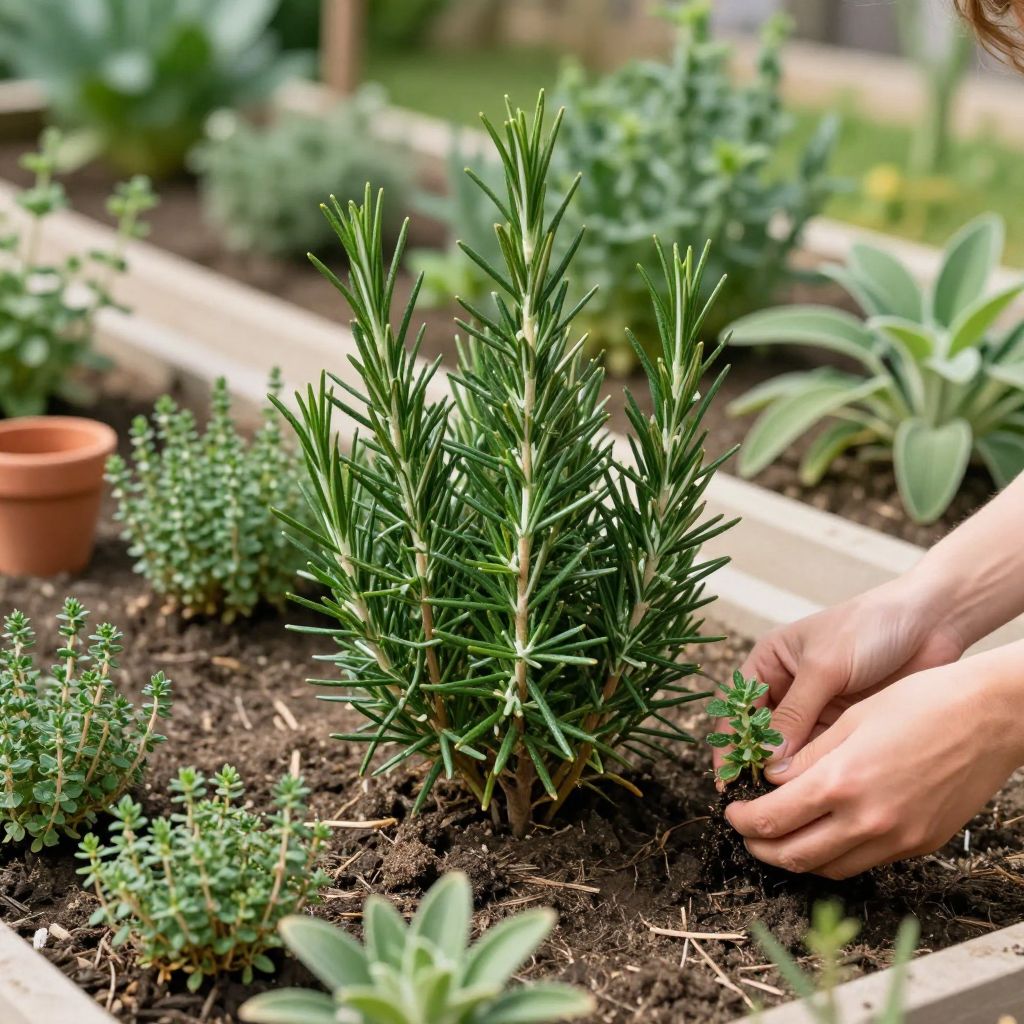
Trying to figure out what to plant with rosemary? The best companions are plants that like the same conditions: full sun, sharp drainage, and soil that is not overly rich or wet. Rosemary pairs well with many Mediterranean herbs, drought-tolerant flowers, and some vegetables if you match their water needs carefully.
The key is to avoid crowding rosemary with thirsty, shade-loving plants. Choose companions that enjoy dryish soil, good air movement, and a bit of neglect once established, and your planting will be healthier and easier to maintain.
What to plant with rosemary?
Plant rosemary with other sun-loving, drought-tolerant plants such as thyme, sage, oregano, lavender, marigolds, yarrow, and sedum. In the vegetable garden, pair it only with crops that tolerate similar drainage and moderate watering. The best companions share rosemary’s need for full sun, lean soil, and excellent airflow.
Best companion plants for rosemary
Herbs that grow well nearby
Rosemary fits naturally into an herb bed with plants that prefer similar growing conditions. These companions are usually the easiest and most reliable choices.
- Thyme (Thymus spp.)
- Sage (Salvia officinalis)
- Oregano (Origanum vulgare)
- Marjoram (Origanum majorana)
- Lavender (Lavandula spp.)
- Bay laurel (Laurus nobilis) in mild climates or containers
These herbs generally like sun, drainage, and less fertilizer than many garden plants. They also look attractive together in a kitchen garden or raised bed.
Flowers and ornamentals that suit rosemary
If you want a mixed border, choose flowers that won’t compete with rosemary for moisture or shade it out.
- Marigolds (Tagetes spp.)
- Yarrow (Achillea millefolium)
- Coreopsis (Coreopsis spp.)
- Salvia (Salvia spp.)
- Sedum (Hylotelephium and Sedum spp.)
- Catmint (Nepeta spp.)
These plants can soften rosemary’s woody shape and help create a low-water planting scheme. Many also attract pollinators, which adds value to the garden.
Vegetables that can work nearby
Rosemary is not the best partner for every vegetable, but it can be useful near crops that enjoy sun and well-drained soil.
- Carrots
- Beans in warm, sunny beds with moderate watering
- Cabbage family crops such as kale or cabbage, if watering is managed carefully
- Onions and garlic
Keep in mind that vegetables often need more consistent moisture than rosemary. If you plant them together, use a layout that lets you water the vegetables without soaking rosemary’s crown and roots.
Plants to avoid planting with rosemary
Rosemary does poorly with plants that need rich soil, frequent watering, or shade. If you mix incompatible plants, one or both will usually struggle.
- Mint, which likes more moisture and spreads aggressively
- Basil, which usually prefers richer soil and more even watering
- Parsley, which often needs more consistent moisture
- Lettuce and other leafy greens that bolt or suffer in hot, dry conditions
- Plants that need heavy compost, frequent feeding, or damp soil
Avoid planting rosemary with anything that needs “wet feet.” Rosemary is far more likely to fail from too much water than from too little once established.
How to match rosemary with the right growing conditions
Sunlight
Rosemary grows best in full sun, which usually means at least 6 to 8 hours of direct light daily. Choose companions that also tolerate strong sun so no plant shades the others.
Soil and drainage
Rosemary prefers soil that drains quickly. If your soil stays wet after rain, use a raised bed, a berm, or a container to improve drainage.
Good companion plants should also tolerate leaner soil. If you enrich the bed heavily for vegetables, rosemary may grow lush but weaker, with more risk of root problems.
Watering needs
Pair rosemary with plants that can handle moderate to low watering. This makes maintenance simpler and reduces the chance of overwatering.
If you must mix rosemary with thirstier plants, group them so you can water each zone separately. Drip irrigation or soaker hoses can help, but keep emitters away from rosemary’s base.
How to plant rosemary with companions
Use spacing and layout to prevent overcrowding, which can lead to poor airflow and disease.
- Choose a sunny location. Pick a site with open exposure and fast-draining soil.
- Test drainage. After watering, the soil should not stay soggy for long.
- Group plants by water needs. Put rosemary with thyme, sage, lavender, or other dry-loving plants.
- Leave room for mature size. Rosemary can become woody and wide, so do not crowd it against smaller plants.
- Plant at the same depth as the nursery container. Do not bury the stem deeper than it was growing before.
- Mulch lightly. Use a thin layer of gravel or coarse mulch if needed, but keep material away from the crown.
For containers, choose a pot with drainage holes and use a gritty, free-draining mix. Rosemary does especially well in pots with thyme, oregano, or other herbs that like similar conditions.
Design ideas for rosemary companion planting
Herb spiral or kitchen bed
Rosemary works well in a sunny herb bed where the driest, highest spot is reserved for it. Plant thyme and oregano nearby, then place slightly thirstier herbs farther away.
Pollinator border
Combine rosemary with lavender, salvia, yarrow, and catmint for a long-flowering border. This creates a low-water planting that supports bees and other beneficial insects.
Container grouping
A large pot can hold one rosemary plant with trailing thyme or compact oregano. This is a good option if your garden soil is heavy or your winters are too wet for in-ground planting.
Common mistakes when planting with rosemary
- Overwatering rosemary because a companion plant needs more moisture
- Planting in shade or partial shade
- Using rich, heavy potting soil that holds too much water
- Overcrowding rosemary with fast-growing companions
- Mulching too deeply against the stem
- Feeding heavily with nitrogen-rich fertilizer
These mistakes often lead to yellowing leaves, weak growth, root rot, or a plant that looks healthy for a while and then declines. Rosemary is tough, but it needs the right conditions more than frequent attention.
Rosemary care after planting
Once established, rosemary usually needs less care than many garden plants. Your main job is to protect it from excess moisture and keep it from becoming woody and overgrown.
- Water deeply but infrequently during dry spells, especially while the plant is young.
- Prune lightly after flowering or in spring to shape the plant and encourage fresh growth.
- Remove dead or crowded stems to improve airflow.
- Check for root issues if leaves yellow or the plant wilts despite moist soil.
In colder climates, rosemary may need winter protection or container growing so it can be moved to shelter. In very wet winters, drainage matters even more than temperature for long-term survival.
Pests and diseases to watch for
Rosemary is relatively trouble-free, but poor placement can invite problems. The most common issue is root rot from soggy soil.
- Root rot: caused by poor drainage or overwatering; prevent it with raised beds, pots, or sandy soil.
- Powdery mildew: more likely if plants are crowded or airflow is poor.
- Aphids or spider mites: sometimes appear on stressed plants, especially in hot, dry, sheltered spots.
If you notice pests, first correct the growing conditions. Healthy rosemary usually recovers better when it has sun, airflow, and moderate moisture.
Can rosemary be propagated near companion plants?
Yes. If you already have a healthy rosemary plant, you can propagate it from softwood or semi-ripe cuttings and add new plants to the same type of bed. This is useful if you want to repeat a successful planting combination.
Take cuttings from non-flowering stems, root them in a free-draining mix, and keep them lightly moist until established. Once rooted, plant them in the same sunny, well-drained conditions as the parent plant.
Conclusion
The best answer to what to plant with rosemary is simple: choose plants that love sun, drainage, and modest watering. Thyme, sage, oregano, lavender, marigolds, yarrow, and sedum are all strong candidates, while moisture-loving herbs and leafy greens usually are not. If you match the site to the plant, rosemary becomes a reliable, attractive anchor for your garden.
If you want to build a fuller herb planting, consider reading more about herb garden design and growing lavender for more companion ideas that suit dry, sunny beds.