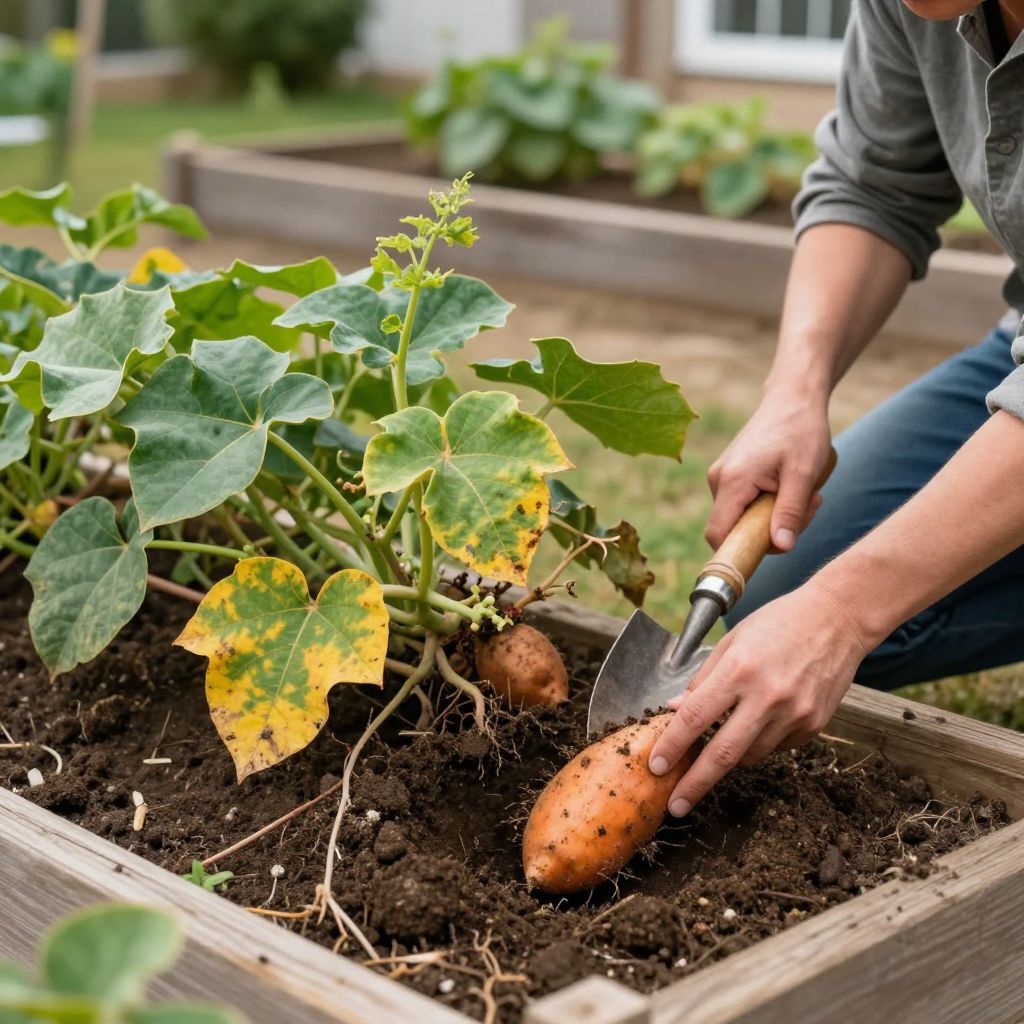
Wondering when to pick sweet potatoes so they’re sweet, fully sized, and store well? The right harvest time depends on your climate, planting date, and how long the vines have been growing. Sweet potatoes are usually ready in late summer to fall, but the best cue is the plant itself and the tuber size beneath the soil.
Harvest too early and the roots may be small and less sweet. Wait too long and you risk cold damage, rot, or pest trouble. With a few simple checks, you can choose the best moment to dig and cure your crop for better flavor and storage.
When to pick sweet potatoes?
Sweet potatoes are usually ready to harvest about 90 to 170 days after planting, depending on the variety and growing conditions. Pick them before soil temperatures drop below about 55°F (13°C) and before frost, because cold can damage the roots and shorten storage life. Mature vines, yellowing leaves, and large tubers are your best clues.
How to tell sweet potatoes are ready
Unlike some crops, sweet potatoes do not always announce maturity with a dramatic change above ground. You often need to combine several signs rather than rely on just one.
Look for these harvest signals
- Days since planting: Many varieties are ready after 3 to 5 months, but some need longer.
- Vine growth slows: The plant may stop making vigorous new growth.
- Leaves begin to yellow: Some lower leaves naturally fade as the crop matures.
- Tubers feel sizable: A small test dig can confirm whether roots have reached a useful size.
- Weather is turning cool: Harvest before frost or prolonged chilly soil conditions.
If you are unsure, dig one plant carefully and check the roots. A mature sweet potato should have a firm skin and a good-sized, well-formed shape. Very young roots may have thin skin that rubs off easily and a smaller size than you want for storage.
Why the calendar matters, but not enough on its own
Planting date gives you a rough harvest window, but weather can speed up or slow down growth. Hot summers, fertile soil, and a long frost-free season can push tubers to size faster. Cool summers, heavy shade, or dry soil can delay maturity.
That is why it helps to watch both the calendar and the plant. If you planted slips in spring, start checking as you approach the variety’s expected maturity range.
Best growing conditions for a good harvest
Sweet potatoes grow best in warm weather, full sun, and loose, well-drained soil. Good growing conditions help the roots bulk up evenly and reduce rotting or misshapen tubers.
Soil and drainage
- Use loose, sandy, or crumbly soil that allows roots to expand easily.
- Avoid heavy, compacted clay unless you amend it well and form raised beds or ridges.
- Drainage matters more than rich soil alone; standing water can damage developing roots.
Compost can improve soil structure, but avoid overfeeding with nitrogen-rich fertilizer. Too much nitrogen often produces lush vines and fewer harvestable roots.
Sunlight and warmth
Sweet potatoes need full sun for best production. In cooler regions, black plastic mulch or raised beds can help warm the soil earlier in the season, but local conditions still determine when the crop matures.
Watering during growth
Keep plants evenly moist while they are getting established, then water deeply during dry spells. Once roots are sizing up, consistent moisture helps prevent stress, but soggy soil can cause rot. As harvest approaches, avoid sudden swings between very dry and very wet conditions.
How to harvest sweet potatoes without damaging them
Sweet potatoes bruise easily, and damaged skin can lead to poor storage. Use a careful digging method so you keep as many roots intact as possible.
Step-by-step harvest method
- Choose a dry day if possible, so soil is easier to work and roots are less likely to stay wet.
- Cut back the vines to make digging easier. Leave a short section near the crown if needed to locate the plant.
- Loosen the soil with a garden fork or spade several inches away from the plant base.
- Lift carefully and dig wider than you think you need, because tubers may spread outward from the crown.
- Brush off soil gently instead of washing the roots if you plan to store them.
- Sort damaged roots first and use any cut or bruised ones soon.
Be patient while digging. Sweet potatoes can grow deep or wide depending on soil texture, so a narrow dig can accidentally slice into the crop.
What to do if frost is forecast
If frost is coming and your sweet potatoes are close to ready, harvest them as soon as you can. Frost can injure both vines and tubers, and even a light freeze can reduce storage quality. If the soil is cold but not frozen, dig promptly rather than waiting for a perfect day.
Should you let sweet potatoes stay in the ground longer?
Sometimes a little extra time helps roots size up, especially in warm weather. But leaving them too long is risky if your nights are cooling or your season is ending. The goal is to balance size with storage quality.
When waiting makes sense
- The vines are still actively growing and the weather remains warm.
- You have not yet reached the expected maturity window.
- The soil is still warm and there is no frost risk in the near forecast.
When to stop waiting
- Night temperatures are dropping consistently.
- Heavy rain is making the soil soggy and difficult to work.
- You see signs of rot, pest damage, or cracking in the roots.
- The crop has already reached a reasonable harvest size.
If you are growing in a short-season climate, it is often better to harvest slightly early than to lose the crop to cold weather.
Curing sweet potatoes after harvest
Curing is one of the most important steps after picking sweet potatoes. It helps toughen the skin, heal small wounds, and improve sweetness and storage life.
Basic curing conditions
- Warm temperature: Around 80–85°F (27–29°C) is commonly recommended.
- High humidity: Moist air helps skin heal without shriveling.
- Good airflow: Prevents mold while the roots cure.
Many home gardeners cure sweet potatoes in a warm room, greenhouse, or sheltered space where temperatures stay steady. Handle the roots gently during this period, because uncured skin is delicate.
Why curing matters
Freshly dug sweet potatoes are not at their best right away. Curing improves flavor, reduces minor harvest damage, and helps the roots store longer. Skipping this step often leads to poorer keeping quality, even if the crop looked fine in the ground.
Common problems when harvesting sweet potatoes
A few issues can make harvest confusing. Knowing what to look for helps you decide whether to dig now or wait a little longer.
Small tubers
If the roots are still small, the plant may need more time, more warmth, or better growing conditions. Sometimes too much shade, compacted soil, or excess nitrogen leads to big vines and small harvests.
Cracked or misshapen roots
Irregular watering, hard soil, or obstacles in the bed can cause odd shapes and splitting. These roots can still be edible, but they may not store as well as smooth, intact ones.
Rotting roots
Rot is often linked to poor drainage, overly wet soil, or late-season cold. If you notice soft spots or bad odor, harvest the crop quickly and separate damaged roots from sound ones.
Insect or animal damage
Wireworms, voles, and other pests may chew roots underground. If you suspect damage, dig a sample plant first and inspect the crop before deciding whether to harvest the rest immediately.
How to store sweet potatoes after picking
After curing, store sweet potatoes in a cool, dry, dark place with decent air circulation. Avoid refrigeration, which can damage texture and flavor. A pantry, basement shelf, or similar space often works if temperatures stay moderate and steady.
- Keep roots dry and unwashed for storage.
- Check them regularly and remove any that soften or mold.
- Store only sound, uncut tubers for the longest keeping time.
Use damaged or cut sweet potatoes first, since they are less likely to store well.
Quick checklist for picking sweet potatoes
- Count the days since planting slips.
- Watch for slowing vine growth and yellowing leaves.
- Check a sample root for size and skin firmness.
- Harvest before frost or cold soil damage.
- Dig carefully to avoid cutting the tubers.
- Cure the crop before long-term storage.
Conclusion
The best answer to when to pick sweet potatoes is: harvest when the roots are sized up, the vines are slowing, and cold weather is near, but before frost or chilly soil can damage the crop. If you are unsure, dig one plant and check the tubers. For more seasonal growing help, you may also want to read about how to grow sweet potatoes in raised beds and how to cure and store root vegetables.