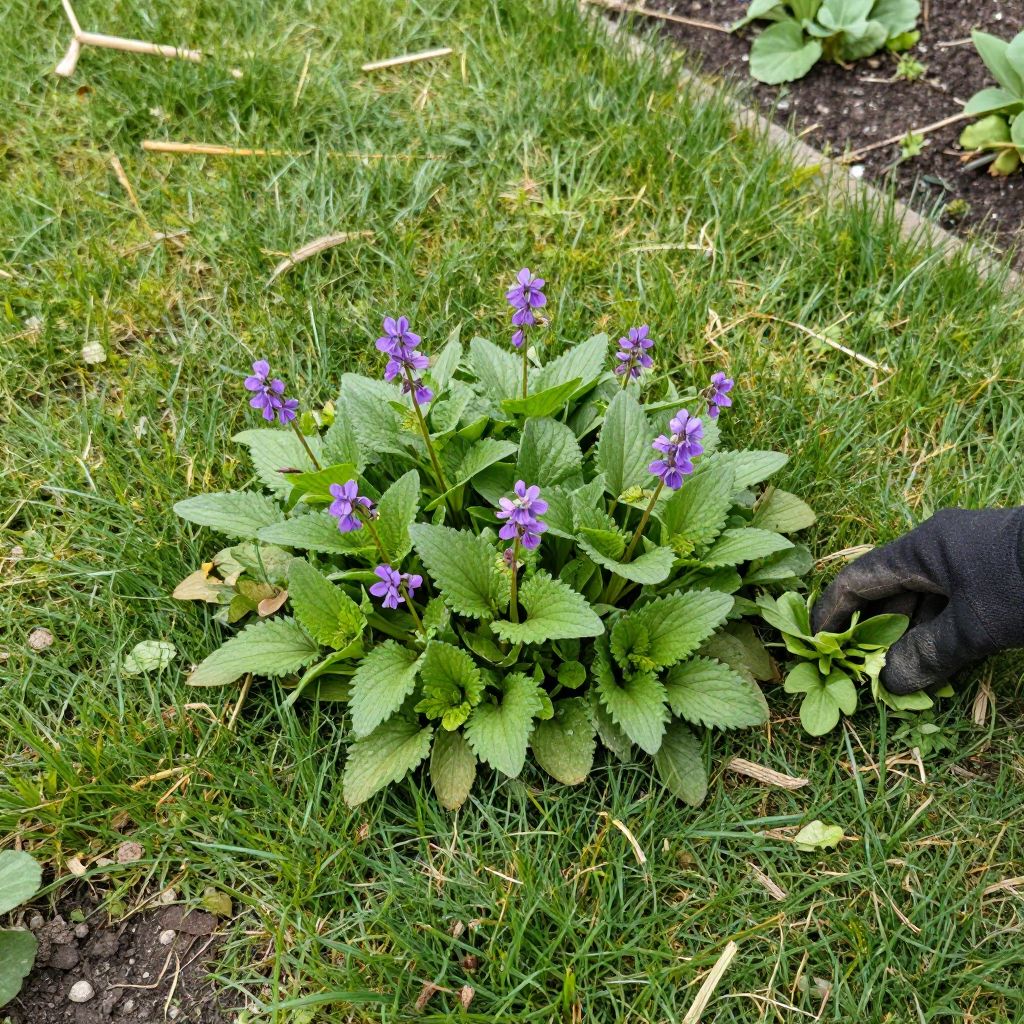
If you’ve spotted purple-flowered “weeds” in your lawn, borders, or vegetable beds, you’re probably dealing with one of several common wild or invasive plants rather than a single species. The right identification matters, because some are harmless self-seeders while others spread aggressively and are worth removing quickly.
Most of the time, the answer to what are the weeds with purple flowers called depends on the leaf shape, flower form, and where the plant is growing. A few of the most common candidates include purple deadnettle, henbit, creeping Charlie, wild violet, thistles, and self-heal.
What are the weeds with purple flowers called?
Common purple-flowered weeds are often purple deadnettle (Lamium purpureum), henbit (Lamium amplexicaule), creeping Charlie (Glechoma hederacea), wild violet (Viola spp.), self-heal (Prunella vulgaris), or a type of thistle (Cirsium spp.). Identification usually comes down to leaf shape, stem texture, and flower clusters.
How to identify the most common purple-flowered weeds
Purple deadnettle
Purple deadnettle is a cool-season annual with square stems and small, fuzzy, triangular leaves near the top that often look purplish. It produces tiny pink-purple flowers in stacked whorls near the upper leaves.
- Often appears in spring or fall
- Stays low and forms patches
- Common in lawns, beds, and disturbed soil
Henbit
Henbit is closely related to purple deadnettle and is also a cool-season annual. Its leaves are rounder and more scalloped, and the upper leaves clasp the stem more noticeably.
- Square stems, like many mint-family plants
- Small tubular purple flowers
- Often confused with purple deadnettle
Creeping Charlie
Creeping Charlie, also called ground ivy, is a low, spreading perennial with round, scalloped leaves and purple-blue funnel-shaped flowers. It roots at the nodes and can form dense mats in lawns and shade.
- Prefers moist, shady areas
- Spreads by runners
- Can be difficult to remove once established
Wild violet
Wild violets have heart-shaped leaves and delicate purple flowers that appear in spring. They spread by seed and underground rhizomes, which makes them persistent in lawns and garden edges.
- Often grows in partial shade
- Leaves are smooth and heart-shaped
- Flowers may be purple, blue, or white depending on species
Self-heal
Self-heal is a low-growing perennial in the mint family with oval leaves and short spikes of purple flowers. It is sometimes considered a weed in turf, but it can also be a useful pollinator plant in informal areas.
- Grows in lawns, meadows, and edges
- Tolerates mowing better than many weeds
- Spreads by creeping stems and seed
Thistles
Thistles are prickly weeds with purple flower heads and spiny leaves. They are easy to recognize once mature, but young seedlings can look less obvious before the spines fully develop.
- Usually upright and coarse-textured
- Flowers are round, tufted heads rather than open blooms
- Best removed early before flowering and seeding
Why these weeds show up in lawns and beds
Purple-flowered weeds usually take advantage of thin turf, bare soil, shade, compaction, or disturbed ground. They are not always a sign of poor gardening, but they often point to conditions that favor opportunistic plants over dense, healthy desired plants.
Common conditions that encourage them
- Thin grass cover that leaves soil exposed
- Shady, damp spots where turf struggles
- Compacted soil with poor root growth
- Overwatering or poor drainage
- Disturbed beds after digging or renovation
How to get rid of purple-flowered weeds safely
The best control method depends on whether the plant is an annual, perennial, or creeping spreader. For most home gardens, the most effective approach is to remove the weed early, improve growing conditions, and prevent reseeding or regrowth.
Step-by-step removal
- Identify the weed first. Pulling blindly can leave rhizomes, stolons, or roots behind.
- Remove after rain or watering. Moist soil makes roots easier to lift cleanly.
- Use a hand fork or weeding tool. Get under the crown and lift the whole plant when possible.
- Bag seed heads and flowers. This helps prevent spread, especially with thistles and self-seeding annuals.
- Repeat as needed. Perennials like creeping Charlie and wild violet often need several passes.
What not to do
- Do not compost mature seed heads unless your compost gets hot enough to kill weed seed.
- Do not leave pulled runners or fragments on moist soil if the plant can re-root.
- Do not scalp the lawn repeatedly, since very short mowing can weaken turf and help weeds.
How to manage them in lawns
In lawns, the long-term fix is usually not repeated spraying or endless pulling. A thicker, healthier lawn shades the soil and makes it harder for weeds to establish in the first place.
Improve turf competition
- Mow at the correct height for your grass type; taller grass usually shades weeds better.
- Aerate compacted soil if foot traffic is heavy.
- Overseed thin areas when conditions are right for your grass type.
- Water deeply but not constantly, so grass roots grow deeper.
- Topdress with compost only where appropriate and in a thin layer.
Shady lawns are especially prone to creeping Charlie and wild violet. If grass struggles because of low light, consider switching that area to shade-tolerant groundcovers or mulched planting beds instead of fighting the same weeds every season.
How to manage them in garden beds
In beds, purple-flowered weeds are easier to control if you keep the soil covered. Bare soil invites seeds to germinate, while mulch reduces light and makes hand weeding much simpler.
Bed care that helps prevent regrowth
- Apply 5 to 8 cm of organic mulch around established plants, keeping it off stems and crowns.
- Pull or cut weeds before they flower.
- Inspect bed edges, paths, and fence lines where weeds often start.
- Use drip irrigation or targeted watering to avoid wetting unused soil.
For persistent perennials
Wild violet and creeping Charlie may return from small root pieces or runners. Digging out as much of the root system as possible is more effective than shallow pulling, especially in spring when the soil is soft.
Should you leave any purple-flowered weeds alone?
Some purple-flowered weeds are not worth panicking over. Self-heal, for example, can support pollinators in low-maintenance areas, and some wild violets are attractive in naturalized spaces. The key question is whether the plant is where you want it and whether it is spreading too much.
Consider leaving them if:
- They are in a meadow, wildlife area, or informal border
- They are not crowding out desired plants
- You want a low-input, pollinator-friendly patch
Remove them if:
- They are taking over a lawn or vegetable bed
- They are setting seed freely
- They are competing with young ornamentals or crops
Common mistakes when identifying purple-flowered weeds
Many gardeners mistake one mint-family weed for another because the flowers are similar. A careful look at the leaves, stem shape, and growth habit usually solves the puzzle.
- Confusing deadnettle with henbit: both have square stems, but their leaf shapes differ.
- Ignoring growth habit: creeping Charlie spreads by runners, while deadnettle is more upright and seasonal.
- Waiting until full bloom: some weeds are much easier to remove before flowering.
- Pulling only the top growth: perennials often regrow from roots or stolons.
Tools that make removal easier
You do not need specialized equipment for most purple-flowered weeds, but the right basic tools save time and reduce breakage.
- Hand fork or dandelion weeder for taproots and crowns
- Gloves, especially for thistles
- Small trowel for digging perennials from beds
- Bucket or bag for seed heads and debris
- Mulch for prevention after weeding
Conclusion
If you’re asking what are the weeds with purple flowers called, start by checking the leaf shape, stem type, and how the plant spreads. Most commonly, you’re looking at purple deadnettle, henbit, creeping Charlie, wild violet, self-heal, or a thistle. Once you identify it, remove it early and improve the growing conditions so it does not keep coming back.
For more help with weed control and lawn care, it also helps to read about improving soil health, mulching, and managing shade in problem areas.