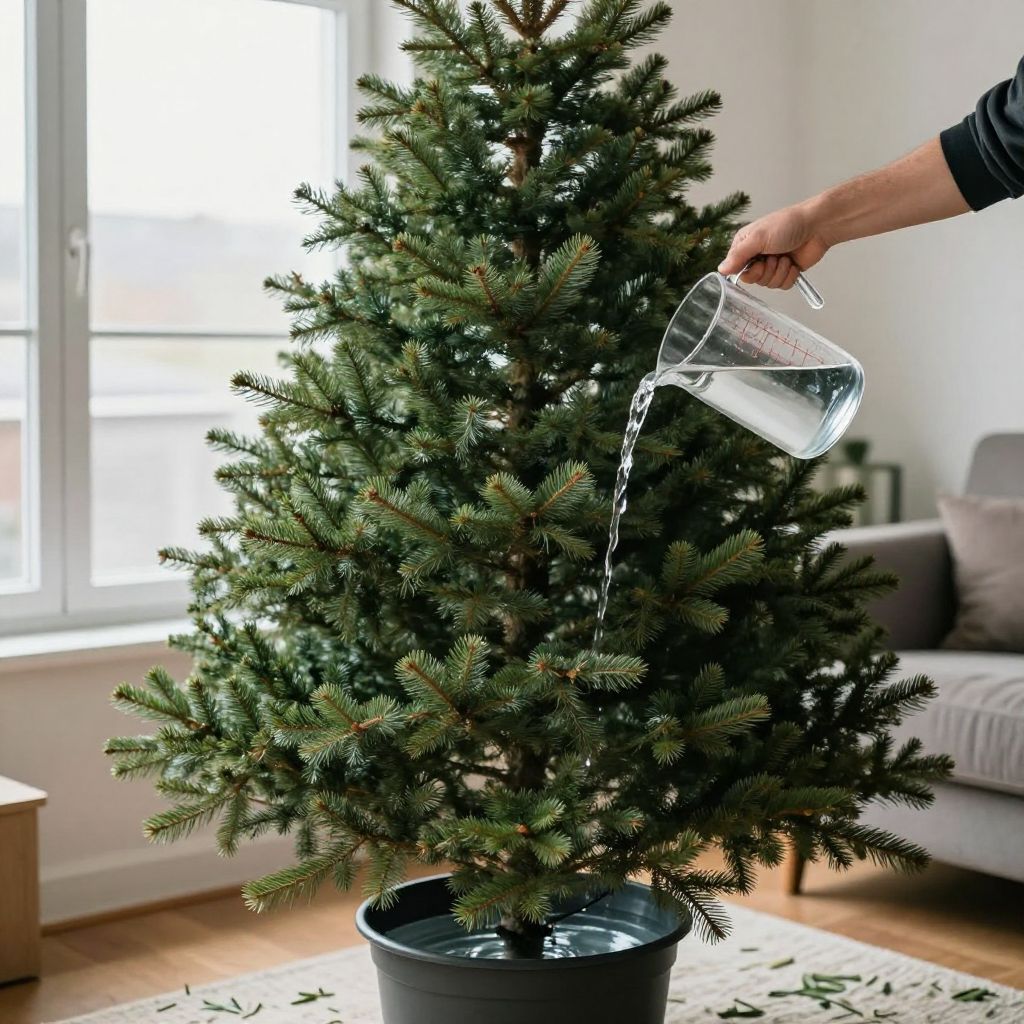
What should you put in Christmas tree water? For a fresh-cut tree, plain tap water is usually the best answer. A clean stand, a fresh cut at the trunk, and steady water level matter far more than additives, and most “home remedies” do little good.
If you want your tree to stay fresher longer indoors, focus on the basics: correct placement, enough water, and avoiding heat and dry air. The right care can slow needle drop and reduce mess, but no additive can make an old or already-drying tree behave like a living potted plant.
What To Put In Christmas Tree Water?
Plain water is the safest and most effective thing to put in Christmas tree water. Use clean tap water in a sturdy stand, keep the reservoir full, and top it up daily. If the tree is freshly cut, it will usually take up water best in the first few days, so monitor the level closely and never let the trunk base dry out.
Why plain water usually works best
A cut evergreen tree is no longer rooted, so it cannot absorb nutrients from soil. Its main need indoors is hydration, not fertilizer. Additives such as sugar, aspirin, soda, bleach, or commercial “tree preservatives” are usually unnecessary and may even clog the cut end or encourage problems.
What the tree actually needs
- Water to replace moisture lost through the needles.
- A freshly recut trunk so water can move into the wood.
- Cool indoor conditions away from heat vents and fireplaces.
- A stand that holds enough water for the tree’s size.
What not to put in Christmas tree water
Many popular suggestions sound helpful, but most are not worth trying. Some can make the water dirty, reduce uptake, or create a sticky mess in the stand.
Common additives to skip
- Sugar or syrup: can feed microbes in the stand water.
- Aspirin: no reliable benefit for cut Christmas trees.
- Bleach: sometimes used in tiny amounts in old advice, but it is not necessary for most homes and can be irritating if overused.
- Soft drinks: sugary and sticky, with no real advantage.
- Fertilizer: a cut tree cannot use it the way a rooted plant can.
- Antifreeze or alcohol: unsafe and not appropriate.
If you want the simplest, safest approach, use clean water only. That recommendation is especially sensible for households with children or pets, or if you plan to keep the tree up for several weeks.
How to help a cut tree drink properly
Water alone is not enough if the tree cannot take it up. The trunk must be prepared correctly, and the stand must stay filled.
- Make a fresh cut across the base of the trunk before putting the tree in the stand.
- Remove a thin slice, about 1/2 inch, to expose fresh wood.
- Set the tree in water as soon as possible after cutting.
- Use a stand that fits the trunk securely and holds an adequate reservoir.
- Check the water level every day, and more often during the first week.
Why a fresh cut matters
When a trunk sits dry, sap can seal the cut end and slow water uptake. A new cut opens the wood again. If the trunk has been dry for several hours or more, recut it before placing it in the stand.
How much water does a Christmas tree need?
The amount varies with tree size, species, indoor temperature, and how recently it was cut. A large tree in a warm room may drink a surprising amount in the first few days. The safest rule is to keep the reservoir from ever going dry.
Practical watering tips
- Check the stand at least once a day.
- Top up whenever the water level drops below the trunk base.
- Use room-temperature water if possible, since very cold water can be uncomfortable to handle and very hot water is unnecessary.
- Expect higher water use in the first week after setup.
Never let the cut end sit above the water line. If the base dries out, the tree may struggle to reabsorb water even after you refill the stand.
Best indoor conditions for a fresher tree
Water management works best when the tree is kept in a cooler, less stressful spot. Indoor heat and dry air are the main reasons Christmas trees dry out quickly.
Placement matters
- Keep the tree away from radiators, heat registers, wood stoves, and fireplaces.
- Choose a cooler room if you have one.
- Avoid direct sun through a bright window if the room gets warm.
- Use lights that do not add excessive heat.
If your home is very warm or dry, the tree may need more frequent watering and may still dry faster than you’d like. That is normal; indoor conditions often matter more than any additive in the water.
Should you use commercial Christmas tree preservatives?
Commercial products sold for cut trees are designed to improve water quality or reduce bacterial growth, but results are often modest. If you choose to use one, follow the label exactly and still treat plain water as the main care method.
For most home gardeners, a clean stand, a fresh cut, and daily watering are enough. If you are unsure about a product, plain water is the low-risk option.
Common Christmas tree water problems and fixes
Most issues with indoor trees come from setup mistakes, not from the water itself. A little troubleshooting can often solve the problem quickly.
Problem: the tree is dropping needles early
- Check whether the trunk was recut before setup.
- Make sure the stand has not run dry.
- Move the tree farther from heat sources.
- Confirm the tree was fresh when purchased; a dry tree may already be past its best stage.
Problem: the stand smells sour or looks slimy
- Empty and clean the stand if possible.
- Rinse out debris before refilling with fresh water.
- Avoid adding sugar or other organic mixtures that can encourage microbial growth.
Problem: the tree seems not to be drinking water
- Recut the trunk base if it has been dry.
- Check that the stand opening is not pinching the bark too tightly.
- Make sure the cut end is actually below the water line.
- Look for a hidden crack or damaged trunk end that may be limiting uptake.
How this differs from caring for a living potted tree
Some people keep a small living conifer in a container for a holiday display. That is a different gardening task from a cut Christmas tree. A potted tree needs soil, drainage, and regular but careful watering, not a stand of water.
If you are growing a living evergreen in a pot, the goal is to keep the root ball evenly moist, never waterlogged. After the holidays, it should be acclimated gradually before moving outdoors, depending on your climate and the plant’s hardiness.
Quick checklist for better Christmas tree care
- Choose a fresh tree with flexible needles.
- Recut the trunk before placing it in the stand.
- Use plain water in a clean stand.
- Check the water level every day.
- Keep the tree away from heat and direct warmth.
- Skip sugar, soda, aspirin, and other unnecessary additives.
Conclusion
If you are wondering what to put in Christmas tree water, the best answer is simple: plain water. Pair that with a fresh trunk cut, a good stand, and a cooler indoor location, and you’ll give your tree the best chance to stay attractive longer. Start by checking the water level today and keep it topped up from here on out.
For more practical indoor plant care ideas, you may also find related gardening reading helpful on choosing the right Christmas tree care tips and keeping indoor evergreens healthy through the season.