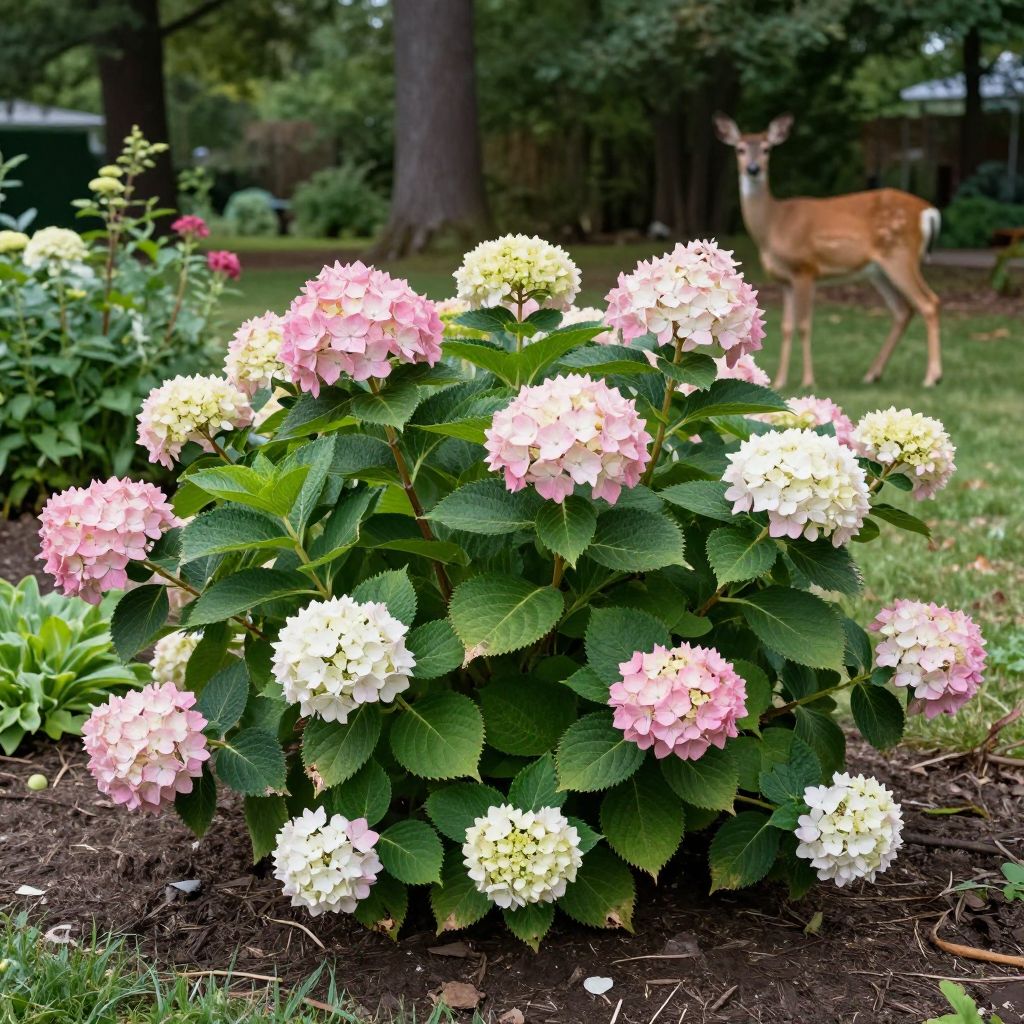
Are hydrangeas deer resistant? In many gardens, the answer is “not reliably.” Deer usually prefer other plants first, but when food is scarce they may browse hydrangeas, especially tender new growth, buds, and flower heads.
If deer visit your yard regularly, treat hydrangeas as deer-tolerant rather than deer-proof. With smart placement, protection, and good care, you can still grow healthy hydrangeas and reduce the chance of repeated damage.
Are hydrangeas deer resistant?
Hydrangeas are generally considered moderately deer resistant, not fully deer proof. Deer often avoid them when better food is available, but hungry deer will browse leaves, stems, and flower buds. Young plants and soft spring growth are the most vulnerable, so protection is still important in deer-prone areas.
Why deer may still eat hydrangeas
Deer feeding is driven by availability, season, and pressure in your area. Even plants that are usually left alone can be damaged when deer populations are high or natural forage is limited.
What parts are most at risk?
- New shoots and leaves in spring
- Flower buds, especially on tender growth
- Young shrubs that are easy to reach
- Low branches near paths, woods, or fence lines
When deer damage is most likely
- Late winter and early spring, when other food is scarce
- During drought or heat stress, when deer browse more widely
- In suburban gardens near wooded edges or open fields
- When new plantings are still small and unprotected
Which hydrangeas are more likely to be browsed?
Deer preferences vary, but no hydrangea should be assumed safe. Some gardeners report that certain types get nibbled less often, while others are hit harder depending on local deer pressure.
General tendency by plant type
- Bigleaf hydrangea (Hydrangea macrophylla) may be browsed for its lush, soft foliage.
- Panicle hydrangea (Hydrangea paniculata) is often left alone more than some other types, but not always.
- Smooth hydrangea (Hydrangea arborescens) can be damaged if deer are hungry.
- Oakleaf hydrangea (Hydrangea quercifolia) may be less tempting in some gardens, but deer can still browse it.
These are tendencies, not guarantees. In a high-pressure deer area, any hydrangea may need protection.
How to protect hydrangeas from deer
The best approach is to combine several methods. One tactic alone rarely works for long, especially if deer are regular visitors.
1. Use physical barriers first
Fencing is the most dependable solution. A tall barrier is usually more effective than sprays when deer pressure is high.
- Garden fencing should be tall enough to discourage jumping; many gardeners use 7 to 8 feet for reliable deer exclusion.
- Smaller plants can be protected with individual cages or wire enclosures.
- For foundation beds, use discreet fencing, netting, or decorative barriers where practical.
2. Apply deer repellents correctly
Repellents can help, especially on established shrubs, but they need reapplication after rain and new growth. They work best as part of a routine rather than a one-time treatment.
- Choose a product labeled for deer deterrence and follow the label exactly.
- Spray before deer begin feeding heavily, not after the plant is already stripped.
- Reapply as directed, especially after heavy rain or rapid growth.
- Rotate products if needed so deer do not become accustomed to one scent or taste.
3. Make the planting area less inviting
Deer are more likely to browse easy, exposed plants. You can reduce risk by making hydrangeas less accessible and less obvious.
- Plant hydrangeas closer to the house, patio, or active areas where deer feel less comfortable.
- Use companion plantings that create visual clutter around the shrub.
- Avoid placing young hydrangeas on the edge of woods or along deer trails.
- Keep the area tidy, but not so open that the shrub stands alone as an easy target.
4. Protect new growth in spring
Spring is often the most important time to guard hydrangeas. New shoots are soft and attractive, and damage then can reduce flowering later in the season.
- Check plants weekly as buds swell and shoots emerge.
- Use cages or temporary fencing around young shrubs.
- Reapply repellents before a stretch of mild weather when deer activity often increases.
Best growing conditions for healthy hydrangeas
Healthy hydrangeas recover from minor browsing better than stressed plants. Good planting conditions also help them produce stronger stems and fuller growth, which can make them less tempting over time.
Light
Most hydrangeas do best with morning sun and afternoon shade, especially in warmer climates. In cooler regions, more sun is often fine if the soil stays evenly moist.
Soil
Hydrangeas prefer soil that drains well but holds some moisture. Add compost to improve structure, especially in sandy or compacted soil.
- Work in several inches of compost before planting if the soil is poor.
- Avoid sites where water stands after rain.
- Mulch to help keep roots cool and evenly moist.
Watering
Newly planted hydrangeas need regular moisture while they establish. Mature shrubs still benefit from deep watering during dry spells, especially in hot weather.
- Water deeply at the base rather than sprinkling lightly.
- Check soil moisture before watering again.
- Mulch 2 to 3 inches deep, but keep mulch a few inches away from the stems.
Pruning and deer damage: what to do if browsing happens
If deer nibble your hydrangea, don’t panic. Light damage is often cosmetic, but repeated browsing can reduce flowering and distort the shrub’s shape.
How to respond after browsing
- Inspect the plant and remove only clearly broken or torn stems.
- Leave healthy green tissue in place so the shrub can regrow.
- Protect the plant immediately with fencing or repellent.
- Watch for new shoots, which may need extra protection.
Pruning caution
Hydrangea pruning depends on the type, so avoid heavy cutting unless you know which kind you have. Some hydrangeas bloom on old wood, while others bloom on new wood. If deer have damaged the plant, focus on cleanup rather than major pruning unless necessary.
Other problems that can look like deer damage
Not every missing leaf means deer were involved. It helps to compare the damage pattern before you decide how to protect the plant.
- Deer damage often looks ragged or stripped at a reachable height.
- Rabbit damage is usually lower to the ground and cleaner-cut.
- Insect damage often leaves holes, spotting, or skeletonized leaves rather than entire shoots missing.
- Storm damage may break stems unevenly and leave shredded foliage after wind or hail.
Can you grow hydrangeas in deer-heavy gardens?
Yes, but success depends on planning. If deer pressure is moderate, hydrangeas can work well with repellents and occasional monitoring. If deer are severe, physical protection is usually necessary from the start.
Best strategy for high-deer areas
- Choose a planting spot near the house or within a protected courtyard.
- Install fencing before or at planting time.
- Use repellents as backup, not as the only defense.
- Prioritize strong plant health with good soil, mulch, and consistent moisture.
Propagation and replacement after damage
If a hydrangea is repeatedly browsed, you may want to move it or replace it with a better-protected planting. Healthy stems can often be propagated from cuttings, depending on the type and season.
For damaged shrubs, wait until the plant has recovered enough to show active growth before attempting cuttings or major reshaping. A stressed plant is less likely to root well.
Common mistakes to avoid
- Assuming hydrangeas are deer proof and skipping protection.
- Using repellents only after deer have already started feeding heavily.
- Planting young shrubs in exposed, easy-to-reach spots.
- Overwatering or planting in poorly drained soil, which weakens the shrub.
- Pruning too aggressively after browsing without knowing the hydrangea type.
Conclusion: the practical answer for gardeners
Hydrangeas are not reliably deer resistant, but they are often less preferred than many other landscape plants. If deer visit your garden, protect hydrangeas with fencing, repellents, and smart placement, then keep them healthy with good soil, mulch, and steady moisture. That combination gives you the best chance of blooms and fewer losses.
If you’re planning a deer-aware garden, you may also want to read about what to feed deer so you can better understand their browsing habits and reduce conflict around your landscape.