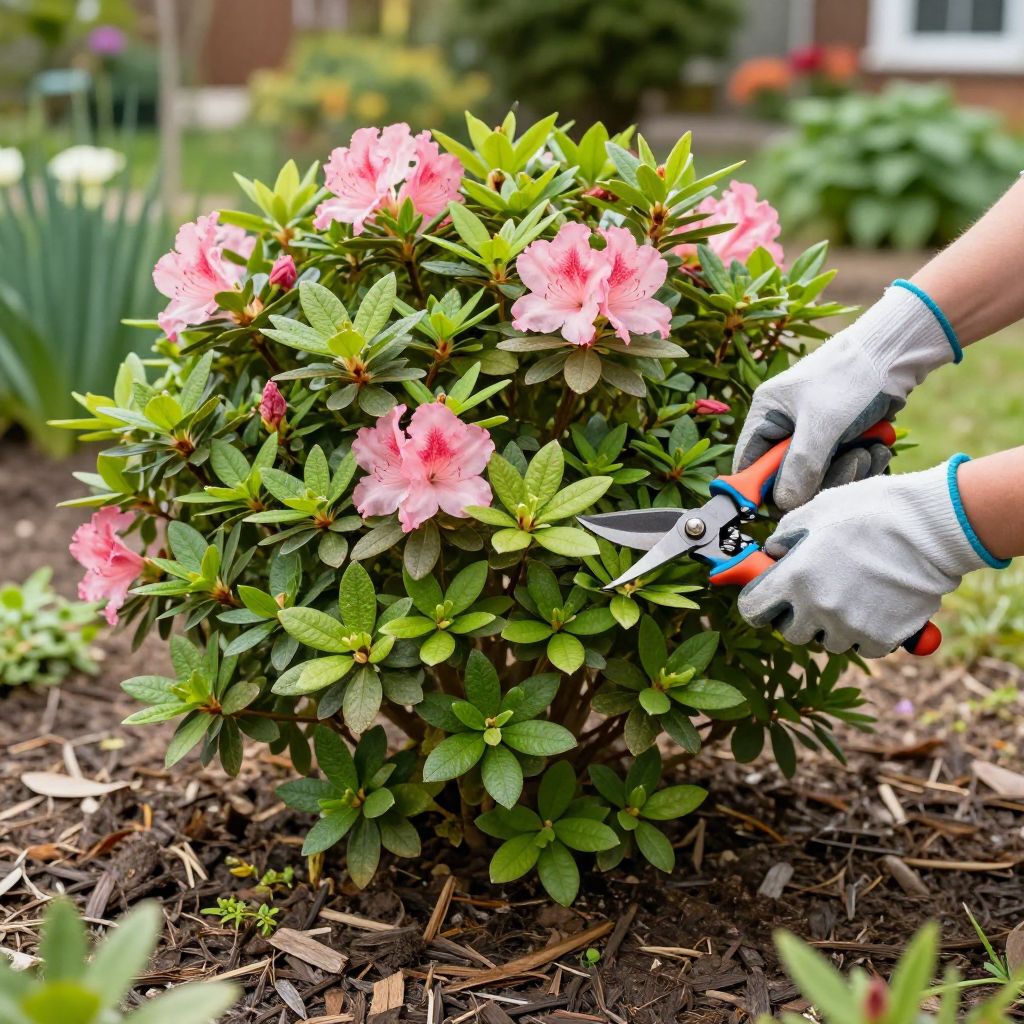
Wondering when to prune azaleas without cutting off next spring’s flowers? The timing matters because azaleas set their flower buds soon after blooming, so the wrong pruning window can remove the display you were hoping for. A little careful trimming at the right time keeps plants full, healthy, and flowering well.
The good news is that azaleas are forgiving if you prune lightly and at the right season. With a few simple rules, you can shape overgrown shrubs, remove dead wood, and improve flowering without stressing the plant.
When to prune azaleas?
The best time to prune azaleas is soon after they finish blooming, while new growth is still developing but before next year’s flower buds form. In most climates, that means late spring to early summer. Avoid heavy pruning in late summer, fall, or winter if you want blooms the following season.
Why timing matters so much
Azaleas usually bloom on growth produced the previous season. If you prune too late, you may remove the buds that were already set for next year’s flowers.
That is why azalea pruning is different from pruning some other shrubs. The goal is not to shear them into shape at any time of year, but to trim them when they can recover and still make flower buds for the next cycle.
Best pruning window by season
- Right after flowering: Best time for shaping, thinning, and light size control.
- Early summer: Still acceptable in many areas if bloom has just ended.
- Late summer or fall: Usually too late for next year’s buds.
- Winter or early spring: Risky if flower buds are already present.
How much should you prune?
Most azaleas only need light pruning. A good rule is to remove no more than about one-third of the plant at a time unless you are renovating an old, overgrown shrub.
Light pruning encourages bushier growth and keeps the plant natural-looking. Heavy shearing can create a dense outer shell with weak growth inside and fewer flowers overall.
What to remove first
- Dead, broken, or diseased stems.
- Crossing branches that rub against each other.
- Spindly shoots that crowd the center.
- Long, awkward stems that spoil the shape.
- Spent flower clusters, if you are doing a very light tidy-up.
Step-by-step: how to prune azaleas
Use clean, sharp hand pruners for most cuts. Loppers may help on thicker stems, but avoid rough tearing or crushing the wood.
- Wait until flowering ends. Do not prune while buds are still opening.
- Inspect the shrub. Look for dead wood, weak growth, and branches that spoil the shape.
- Remove dead or damaged stems first. Cut back to healthy wood or to the base if needed.
- Thin crowded areas. Make selective cuts to open the center and improve airflow.
- Shorten long shoots. Cut just above a leaf node or side branch to encourage branching.
- Step back often. Check the plant’s shape as you go so you do not overdo it.
How to make the cuts
Make each cut just above a leaf or bud facing the direction you want new growth to go. Angle the cut slightly so water sheds away from the bud, and avoid leaving long stubs.
If a stem is thick and woody, prune it back to a side branch rather than cutting it at random. This helps the plant heal more cleanly and keeps the shrub looking natural.
Can you prune azaleas hard?
Yes, but only when necessary. If an azalea is very overgrown, leggy, or damaged, you can do a renovation prune, but it should be done carefully and usually after flowering. Expect the plant to look sparse for a while and to need time to recover.
A hard prune is best reserved for shrubs that have outgrown their space or become woody and flower poorly. Even then, it is usually wiser to spread major pruning over two seasons rather than cutting everything back at once.
Renovation pruning tips
- Cut back only part of the shrub in one year if possible.
- Keep some healthy leafy growth so the plant can photosynthesize.
- Water during dry spells after pruning.
- Mulch lightly to steady soil moisture and temperature.
What to avoid when pruning azaleas
Many azalea problems come from pruning at the wrong time or using the wrong technique. Avoid these common mistakes:
- Shearing at the wrong season: This often removes next year’s flower buds.
- Cutting too much at once: Severe pruning can weaken the plant.
- Leaving stubs: Stubs can die back and look untidy.
- Using dull tools: Ragged cuts heal more slowly.
- Pruning during drought stress: A stressed shrub recovers more slowly.
How pruning fits with azalea care
Healthy azaleas recover better from pruning when they are growing in the right conditions. They prefer well-drained, acidic soil, consistent moisture, and light shade or filtered sun in many climates.
If your azalea is struggling, pruning alone will not fix the problem. Check the site first, because poor drainage, too much sun, or compacted soil can weaken flowering and growth.
Helpful care after pruning
- Water deeply if rainfall is scarce, especially during active growth.
- Apply mulch to conserve moisture, but keep it away from the stems.
- Do not overfertilize immediately after a hard prune.
- Watch for new shoots and pinch only if you need a slightly fuller shape.
Do azaleas need deadheading?
Deadheading is optional, but it can tidy the plant and sometimes help direct energy into growth rather than seed production. If you do it, remove spent flower clusters carefully without damaging the tender new shoots just below them.
For most home gardeners, a light deadhead after bloom is enough. You do not need to remove every faded blossom if the shrub is otherwise healthy and the shape is good.
Pruning azaleas in containers
Potted azaleas follow the same timing rule: prune after bloom, not before next year’s buds form. Container plants may need more frequent light shaping because they can become leggy faster in limited space.
Because pots dry out more quickly than garden beds, keep container azaleas evenly moist after pruning. If roots are crowded, repotting into fresh, acidic potting mix may help more than heavy pruning alone.
Common problems after pruning
If an azalea looks weak after pruning, the issue is often stress rather than the cut itself. The most common causes are pruning too late, removing too much growth, or giving the plant poor aftercare.
Signs your azalea needs attention
- Few or no flowers next spring: Pruning likely happened after buds formed.
- Brown dieback at cut ends: Cuts may have been rough or made into weak wood.
- Thin regrowth: The plant may need better light, moisture, or soil conditions.
- Yellowing leaves: Check soil pH, drainage, and root health.
Pests and disease to watch for
Pruning can help improve airflow, which reduces some disease problems. It also makes it easier to spot pests early.
Look for lace bugs, scale insects, leaf spots, and twig dieback. Remove diseased wood promptly, and clean your tools between cuts if you suspect infection so you do not spread the problem.
Quick pruning checklist for azaleas
- Prune right after flowering.
- Use sharp, clean hand pruners.
- Remove dead, damaged, and crossing branches first.
- Trim lightly to shape rather than shearing hard.
- Avoid late-season pruning if you want blooms next year.
- Water and mulch after pruning if the weather is dry.
Conclusion
If you are asking when to prune azaleas, the safest answer is simple: prune soon after they bloom. That timing protects next year’s flower buds while giving you a chance to shape the shrub, remove dead wood, and keep it healthy.
Next time your azalea finishes flowering, take a few minutes to inspect it, make a few careful cuts, and stop before you overdo it. For more shrub care guidance, you may also want to read related articles on seasonal pruning and flowering shrub maintenance.