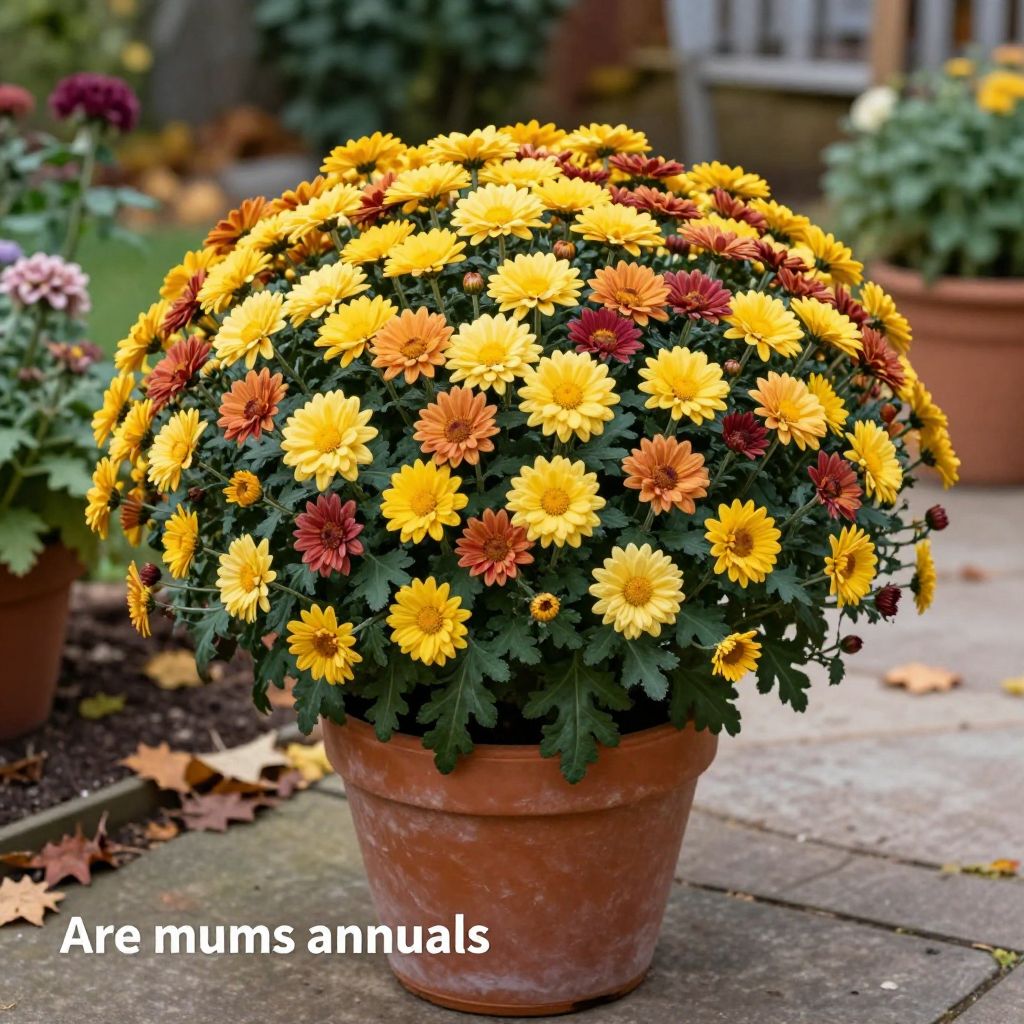
If you’ve bought a pot of mums and wondered, “Are mums annuals?” the answer is: sometimes, but not always. Garden mums, or chrysanthemum varieties sold for outdoor planting, are often grown as perennials in the right climate, while many florist mums are treated like seasonal color and may not return reliably.
Whether your mum comes back depends on the type you bought, your climate, when you planted it, and how well it’s cared for before and after bloom. With the right planting and maintenance, you can often keep garden mums going for more than one season.
Are mums annuals?
Mums are not true annuals by nature. Most garden mums (Chrysanthemum or Chrysanthemum x morifolium) are perennial plants, meaning they can live for several years. However, many are sold in fall as short-lived seasonal color, and in colder climates or poor conditions they may fail to overwinter and are treated like annuals.
What kind of mum did you buy?
The first step is figuring out whether you have a garden mum or a florist mum. That makes a big difference in whether it’s likely to return next year.
Garden mums
- Usually sold for outdoor planting in beds or containers.
- Often have a mounded shape and many blooms.
- Can be perennial in suitable climates and with proper care.
Florist mums
- Commonly sold as potted indoor or gift plants.
- May be less hardy outdoors, especially if forced to bloom early.
- Often do not overwinter well in the garden.
If the tag doesn’t say whether it’s hardy in your area, assume it may be more of a seasonal plant unless you can confirm it’s a garden mum suited to outdoor growing.
How to help mums come back next year
To keep mums alive beyond one season, give them a good start in the ground or a large container, then protect them through winter. Drainage and timing matter more than almost anything else. A healthy plant that roots well before cold weather has a much better chance of surviving.
- Plant early enough for roots to establish before the season turns cold.
- Choose a sunny spot with at least 6 hours of direct sun.
- Use well-drained soil enriched with compost.
- Water consistently without keeping the soil soggy.
- Mulch after the ground cools to protect roots in winter.
Best growing conditions
- Sunlight: Full sun is best for strong stems and abundant blooms.
- Soil: Fertile, loose, and well-drained soil works best.
- pH: Slightly acidic to neutral soil is generally suitable.
- Airflow: Good spacing helps reduce fungal disease.
In heavy clay soil, mums may struggle because wet roots rot easily. If your garden holds water after rain, grow mums in raised beds or containers with drainage holes.
When to plant mums outdoors
For the best chance of long-term survival, plant mums in spring or early summer rather than waiting until fall. Fall-blooming potted mums are often already putting energy into flowers, not roots, so they may not have enough time to establish before winter.
If you only buy mums in autumn, you can still plant them, but treat them as a trial. The earlier in fall you plant, the better the odds. In colder regions, late-planted mums are especially vulnerable.
Container planting tips
- Use a pot with drainage holes.
- Choose a container wide enough for root growth, not just the bloom size.
- Use quality potting mix, not garden soil.
- Check moisture often, because pots dry out faster than beds.
Watering and feeding mums correctly
Mums need steady moisture, especially while they are growing and setting buds. The goal is evenly moist soil, not saturated soil. Let the top inch of soil dry slightly between waterings, then water deeply at the base of the plant.
Avoid overhead watering when possible. Wet leaves can encourage leaf spot and other fungal problems, especially in humid weather or crowded plantings.
Fertilizer basics
Rich soil usually does most of the work. If your soil is poor, mix in compost before planting. Too much nitrogen can lead to leafy growth and fewer flowers, so avoid overfeeding mums late in the season.
- Use compost or a balanced garden fertilizer if needed.
- Stop heavy feeding once buds begin to form.
- In containers, refresh the potting mix each season if the plant stays potted.
Pruning and pinching for fuller plants
Pinching is one of the best ways to make mums bushier and less floppy. By removing the growing tips earlier in the season, you encourage branching and more flower buds later.
How to pinch mums
- Wait until the plant is actively growing and about 6 to 8 inches tall.
- Pinch or snip off the top inch or two of each stem.
- Repeat every few weeks until midsummer, if needed.
- Stop pinching later in the season so the plant can form buds.
Do not pinch too late. If you keep cutting back a mum in late summer or early fall, you may delay or reduce blooming.
Winter care: why some mums return and others don’t
Winter survival is often the deciding factor in whether mums are annuals in your garden. Even hardy garden mums can fail if they are planted too late, sit in wet soil, or are exposed to repeated freeze-thaw cycles without protection.
How to overwinter mums
- Leave stems in place until spring if your climate is cold; they can help trap snow and protect crowns.
- After the ground begins to freeze, add a light mulch layer around the base.
- Avoid burying the crown too deeply, which can trap moisture.
- In wet climates, make sure water drains away from the plant all winter.
In very cold regions, even well-cared-for mums may behave like annuals unless they are especially hardy and well established. In milder climates, they are much more likely to return year after year.
Common problems that shorten mum life
Several issues can make mums look like annuals even when they are capable of returning. Catching these early can save the plant.
Root rot
Caused by soggy soil or poor drainage. Symptoms include yellowing leaves, wilting, and soft stems. Improve drainage and reduce watering if the soil stays wet for long periods.
Powdery mildew and leaf spots
These fungal issues are more common when plants are crowded or watered from above. Space plants properly, prune for airflow, and remove heavily affected leaves.
Aphids and spider mites
These pests can weaken plants, especially in hot, dry weather or on stressed mums. Check the undersides of leaves and new growth. A strong spray of water or insecticidal soap may help when infestations are light.
Flopping stems
Mums grown in too much shade or rich, floppy growth may need more sun, earlier pinching, or staking. Weak stems often mean the plant is stretching for light.
Can you propagate mums?
Yes. If a mum survives well in your garden, you can often divide it in spring or take cuttings from healthy growth. Division helps rejuvenate older clumps and can give you more plants for other parts of the garden.
For division, wait until new growth appears in spring, then dig up the clump and separate healthy sections with roots attached. Replant them promptly in prepared soil and water them in well.
Using mums in the landscape
Mums work well in borders, foundation plantings, and containers where you want late-season color. They pair nicely with ornamental grasses, asters, sedum, and other fall bloomers. For the best effect, plant them where they get sun and where their mounded shape can be seen clearly.
If you are using mums as a temporary seasonal display, that is perfectly fine. Many gardeners do. But if you want them to behave as perennials, give them the same care you would give any long-term garden plant: good soil, enough sun, and proper winter protection.
The short answer for gardeners
So, are mums annuals? Not always. Garden mums are often perennial, but many are sold and grown like annuals because they are planted late, stressed by containers, or not hardy enough for the local climate. The plant’s longevity depends on the variety, your growing conditions, and how well you care for it after bloom.
If you want your mums to return, plant them early in a sunny, well-drained spot, keep them watered but not soggy, and protect the roots through winter. For more seasonal color planning, you may also want to read about fall container gardening ideas and how to prepare perennials for winter.
Leave a Reply