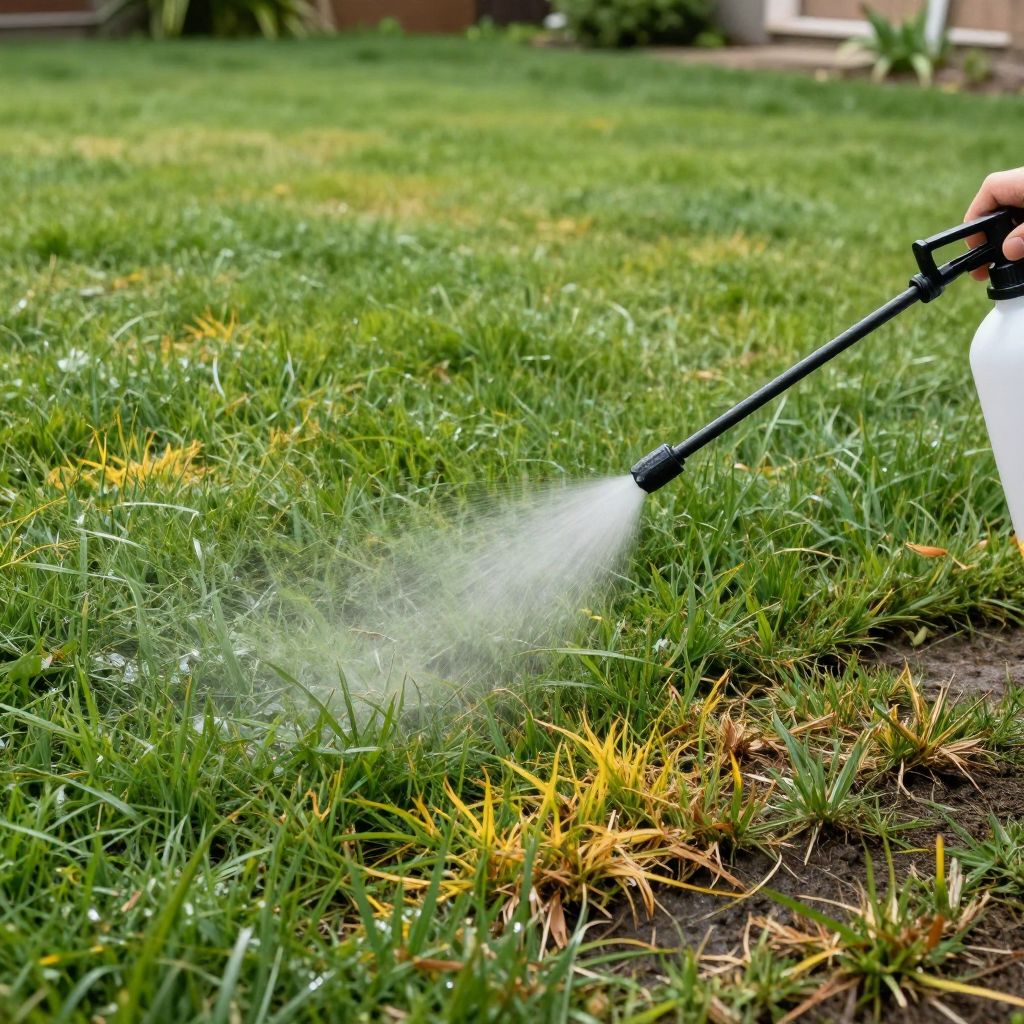
Does Roundup kill grass? Yes—when glyphosate in Roundup contacts actively growing grass, it usually kills the blades, stems, and roots it reaches. It is a non-selective herbicide, so it does not distinguish between weeds and lawn grass, and even a light overspray can damage or kill turf.
If you are trying to remove a patch of grass, repair a weedy lawn, or protect nearby plants, the key is using Roundup carefully and only where you truly want everything to die. If you are hoping to save grass, there are better options than spraying Roundup over the top.
Does Roundup kill grass?
Yes. Roundup is designed to kill most green, growing plants, including lawn grasses, ornamental grasses, and weeds. It works best on actively growing tissue, so treated grass may yellow, wilt, and die back over several days to two weeks, depending on weather and plant vigor.
How Roundup works on grass
Roundup contains glyphosate, a systemic herbicide. That means the plant absorbs it through the leaves and moves it through the plant’s tissues, including down to the roots and growing points.
Because it is systemic, it is more effective than contact sprays that only burn the top growth. That also means a small amount can do a lot of damage if it lands on desirable grass.
What you may see after spraying
- First 1–3 days: grass may look slightly dull or stressed.
- Within a week: yellowing, browning, or wilting often appears.
- After 1–2 weeks: treated grass usually dies back significantly.
- Cool weather or drought stress: results may take longer.
Will Roundup kill all kinds of grass?
In most cases, yes. It can kill common lawn grasses such as Kentucky bluegrass, perennial ryegrass, fescues, bermudagrass, zoysiagrass, and many ornamental grasses if the spray reaches them. Some grasses may recover from light, uneven coverage, but you should never count on that.
Young, tender growth is often easier to kill than mature, tough turf. Healthy, actively growing grass also absorbs herbicide more readily than drought-stressed or dormant grass, which can make timing matter.
Why some grass seems unaffected
- The spray missed the leaves or was washed off too soon.
- The grass was dormant, drought-stressed, or not actively growing.
- The application was too light or uneven.
- The product was used incorrectly or at the wrong time of day.
How to use Roundup safely around grass
If you want to kill a patch of grass before replanting, apply Roundup only to the area you want removed. Use a shield, cardboard barrier, or careful spot-spraying to keep drift off nearby turf and ornamentals.
- Choose a calm day with little or no wind.
- Make sure the grass is actively growing and dry at the time of application.
- Spray only the target area, covering leaves evenly but not to the point of runoff.
- Keep people, pets, and irrigation off the area until the product has dried.
- Wait and watch for full dieback before reseeding or replanting.
Do not spray on a windy day. Drift is one of the most common reasons nearby lawn grass gets damaged by accident.
How long before you can replant after killing grass?
That depends on the product label and the planting you plan to do. In many cases, you can reseed or replant after the grass has fully died and the site has been prepared, but always follow the specific label directions on the product you used.
For a lawn renovation, wait until the grass is completely dead, then rake out debris, loosen the soil if needed, and improve the seedbed. If you are installing sod or new plants, make sure the old grass is no longer actively growing and that the soil surface is workable.
Good site-prep steps after killing grass
- Remove dead thatch and debris.
- Check drainage and level low spots.
- Loosen compacted soil with a garden fork or core aerator.
- Add compost if the soil is poor or thin.
- Water lightly before seeding so the top layer is evenly moist, not soggy.
What if you want to save your grass?
If your goal is to keep your lawn healthy, Roundup is usually the wrong product. Because it kills grass, it should not be used as a weed spot treatment in turf unless you are intentionally removing that section.
For weeds in lawn grass, look for a selective lawn herbicide labeled for your specific grass type and weed problem. Some weeds are better controlled by hand-pulling, mowing adjustments, overseeding, or improving turf density so weeds have less room to establish.
Better lawn-care alternatives
- Hand pull or dig isolated weeds when soil is moist.
- Mow at the proper height for your grass species to shade out weeds.
- Overseed thin areas so grass can compete better.
- Water deeply but not too often to encourage deeper roots.
- Test soil if turf is weak across large areas.
Common mistakes to avoid
Most problems with Roundup and grass come from accidental overspray, poor timing, or using it where a selective product would be better. A little planning can save a lot of lawn damage.
- Spraying near desirable grass without a barrier or shield.
- Applying during windy conditions or before rain when drift and wash-off are likely.
- Using it on dormant grass and assuming it will work the same as on actively growing turf.
- Trying to treat lawn weeds with a non-selective herbicide.
- Rushing to reseed before the old grass is fully dead and the site is ready.
Troubleshooting: what to do if grass was accidentally sprayed
If you accidentally hit lawn grass with Roundup, act quickly but calmly. Once glyphosate has been absorbed, washing the leaves usually will not reverse the damage, but immediate rinsing may help if the spray is still fresh on the blades.
- Rinse the area with clean water right away if the spray is still wet.
- Keep an eye on the grass for the next 7–14 days.
- Mark the damaged area so you can assess whether it recovers or needs repair.
- Once the outcome is clear, overseed, patch, or replace the area as needed.
If only a few blades were hit, the surrounding turf may fill in over time. If the patch is large, you may need to reseed or lay sod after the dead grass is removed.
Seasonal and growing-condition considerations
Roundup works best when grass is actively growing and not under severe stress. Warm, mild conditions often give more predictable results than cold, droughty, or very hot weather.
In spring and early fall, many lawn grasses are actively moving nutrients and herbicide through the plant, so control is often more reliable. In midsummer heat or during drought, grass may be less responsive, which can lead to patchy results.
Conditions that affect performance
- Temperature: moderate temperatures usually work better than extremes.
- Moisture: lightly watered, healthy growth absorbs herbicide more readily than wilted turf.
- Sunlight: bright conditions often support active growth, but avoid spraying in heat stress.
- Rain: check the label for rainfast timing before watering or irrigating.
When Roundup is useful in the garden
Roundup can be helpful when you are converting a weedy strip into a new bed, clearing turf before installing a path, or removing grass from an area where you want to start over. It is especially useful when you need to kill existing vegetation without digging everything out by hand.
Even then, use it sparingly and only on the target area. For many home gardeners, careful digging, mulching, edging, or using a sod cutter may be better if the area is small.
Bottom line
Does Roundup kill grass? Yes, and that is exactly why you need to use it with caution around lawns and landscape beds. If you are removing grass, spray only the target area and wait for complete dieback before replanting. If you are trying to protect turf, choose a selective weed-control method instead.
For more lawn-care help, read about lawn renovation basics and choosing the right weed control for lawns.
Leave a Reply