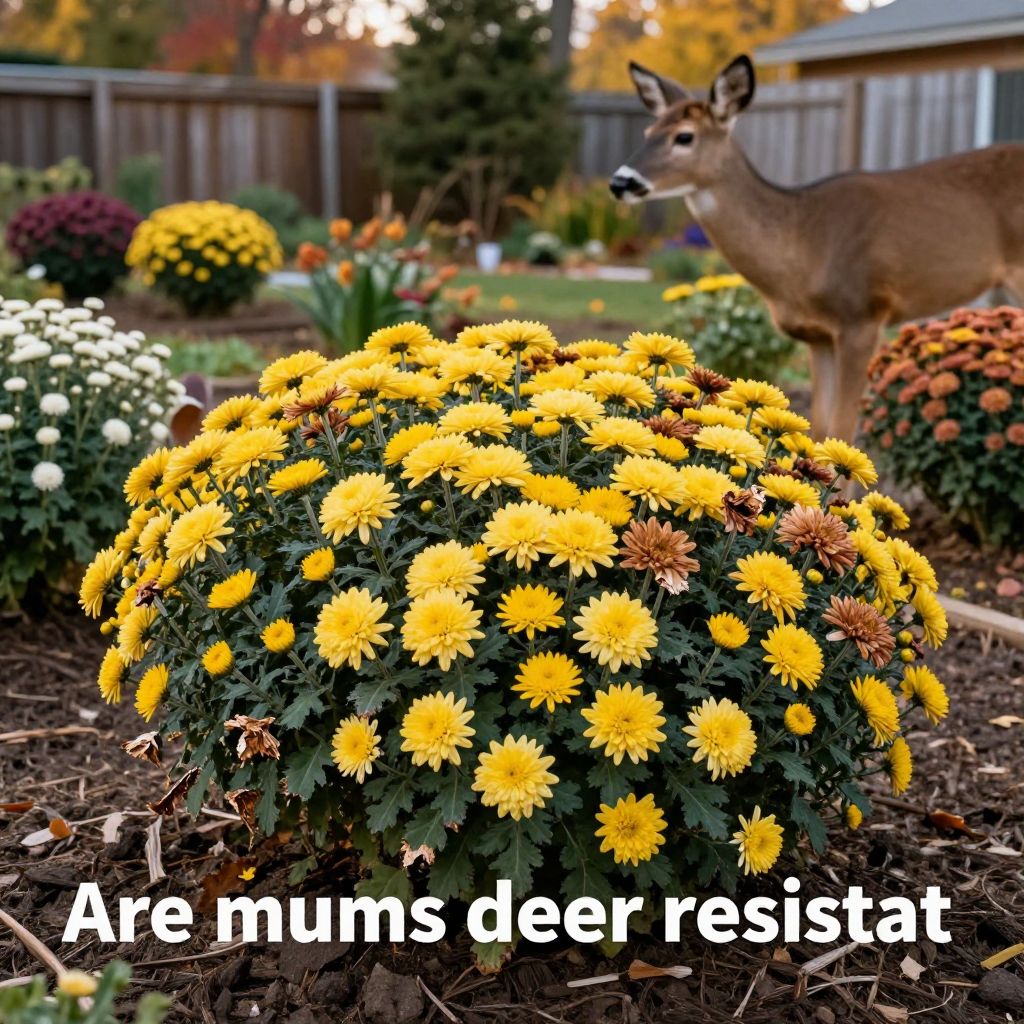
Are mums deer resistant? In most gardens, chrysanthemums are deer resistant rather than deer proof. Deer usually avoid them because of their strong scent and slightly bitter foliage, but hungry deer may still nibble young plants, buds, or flowers when food is scarce.
If deer pressure is high in your area, mums can still be a useful part of the landscape, especially when paired with other deer-resistant plants and simple protection. The key is to understand when they’re most likely to be browsed and how to grow them so they stay healthy and less tempting.
Are mums deer resistant?
Yes, mums are generally considered deer resistant, but not fully deer proof. Deer often pass them by because of their aromatic foliage and taste, yet they may still browse chrysanthemums if other food is limited, especially in late fall, drought, or newly planted beds.
Why deer usually leave mums alone
Deer tend to prefer tender, high-moisture plants with little scent. Mums have a stronger aroma and a texture many deer dislike, which makes them a lower-priority snack in mixed plantings.
What makes mums less appealing
- Strong foliage scent that can mask the plant’s taste.
- Somewhat coarse leaves compared with softer ornamentals.
- Late-season bloom timing when deer may already have other preferred foods.
That said, deer behavior changes with weather, food availability, and local pressure. A plant that is ignored one year may be browsed the next.
When deer may still eat mums
- During dry spells or drought, when natural forage is limited.
- In winter or late fall, when deer are hungry and less selective.
- On young, tender transplants that have not fully filled out.
- In gardens close to woods, hedgerows, or deer travel routes.
How to grow mums so they stay healthy and less tempting
Healthy mums are better able to recover from light browsing and are less likely to look like an easy meal. Give them the right site, good drainage, and steady care so they grow vigorously without becoming weak or stressed.
Sunlight and site selection
Mums bloom best in full sun, which usually means at least 6 hours of direct light each day. In hotter climates, some afternoon shade can help prevent stress, but too much shade often leads to leggy growth and fewer flowers.
Choose a spot with good air movement and avoid low areas where water collects. Wet, crowded plants are more prone to disease and can decline quickly after browsing or weather stress.
Soil and drainage
Mums prefer fertile, well-drained soil. If your soil is heavy clay, work in compost to improve structure and drainage before planting. Avoid soggy beds, because roots that sit in wet soil are more likely to rot.
A lightly amended bed is usually enough. Overly rich, soft growth can be more attractive to deer and may flop later in the season.
Planting tips
- Plant mums where they will get enough sun and room to spread.
- Set them at the same depth they were growing in the container.
- Water thoroughly after planting to settle the soil around the roots.
- Mulch lightly to conserve moisture, but keep mulch a little away from the stems.
If you are planting in autumn for seasonal color, remember that container-grown mums are often already in bloom. They may look great quickly, but they still need consistent moisture and protection from browsing while they establish.
Watering and feeding mums without making them weak
Newly planted mums need regular moisture while roots establish, but they do not like constantly wet soil. Water deeply when the top inch or two of soil begins to dry, then let excess water drain away.
Established garden mums usually need less frequent watering than container mums. Pots dry out faster, especially in sun and wind, so check them often and water when the potting mix begins to dry at the surface.
Fertilizer basics
If your soil is already fertile, mums may only need a light feeding in spring or early summer. Too much nitrogen can produce lush foliage with fewer flowers and softer growth that may be more appealing to deer.
For best results, focus on balanced soil health rather than heavy feeding. Compost and well-drained soil often do more good than repeated fertilizer applications.
Pruning and pinching for fuller, sturdier plants
Pinching back mums during the growing season helps create bushier plants with more stems and flowers. Compact growth is also less likely to flop, which makes the plant look healthier and less neglected in the landscape.
How to pinch mums
- When stems are actively growing, pinch off the top inch or two of new growth.
- Repeat as needed earlier in the season to encourage branching.
- Stop pinching well before bloom time so buds can form.
Do not shear mums randomly late in the season once buds are forming. That can delay flowering and reduce the display you are trying to protect from deer.
How to protect mums from deer damage
Even deer-resistant plants can be browsed, so use a layered approach if deer are common in your yard. The best protection combines plant choice, placement, and physical barriers.
Practical deer-control methods
- Plant mums near the house or in high-traffic areas where deer are less likely to enter.
- Use fencing when deer pressure is heavy; this is the most reliable option.
- Apply deer repellents according to label directions and reapply after rain or new growth.
- Mix mums with other deer-resistant plants rather than using them alone in exposed beds.
Repellents can help, but they work best as part of a routine. Deer often test plants after rain, during hungry periods, or when new growth appears.
Container growing as a strategy
Growing mums in pots can make it easier to move them to a porch, patio, or entryway where deer are less likely to browse. Containers also let you control soil quality and drainage more precisely.
Use a pot with drainage holes and a quality potting mix. Keep in mind that containers dry out faster than garden beds, so they need closer monitoring in warm or windy weather.
Common problems that can make mums more vulnerable
Stress does not make mums suddenly deer magnets, but it can make them weaker and more likely to suffer noticeable damage if deer do browse them. Healthy plants recover faster and bloom better.
Watch for these issues
- Leggy growth from too little sun.
- Root rot from poor drainage or overwatering.
- Powdery mildew in crowded, humid plantings with poor airflow.
- Aphids and leaf spots that may weaken the plant.
If a mum is already stressed, even light browsing can leave it looking ragged. Correct the growing conditions first, then add deer protection.
How to tell deer damage from other problems
Deer usually leave ragged, torn-looking stems and cleanly browsed leaves or buds at a reachable height. Insects, disease, and weather damage often look different, with spotting, curling, or browning that starts on the leaf surface rather than missing tissue.
Best uses for mums in deer-prone gardens
Mums work well in borders, foundation beds, mixed containers, and seasonal displays. In deer-heavy areas, they are best used as part of a broader planting plan rather than as the only plant in a bed.
Good companion ideas
- Ornamental grasses
- Salvia
- Lavender
- Russian sage
- Boxwood
- Herbs with strong scent, such as rosemary or thyme, where climate allows
These combinations can help reduce browsing pressure, but no plant is completely safe if deer are hungry enough.
Quick answer: are mums deer resistant enough for your garden?
For many home gardens, yes. Mums are a smart choice when you want fall color and a plant that deer usually ignore, but they should still be treated as low-risk, not no-risk. If deer are common where you live, use repellents, fencing, or protected placement for the best results.
Start with a healthy, sun-grown mum in well-drained soil, then watch how deer behave in your yard. If browsing is a recurring problem, pair your mums with stronger protection and read more about choosing deer-resistant flowers for a more resilient landscape.