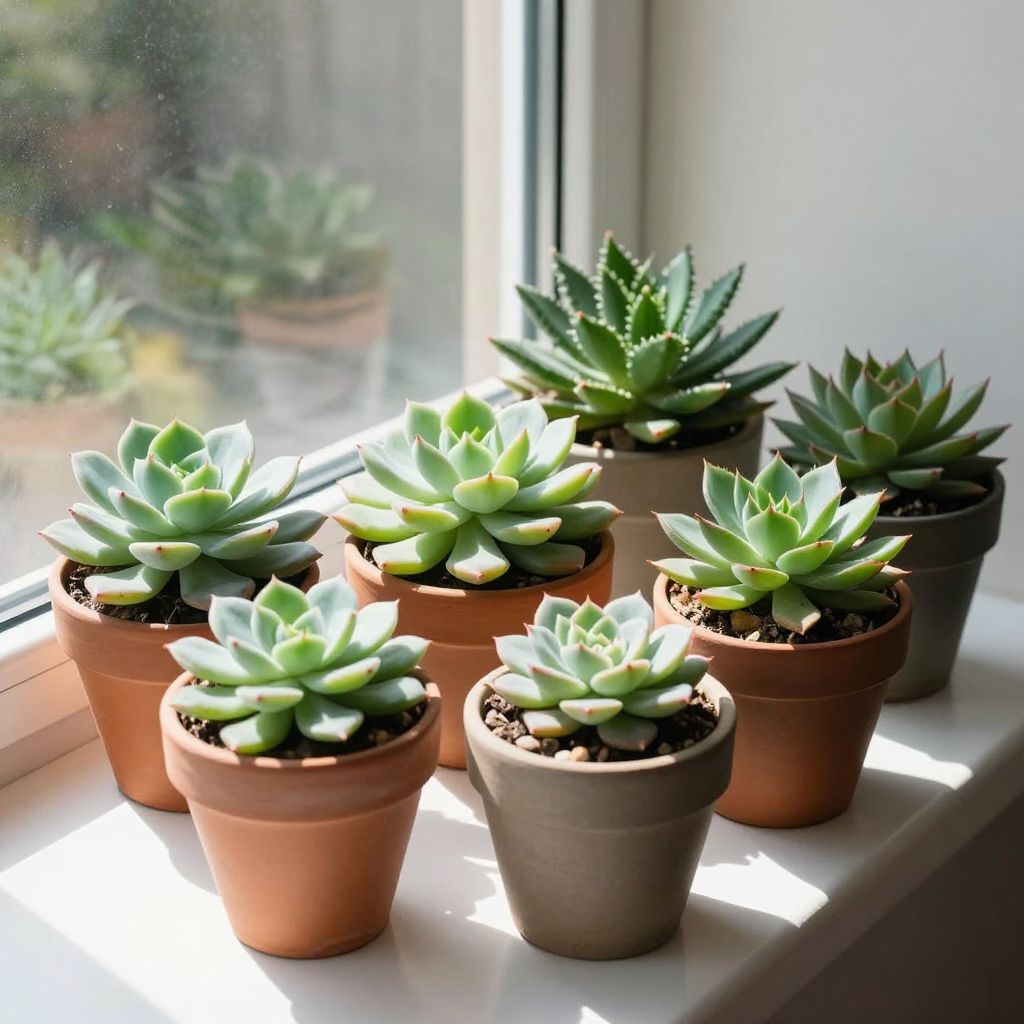
Do succulents need sunlight? Usually, yes—but not all succulents want the same amount, and too much direct sun can be just as damaging as too little. Most succulents grow best in bright light, with several hours of sun or very strong indirect light depending on the species and whether they live indoors or outside.
If your succulent is stretching, fading, or leaning toward a window, light is probably the issue. The good news is that most light problems are easy to fix once you know how much sun your plant actually needs.
Do succulents need sunlight?
Yes. Succulents need bright light to stay compact, healthy, and colorful. Many types prefer at least 4 to 6 hours of sun daily outdoors, while indoor succulents usually need the brightest window you have. Some species tolerate partial shade, but very low light leads to stretching, weak growth, and leaf drop.
How much sun do succulents really need?
The right amount depends on the type of succulent and where it is growing. Desert-type succulents such as many Echeveria, Sempervivum, and cacti often want more direct sun than shade-tolerant types like haworthias and gasterias.
Outdoor succulents
Most outdoor succulents do best in bright light with morning sun and some protection from harsh afternoon rays in hot climates. In cooler regions, many can handle full sun if they are acclimated gradually.
- Full sun: Often 6 or more hours of direct sun, best for many sun-loving succulents.
- Partial sun or bright shade: 3 to 6 hours of sun, or filtered light for species that scorch easily.
- Light shade: Useful in very hot climates, especially during heat waves.
Indoor succulents
Indoors, a sunny south- or west-facing window is often the best spot, though east-facing windows can work for lower-light types. If natural light is limited, a grow light can help keep plants compact and healthy.
Important: “Bright light” indoors is not the same as “bright room.” A succulent placed several feet from a window often gets far less light than it needs.
Signs your succulent is getting too little light
Low light problems usually show up gradually. If you catch them early, you can often correct the issue before the plant is seriously weakened.
- Stretching or legginess: Long gaps between leaves and a stem that reaches toward the light.
- Pale color: Leaves lose their rich green, red, or purple tones.
- Drooping or leaning: The plant bends toward the nearest light source.
- Slow growth: The succulent seems stalled or produces smaller, weaker leaves.
- Leaf drop: Older leaves may shrivel and fall off more easily.
If your plant is already stretched, it will not regain its compact shape on its own. New growth may improve once light is corrected, but the elongated stem usually stays that way unless you prune and re-root the top.
Signs your succulent is getting too much sun
Sunlight is important, but intense direct sun can burn some succulents, especially if they were grown indoors, recently repotted, or moved outside too quickly. Scorch damage is common in hot climates and on south- or west-facing exposures.
- Brown or white patches: Sunburned tissue often looks bleached, tan, or crispy.
- Wrinkled leaves: Heat stress can cause leaves to lose moisture faster than roots can replace it.
- Red or purple stress coloring: Some color change is normal, but severe discoloration can mean too much sun.
- Shriveled tips: Especially on thin-leaved succulents exposed to intense afternoon sun.
Sunburned tissue does not heal. You can move the plant to gentler light, but damaged areas usually remain marked.
Best light conditions for common succulent types
Not every succulent wants the same exposure. Knowing the general group your plant belongs to helps you place it more accurately.
Sun-loving succulents
Many rosette-forming succulents and cacti prefer stronger light and do best with several hours of direct sun once acclimated.
- Echeveria
- Sedum
- Sempervivum
- Many cacti
- Some Aloe species
Lower-light tolerant succulents
These still need bright light, but they are less likely to scorch in filtered sun or a bright indoor window.
- Haworthia
- Gasteria
- Some jade plants (Crassula ovata) in hot climates
- Snake plant (Dracaena trifasciata), which is often grouped with succulents in home care
If you are unsure of the exact species, start with bright indirect light and observe the plant. Adjust gradually rather than moving it straight into harsh sun.
How to move a succulent into more sun safely
Sudden exposure is one of the most common reasons succulents burn. Acclimation gives the plant time to adapt its leaves and cuticle to stronger light.
- Start with a brighter location, such as a spot with morning sun or filtered light.
- Increase direct sun exposure slowly over 7 to 14 days.
- Watch for bleaching, crisp edges, or wrinkling.
- Move the plant back a little if it shows stress.
- Repeat gradually until you reach the best light level for that species.
For outdoor plants, a shade cloth, patio umbrella, or placement near taller plants can help bridge the transition. For indoor plants, rotate the pot every week or two so growth stays even.
Soil, drainage, and watering matter too
Sunlight is only part of succulent care. Even a well-lit plant can struggle if the soil stays wet too long or the container has poor drainage.
Use fast-draining soil
Succulents need a gritty, airy mix that dries out reasonably fast. A commercial cactus and succulent mix is a good starting point, and many gardeners improve it further with pumice, perlite, or coarse sand depending on the plant and climate.
- Choose pots with drainage holes.
- Avoid heavy garden soil in containers.
- Use a shallow pot when possible for small-rooted succulents.
Water based on light and season
Plants in brighter light usually dry out faster than those in shade, so they may need watering more often. Still, the safest rule is to water thoroughly only when the soil has dried out most or all the way through, depending on the species and pot size.
In cooler months or low-light conditions, succulents use water more slowly. Overwatering in winter is a common cause of root rot, especially indoors.
Tip: If the leaves are plump and the soil is still damp, wait. Succulents handle brief dryness far better than constant moisture.
Can succulents live without direct sunlight?
Some can survive for a while in bright indirect light, but most will not thrive long-term without strong light. A plant may stay alive in a dim room, yet it will usually become stretched, weak, and less colorful over time.
If you do not have a sunny window, a grow light is often the easiest solution indoors. Place the light close enough to be useful, following the manufacturer’s guidance, and keep the plant on a regular light cycle rather than leaving it in darkness.
Common mistakes to avoid
Most succulent light problems come from a few predictable errors. Avoiding these will save you a lot of frustration.
- Moving a plant from low light straight into full sun.
- Assuming all succulents want the same exposure.
- Placing a succulent far from a window indoors.
- Using a decorative pot without drainage holes.
- Watering more often just because the plant is in brighter light.
- Ignoring seasonal changes. Winter sun is weaker, and summer sun can be intense.
Pruning and propagation after low-light damage
If a succulent has become leggy from low light, pruning can help restore a fuller look. Many rosette succulents can be cut back and the healthy top rooted again once the stem has been allowed to callus.
For stem succulents, remove the stretched top, let the cut end dry for a few days if needed, then place it in dry, well-draining mix. Water lightly only after roots begin to form.
Leaves from some succulents can also be propagated, but success varies by species. Healthy, plump leaves taken from a vigorous plant usually root better than damaged or sunburned leaves.
Pests and diseases linked to poor light
Weak, etiolated succulents are often more vulnerable to pests and rot. Low light slows drying, which can encourage mealybugs, scale, and fungal problems if watering is not adjusted.
Check plants regularly, especially in crowded indoor collections. Remove dead leaves, keep air moving around the plant, and isolate any succulent that shows sticky residue, cottony clusters, or soft blackened tissue.
Quick care checklist for healthy light
- Give the plant the brightest appropriate spot for its type.
- Acclimate gradually to stronger sun.
- Use a pot with drainage holes.
- Choose a gritty, fast-draining soil mix.
- Water only when the soil has dried appropriately.
- Watch for stretching, bleaching, or scorch marks.
- Rotate indoor pots for even growth.
Conclusion
So, do succulents need sunlight? Yes—most need bright light to stay compact, colorful, and healthy, but the right amount depends on the species, season, and whether the plant is indoors or outside. Start by improving light gradually, then watch how your plant responds. If you want, move your succulent to a brighter window or a gentler sun exposure today and check its growth over the next few weeks.
For more practical succulent care, you may also want to read about choosing the right succulent soil mix and how to propagate succulents successfully.