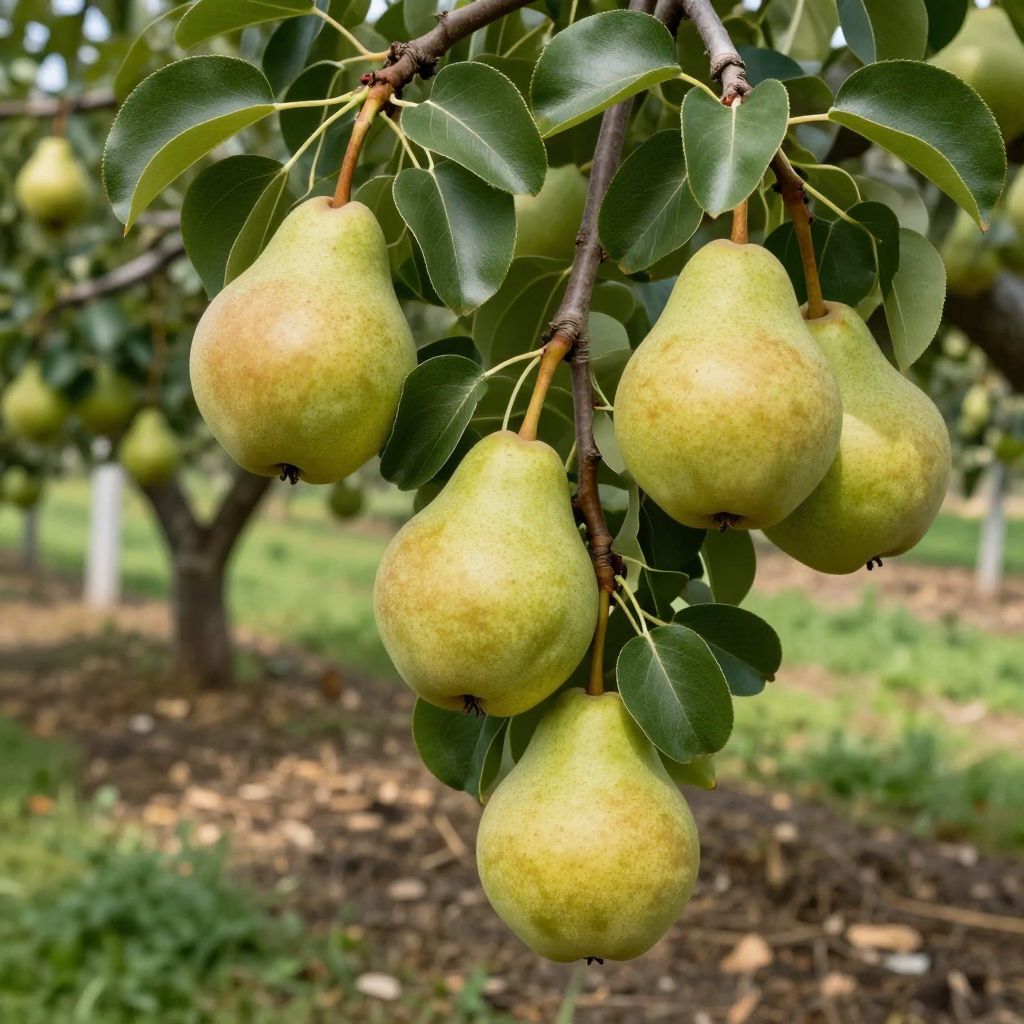
Are pears in season? Yes—though the answer depends on your climate, the pear type, and whether you mean fresh-eating fruit from the tree or pears sold in stores. In most temperate regions, pears ripen from late summer into fall, and many varieties are picked slightly firm and finished indoors.
If you grow pears, timing matters for both harvest and tree care. Knowing when pears are in season helps you pick fruit at the right stage, avoid bruising, and plan pruning, watering, and pest control around the tree’s natural cycle.
Are pears in season?
Pears are typically in season from late summer through fall, with exact timing varying by variety and local weather. Most home orchard pears are harvested when mature but still firm, then ripened off the tree for best flavor and texture. In cooler climates, the season often runs later than in warm regions.
When pears are ready to harvest
Pears are one of the fruits that often do not ripen properly on the tree. Many varieties are picked when they separate easily from the branch and the seeds have turned dark, then allowed to soften indoors.
Signs your pears are ready
- The fruit lifts and twists off the spur with little resistance.
- The background color shifts from deep green to a lighter green or yellow-green, depending on the variety.
- The flesh near the stem feels slightly less hard, but not mushy.
- Seeds inside are brown or dark rather than pale.
If you wait until pears are fully soft on the tree, they may become grainy, overripe, or drop and bruise. A gentle test is better than guessing by color alone.
Ripening pears after picking
Place harvested pears at room temperature until they yield slightly at the neck when pressed. This can take a few days to a couple of weeks, depending on the variety and how mature they were at picking.
- Keep them out of direct sun.
- Check daily for softening.
- Once ripe, refrigerate to slow further ripening.
Growing pears successfully in the home garden
Pear trees grow best in full sun, well-drained soil, and a site with good air movement. They are long-lived trees, so choosing the right spot and rootstock matters more than quick fixes later.
Best growing conditions
- Sunlight: At least 6 to 8 hours of direct sun daily.
- Soil: Fertile, loamy soil with good drainage.
- pH: Slightly acidic to neutral soil is usually preferred.
- Airflow: Open spacing helps reduce disease pressure.
Pears dislike waterlogged ground. If your soil stays soggy after rain, plant on a raised bed, berm, or well-drained slope rather than in a low spot.
Planting basics
- Choose a site with full sun and room for the mature tree size.
- Dig a hole wider than the root ball, but no deeper than the roots sit in the container or nursery bundle.
- Set the tree so the graft union stays above soil level.
- Backfill with native soil unless your soil is extremely poor, and water thoroughly.
- Mulch lightly, keeping mulch a few inches away from the trunk.
For most home gardeners, the biggest planting mistake is burying the graft union or planting too deep. Both can reduce vigor and shorten the tree’s life.
How to care for pear trees through the season
Seasonal care keeps the tree healthy and improves fruit quality. Young trees need more attention than established trees, especially during dry spells and the first few years after planting.
Watering
Water newly planted pears regularly so the root zone stays evenly moist, not saturated. Once established, trees usually need deep watering during extended dry periods, especially while fruit is sizing up.
- Water slowly so moisture reaches deeper roots.
- Check soil 2 to 4 inches below the surface before watering again.
- Reduce watering as harvest approaches if the soil is already moist from rain.
Irregular watering can lead to small fruit, drop, or poor tree growth. Consistency matters more than frequent shallow watering.
Mulching and feeding
A 2- to 4-inch layer of organic mulch helps conserve moisture and suppress weeds. Compost can be spread lightly over the root zone in spring, but avoid piling heavy amendments directly against the trunk.
Overfertilizing can push leafy growth at the expense of fruiting. If your soil is already fertile, a modest annual compost top-dressing may be enough.
Pruning
Prune pears in late winter or very early spring in many climates, before active growth begins. The goal is to open the canopy, remove dead or crossing branches, and encourage strong fruiting wood.
- Remove dead, damaged, or diseased wood first.
- Thin crowded branches to improve light and airflow.
- Keep the center open enough for sunlight to reach interior fruiting spurs.
- Use clean, sharp pruners to make smooth cuts.
Heavy summer pruning can reduce vigor, but light cleanup of broken shoots is fine. If you are unsure how much to remove, prune conservatively and reassess next season.
Common pests and diseases that affect pear season
Healthy fruit depends on managing problems early. Pear trees can be affected by pests and diseases that reduce fruit quality or damage the tree before harvest.
Common issues to watch for
- Fire blight: Shoots blacken and look scorched; prune out infected growth promptly and avoid excessive nitrogen.
- Pear psylla: Small sap-feeding insects that can cause sticky residue and leaf stress.
- Aphids: Often cluster on tender new growth and can distort leaves.
- Scab: Dark, rough spots on leaves or fruit in wet conditions.
Good sanitation helps a lot. Remove fallen fruit and diseased leaves, and avoid overhead watering late in the day if leaf diseases are a recurring problem.
Simple prevention steps
- Choose disease-resistant varieties when possible for your region.
- Keep the canopy open with regular pruning.
- Do not overfeed with high-nitrogen fertilizer.
- Inspect new growth and fruit weekly during the active season.
How to tell if pears are in season where you live
Local climate changes the calendar. In cooler areas, pears may ripen later, while warmer regions often see earlier harvests. Altitude, spring frost, and summer heat can all shift timing by weeks.
Use these local clues
- Watch the variety’s typical harvest window, then adjust for your area.
- Track bloom time in spring; harvest often follows several months later.
- Check fruit firmness rather than relying only on the month.
- Ask nearby orchards or extension resources when pears are being picked locally.
If you buy pears from a market, “in season” usually means local or regional fruit is available and has better flavor than long-stored imports. For home growers, it means the tree is at the stage where fruit is maturing and should be monitored closely.
Harvesting and storing pears the right way
Careful harvest handling preserves quality. Pears bruise easily, so pick them gently and avoid tossing fruit into containers.
Harvest tips
- Hold the pear in your hand and lift upward.
- Twist gently; if it resists, leave it a few more days.
- Place fruit carefully in a shallow container.
- Sort out damaged fruit first so it does not spoil the batch.
Store unripe pears in a cool place, and move ripe pears to the refrigerator. If you want to stagger ripening, harvest in small batches instead of picking everything at once.
Propagation and replacing old trees
Home gardeners usually propagate pears by grafting rather than by seed, because seed-grown trees do not reliably match the parent fruit. If an old tree is declining, replacing it with a suitable grafted tree is often the most practical choice.
When replanting in the same spot, improve drainage and avoid planting immediately where a diseased tree was removed if root problems were present. A fresh site is often safer for a new tree.
Common mistakes to avoid
- Waiting for pears to fully soften on the tree.
- Planting in heavy, poorly drained soil without correction.
- Pruning too aggressively and removing too much fruiting wood.
- Overwatering established trees after rain has already saturated the soil.
- Ignoring pests or disease until the fruit is already damaged.
Conclusion
So, are pears in season? In most gardens, yes—from late summer into fall, with ripening and harvest timing shaped by your local climate and the variety you grow. Check firmness, pick pears before they fully soften on the tree, and keep the tree healthy with sun, drainage, pruning, and steady care. If you want to improve next year’s harvest, start by inspecting your tree this week and noting which fruit is closest to picking.
For more practical fruit-tree guidance, you may also want to read about how to prune fruit trees and choosing the best compost for garden soil.