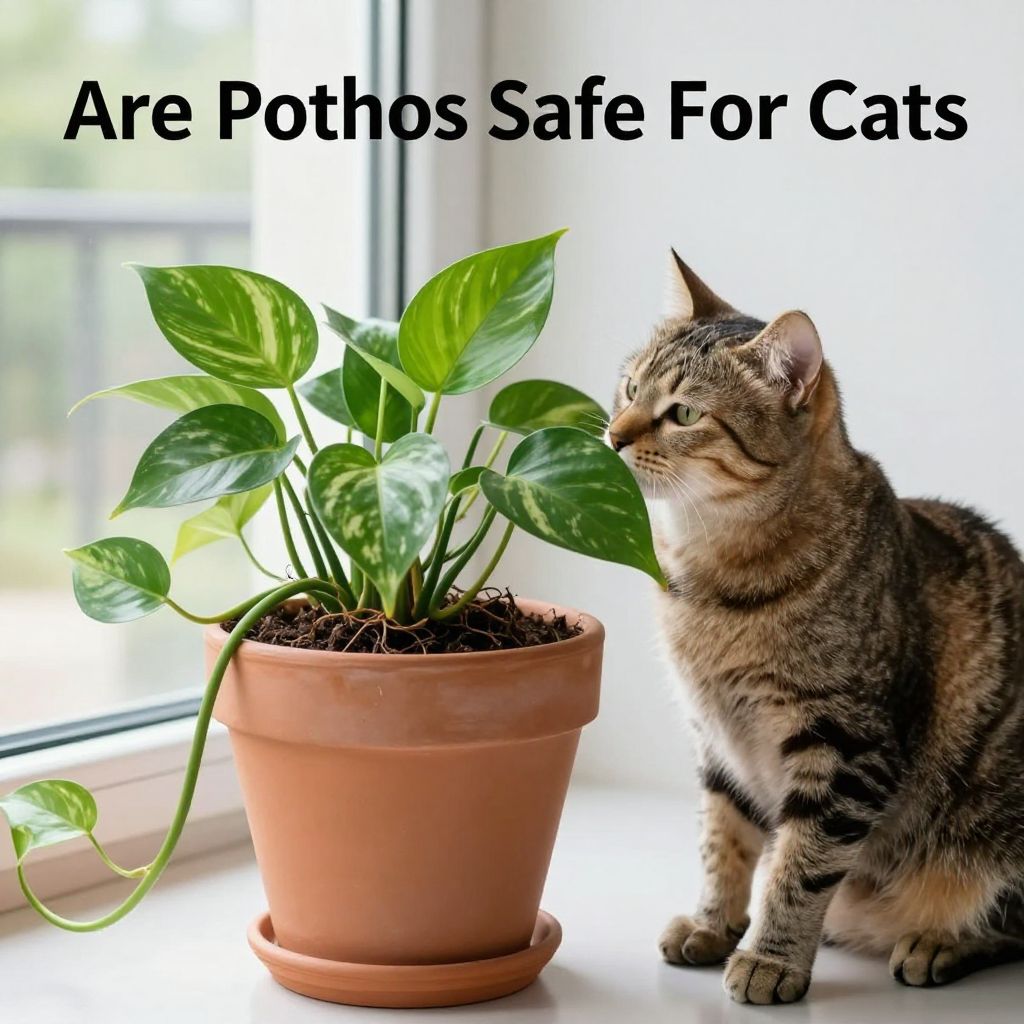
Are pothos safe for cats? If you grow pothos indoors, this is an important question because the plant is popular, easy to care for, and also toxic to pets. The short answer is no: pothos (Epipremnum aureum) is not safe for cats.
If your cat chews pothos leaves or stems, it can cause mouth irritation, drooling, vomiting, and discomfort. The good news is that you can still enjoy this houseplant if you place it carefully, manage access, and know what to do if your cat gets into it.
Are pothos safe for cats?
No. Pothos contains insoluble calcium oxalate crystals that can irritate a cat’s mouth, tongue, and throat. Even a small nibble can cause pain, drooling, pawing at the mouth, vomiting, and reduced appetite, so it is best to treat pothos as a toxic houseplant and keep it out of reach.
Why pothos is risky around cats
Pothos is one of the most common indoor vines because it tolerates low light, irregular watering, and average home conditions. Unfortunately, those same traits make it a frequent choice for homes with pets, which increases the chance of accidental chewing.
What happens if a cat eats pothos?
The plant’s crystal-like compounds can cause immediate irritation rather than a delayed poisoning effect. Most cats will show signs quickly after chewing, especially if they only mouthed the leaves.
- Drooling or foaming at the mouth
- Pawing at the face or mouth
- Vomiting
- Reduced interest in food or water
- Visible mouth discomfort
If your cat has trouble breathing, becomes very lethargic, or cannot keep water down, contact a veterinarian promptly.
What to do if your cat chews pothos
Stay calm and remove any plant pieces from your cat’s mouth if you can do so safely. Then offer fresh water and watch for symptoms. Do not try home remedies unless your veterinarian tells you to.
- Move the plant out of reach right away.
- Check whether your cat only chewed it or swallowed a noticeable amount.
- Rinse the mouth gently with water only if your cat allows it.
- Monitor for drooling, vomiting, or refusal to eat.
- Call your vet or a pet poison hotline for guidance if symptoms appear or the amount eaten is unclear.
Important: If you have more than one houseplant, identify the plant before calling for help. Many common foliage plants are toxic, and correct identification makes advice more accurate.
How to grow pothos more safely in a cat household
If you want to keep pothos, focus on placement and access control. The goal is not to make the plant “safe,” but to reduce the chance that your cat can reach it.
Best placement ideas
- Hang it from a ceiling hook well above jumping height.
- Place it in a room your cat cannot enter.
- Use a high shelf with no nearby launch points.
- Avoid low tables, window ledges, and plant stands that are easy to climb.
Remember that some cats are excellent climbers. A high shelf may not be enough if nearby furniture creates a path upward.
Training and deterrents
You can also reduce interest by giving your cat better options. Cats often chew plants out of curiosity, boredom, or to investigate texture.
- Provide cat grass or another pet-safe chew option.
- Keep play and enrichment consistent so your cat is less likely to explore plants.
- Use physical barriers rather than relying only on sprays or scent deterrents.
Deterrent sprays may help some households, but they are not reliable enough to protect a toxic plant on their own.
Pothos care basics for indoor growing
Even if you are growing pothos mainly for its looks, healthy plants are less likely to drop leaves or trail onto reachable surfaces. Good care also makes it easier to keep the plant in a controlled location.
Light
Pothos grows best in bright, indirect light, but it also tolerates lower light indoors. In lower light, growth slows and stems may stretch, which can make the plant harder to manage.
Water
Let the top inch or two of potting mix dry before watering again. Overwatering is a common mistake and can lead to root rot, yellowing leaves, and a weak plant that sheds foliage.
Soil and drainage
Use a well-draining indoor potting mix and a container with drainage holes. A pot that holds excess water can quickly create problems, especially in cooler rooms or during winter when evaporation slows.
Temperature and humidity
Normal indoor temperatures usually suit pothos well. Avoid placing it where cold drafts, heating vents, or very dry air will stress the plant.
Pruning and maintenance to keep pothos tidy
Regular pruning helps you keep pothos compact and less accessible to pets. It also encourages fuller growth if you want a bushier plant.
- Trim long vines back to a leaf node.
- Remove yellowing or damaged leaves promptly.
- Rotate the pot occasionally so growth stays even.
- Check for fallen leaves on the floor, where a cat may investigate them.
Use clean, sharp pruners or scissors. Wipe blades between cuts if you are removing diseased tissue or moving between different plants.
Common pothos problems and how they affect pet safety
Most pothos problems are plant-care issues, but they can indirectly affect your cat if they make the plant drop leaves or become easy to reach.
Leggy growth
Long, sparse stems usually mean the plant needs brighter indirect light. Prune it back and move it to a better-lit spot if possible.
Yellow leaves
Yellowing often points to too much water, poor drainage, or low light. Remove affected leaves and adjust care before the plant weakens further.
Pests
Mealybugs, spider mites, and scale can appear on indoor pothos. Treat infestations early with gentle methods suited to houseplants, and keep any sprays or treatments away from pets until dry and safe according to the product label.
Safer plant alternatives if you have cats
If your cat is a known plant chewer, choosing pet-safe plants may be the simplest solution. A safer plant collection reduces stress for you and lowers the chance of an emergency.
- Spider plant (Chlorophytum comosum)
- Areca palm (Dypsis lutescens)
- Parlor palm (Chamaedorea elegans)
- Some ferns, depending on the species
Always confirm the exact plant species before buying, since common names can be confusing and not every fern or palm is equally suitable.
Indoor vs. outdoor pothos considerations
Pothos is mainly grown as a houseplant in many climates, but some gardeners move it outdoors in warm weather. If you do, the cat-safety issue does not change.
Outdoor placement can make access harder to control because cats may encounter the plant in patios, porches, or sheltered garden corners. If you move pothos outside seasonally, place it where pets cannot reach it and bring it back in before cool weather if your climate is not suitable.
Quick checklist for cat owners
- Assume pothos is toxic to cats.
- Keep it out of chewing range.
- Use hanging baskets or closed rooms, not low shelves.
- Provide a pet-safe alternative to chew.
- Watch for drooling, vomiting, or mouth irritation after exposure.
- Call a veterinarian if symptoms are significant or you are unsure how much was eaten.
Conclusion
Pothos is a beautiful, low-maintenance houseplant, but it is not safe for cats. If you already grow it, the best approach is careful placement, regular pruning, and a plan for what to do if your cat chews it. If your cat is especially curious, consider switching to pet-safe plants instead.
For more practical houseplant guidance, you may also want to read about indoor houseplant care basics and pet-safe houseplants for homes with cats.