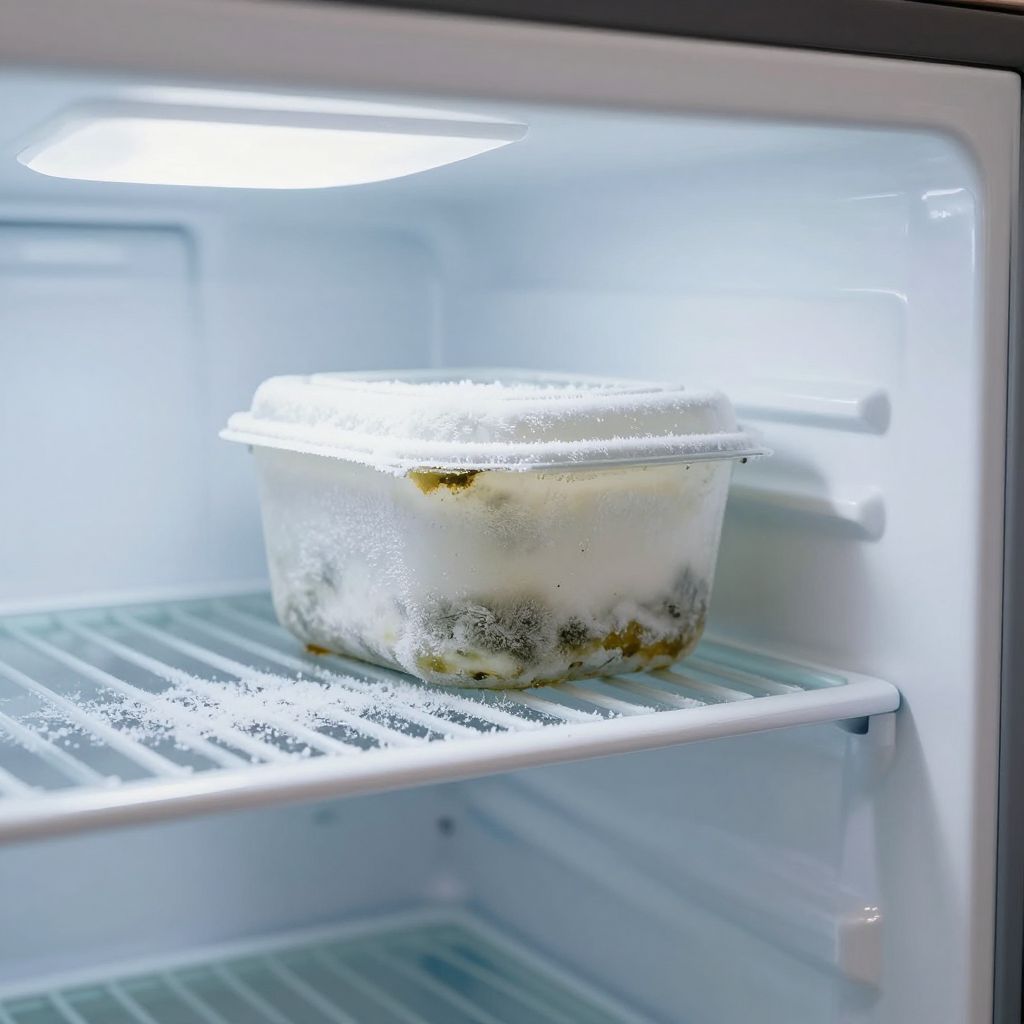
Can mold grow in the freezer? If you’ve found fuzzy spots on frozen food, containers, or the inside of your freezer, it’s a real concern. The short answer is yes, but not usually in the way it does at room temperature.
Mold can survive in a freezer and sometimes grow slowly on food or residue if conditions are just right. The good news is that a clean, cold, dry freezer is a poor place for mold, and you can prevent most problems with good maintenance and proper food storage.
Can mold grow in the freezer?
Yes, mold can grow in the freezer, but freezing temperatures greatly slow or stop most mold activity. Mold is more likely to appear on food that was already contaminated, on spills, or in a freezer that has moisture, poor airflow, or temperature swings. A well-maintained freezer is usually inhospitable to active mold growth.
Why mold shows up in a freezer
Mold needs moisture, organic material, and time. A freezer removes one of those key ingredients by keeping temperatures low, but it does not sterilize food or surfaces.
Common reasons mold appears
- Food was already contaminated before freezing.
- Spills or crumbs were left inside the freezer.
- Containers were not sealed tightly, allowing moisture and air exchange.
- The freezer temperature is too warm or fluctuates often.
- Frost buildup traps moisture around food and packaging.
Mold spores are common in the environment, so the issue is usually not the freezer itself. It is the combination of moisture, residue, and storage problems that gives mold a chance.
What freezer conditions stop mold from spreading?
Most household freezers should be kept at 0°F (-18°C) or colder. At that temperature, mold growth is strongly slowed, though not all spores are destroyed. Dry, sealed storage and stable temperatures matter just as much as the number on the dial.
Best conditions for prevention
- Keep the freezer at a steady 0°F (-18°C).
- Use airtight, freezer-safe containers or bags.
- Remove spills quickly before they freeze into sticky residue.
- Do not overload the freezer so much that air cannot circulate.
- Limit frequent door opening, which causes condensation and temperature swings.
If your freezer is in a garage, basement, or other unconditioned space, seasonal temperature changes can affect performance. In warm weather, check that it is still holding a safe freezing temperature.
Is moldy frozen food safe to eat?
In most cases, no. If you see mold on frozen food, especially soft foods, cooked leftovers, bread, fruit, or anything with visible moisture, it is safest to discard it. Freezing does not make moldy food safe; it only pauses growth.
When to throw it out
- Food has visible mold, slime, or an off smell after thawing.
- The package was damaged, open, or badly freezer-burned.
- The food was thawed and refrozen.
- You cannot tell how long it sat with a temperature problem.
For gardeners who freeze harvests, this matters with berries, tomatoes, peppers, herbs, and blanched vegetables. If you freeze produce from the garden, use clean hands, clean tools, and dry containers to reduce contamination before storage.
How to clean mold from a freezer safely
If you find mold in the freezer, clean it promptly before it spreads to packaging and seals. The goal is to remove spores, moisture, and food residue without leaving behind odors or dampness.
Step-by-step cleaning
- Unplug the freezer if possible and move food to another cold storage area.
- Discard any food that shows mold, leakage, or broken packaging.
- Remove shelves, bins, and drawers if they can be washed safely.
- Wash surfaces with warm water and mild dish soap.
- Rinse and dry thoroughly.
- If needed, wipe with a food-safe sanitizer approved for kitchen surfaces, following the label directions.
- Leave the door open briefly so the interior dries completely before restocking.
Do not spray harsh cleaners directly onto food-contact surfaces unless the product label says it is safe for that use. Moisture left behind can refreeze and create the same problem again.
How to prevent mold in freezer-stored garden produce
If you freeze vegetables, fruit, herbs, or prepared garden harvests, prevention starts before the food goes into the freezer. Clean handling and proper packaging make a big difference.
Good storage habits for homegrown produce
- Wash produce only when appropriate, then dry it well before freezing.
- Blanch vegetables that benefit from blanching before freezing, then cool and dry them thoroughly.
- Use freezer-grade bags or rigid containers designed for cold storage.
- Press out excess air to reduce frost and moisture buildup.
- Label packages so older food gets used first.
- Freeze in practical portion sizes to avoid repeated thawing and refreezing.
For herbs, a small amount of surface moisture can lead to clumping, frost, and deterioration. Dry herbs well before freezing, and store them in small sealed portions so you only expose what you need.
How to tell mold from freezer burn or frost
Not every white patch in the freezer is mold. Freezer burn and frost are common and can look confusing, especially on packaged garden produce.
Quick comparison
- Mold: fuzzy, powdery, or spotty growth; may be green, white, black, or gray.
- Frost: thin ice crystals or a snowy coating on surfaces and packaging.
- Freezer burn: dry, pale, leathery, or discolored patches on food from air exposure.
If the growth looks fuzzy or spreads in patches, treat it as mold. If it is only ice crystals on the outside of a bag, the issue is usually moisture movement, not mold.
Common freezer mistakes that encourage mold
Most freezer mold problems come from storage habits, not from the appliance alone. A few small changes can prevent repeat issues.
What to avoid
- Putting warm food straight into the freezer in a sealed container.
- Storing damp produce without drying it first.
- Using torn bags or cracked containers.
- Leaving spilled juice, soil, or plant debris inside the freezer.
- Ignoring a faulty door seal that lets in humid air.
- Overfilling the freezer so cold air cannot circulate.
Gardeners who freeze a lot of harvests often benefit from a simple routine: cool, dry, package, label, and freeze. That sequence reduces moisture and helps preserve quality.
When mold in the freezer points to a bigger problem
If mold keeps returning, the freezer may have a maintenance issue. Repeated frost, condensation, or odor usually means the appliance is not staying dry enough.
Check these trouble spots
- The door gasket is cracked, loose, or dirty.
- The freezer is overpacked or the vents are blocked.
- The temperature setting is too high.
- The appliance is cycling too often or losing power.
- There is hidden leakage from a package or ice tray.
If you notice persistent moisture, test the temperature with an appliance thermometer. A stable freezer should hold near 0°F (-18°C). If it cannot, the contents may be at risk even if they still feel frozen.
Practical freezer care tips for gardeners
Freezers are a useful tool for preserving the harvest, but they work best when treated like part of your food-storage system. Cleanliness and consistency protect both flavor and safety.
Simple maintenance routine
- Wipe up spills as soon as you notice them.
- Check seals regularly for cracks or dirt.
- Rotate older frozen produce to the front.
- Keep a small inventory so food does not sit forgotten for months.
- Defrost and deep-clean the freezer when frost buildup becomes noticeable.
For homegrown produce, this routine also helps preserve texture and color. The less moisture and air exposure your harvest gets, the better it will hold up.
Bottom line: can mold grow in the freezer?
Yes, mold can grow in the freezer, but usually only when moisture, food residue, or poor storage gives it a foothold. A cold, clean, dry freezer slows mold dramatically, and proper packaging protects your stored harvests.
If you find mold, clean the freezer, inspect the food, and fix the moisture problem before restocking. For more help keeping your harvest in good condition, see related guidance on storing garden produce and preventing freezer burn.
Leave a Reply