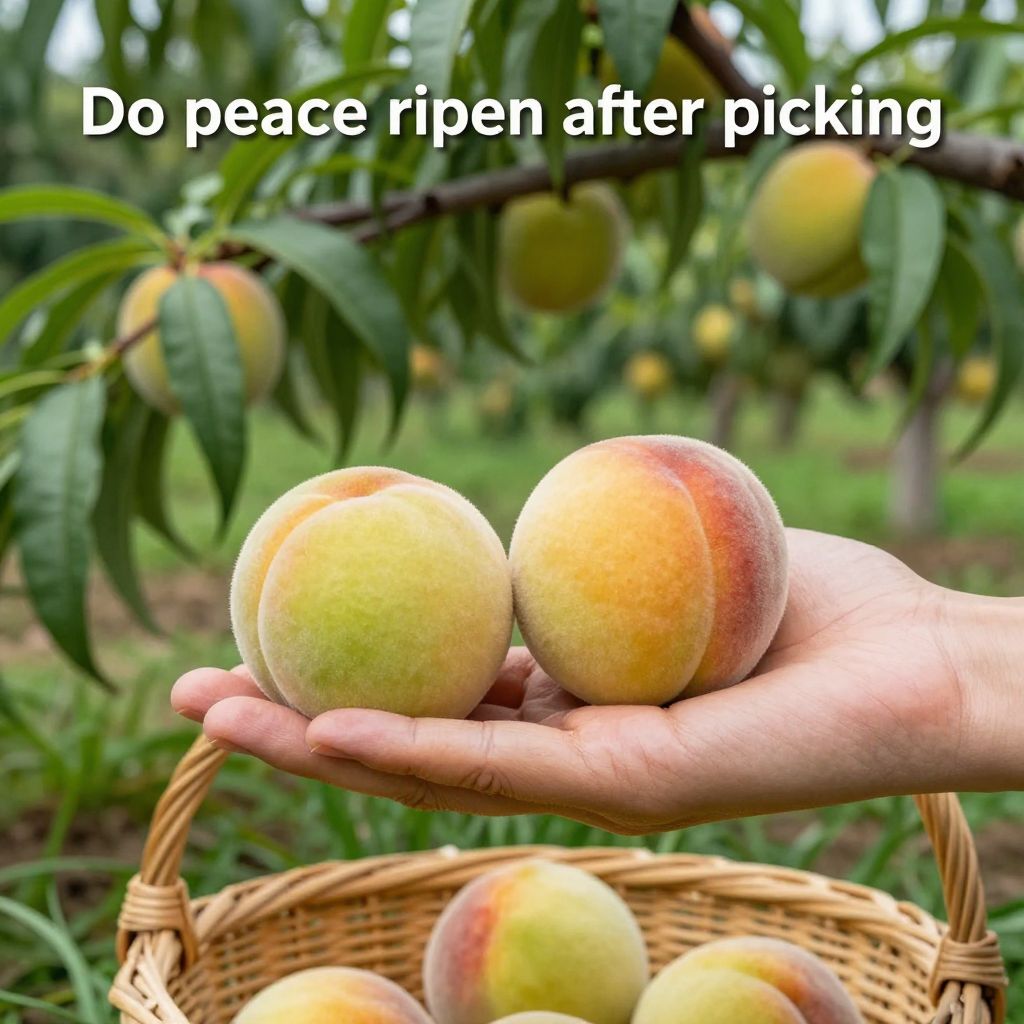
Do peaches ripen after picking? Yes—if they were harvested at the right stage, peaches can soften and become juicier off the tree. But they do not improve much in sweetness after harvest, so the best flavor still comes from fruit picked when mature, not hard and green.
If your peaches are still firm, you can often finish ripening them at room temperature. The key is knowing when a peach is mature enough to ripen off the tree, how to handle it gently, and how to grow fruit that reaches better flavor before harvest.
Do peaches ripen after picking?
Peaches are climacteric fruit, which means they continue to soften after harvest and can develop better aroma and eating texture at room temperature. However, they do not gain much more sugar once picked, so a peach picked too early may soften but still taste bland.
How to tell if peaches are ready to pick
The best peaches for off-tree ripening are mature, not immature. Look for fruit that has developed its full ground color, a slight give near the stem, and a fragrant peach smell. The background color should shift from green to creamy yellow or golden, depending on the variety.
Signs a peach is mature enough
- Color change: the green background fades to yellow, cream, or gold.
- Softness: the fruit yields slightly to gentle pressure, especially near the stem end.
- Aroma: ripe peaches usually smell sweet and fruity.
- Easy detachment: a mature peach often comes off with a gentle lift and twist.
Signs it was picked too early
- Hard, green, and odorless fruit
- Very tart or starchy flavor even after softening
- Poor color development and little fragrance
If you harvest too early, the peach may never taste fully sweet. It can soften, but the flavor will often remain flat.
How to ripen peaches after picking
Place peaches in a single layer at room temperature, out of direct sun. For faster ripening, put them in a paper bag with a banana or apple, which can increase ethylene exposure. Check daily so they do not become over-soft or bruised.
Best ripening method
- Sort out damaged or bruised fruit first.
- Lay peaches in a shallow bowl, tray, or paper bag in a cool indoor spot.
- Keep them at room temperature, not in the refrigerator.
- Check firmness and smell once or twice a day.
- Move ripe peaches to the refrigerator if you need to hold them for a few extra days.
Do not stack peaches deeply. Pressure points cause bruising, and bruised fruit ripens unevenly.
What not to do
- Do not leave peaches in a hot car or on a sunny windowsill.
- Do not refrigerate unripe peaches if you want them to soften properly.
- Do not wash them until you are ready to eat or use them.
How long do peaches take to ripen off the tree?
Timing depends on how mature the peach was at harvest and on room temperature. Mature peaches may soften in 1 to 3 days, while firmer fruit can take several days longer. Cooler rooms slow the process; warm rooms speed it up but can also increase bruising and spoilage.
Once peaches feel ripe, refrigerate them if you are not eating them right away. Cold storage slows further softening and helps preserve quality for a short period.
Why peaches sometimes taste disappointing after picking
When peaches are harvested too early, they may soften without developing enough flavor. This is one of the most common reasons home gardeners think peaches “didn’t ripen.” In reality, the fruit matured poorly on the tree before harvest.
Common causes of poor flavor
- Picking before the fruit reached full maturity
- Too much shade in the canopy
- Overcropped trees carrying more fruit than they can size and sweeten well
- Irregular watering during fruit development
- Low soil fertility or poor drainage
Sweetness and aroma are built on the tree. Off-tree ripening can improve texture, but it cannot fully replace good growing conditions.
Growing peaches for better ripening and flavor
If you want peaches that ripen well after picking, focus on tree care during the growing season. Healthy trees produce fruit with better size, color, and sugar development. Sun, airflow, pruning, and consistent moisture all matter.
Sunlight and site selection
Peach trees need full sun for the best fruit quality. Choose a site with at least 6 to 8 hours of direct sun and good air movement. Avoid low spots where cold air and frost settle, especially in spring.
Soil and drainage
Peaches perform best in well-drained soil. Heavy, waterlogged ground can stress roots and reduce fruit quality. If your soil is clay-heavy, improve drainage with organic matter and proper site preparation rather than relying on frequent shallow watering.
- Work in compost to improve soil structure.
- Avoid planting where water stands after rain.
- Use mulch to conserve moisture, but keep it a few inches away from the trunk.
Watering for quality fruit
Peach trees need steady moisture during fruit development, especially during dry spells. Irregular watering can lead to small fruit, poor flavor, or fruit drop. Water deeply when the top few inches of soil dry out, adjusting for rainfall, soil type, and tree age.
Young trees need more frequent attention than established trees. Mature trees benefit from deep, less frequent watering that encourages roots to grow downward.
Pruning and thinning
Pruning helps light reach the fruiting wood, which improves color and flavor. Thin fruit early so the tree is not overloaded. When too many peaches remain on a branch, individual fruit often stays smaller and less sweet.
- Prune during the dormant season or according to your local peach-growing practice.
- Remove crowded, crossing, or weak shoots.
- Thin fruit when it is still small enough to reduce strain on the tree.
Good thinning is one of the best ways to improve peach quality. Fewer peaches often means larger, better-flavored fruit.
Harvesting peaches the right way
Harvest gently to avoid bruising and to keep the stem end intact. Lift the fruit and twist slightly; ripe peaches should release with minimal force. If you have to yank hard, the fruit is probably not ready.
Harvest checklist
- Pick in the cool part of the day if possible.
- Handle fruit with dry hands.
- Place peaches in a shallow container, not a deep bucket.
- Keep fruit out of direct sun after picking.
If birds, insects, or splitting fruit are a problem, harvest as soon as the peaches are mature enough to finish ripening indoors.
Common pests and diseases that affect peach ripening
Pests and diseases can reduce fruit quality before harvest, which makes off-tree ripening less successful. Damaged fruit may soften, but it often spoils quickly or develops off-flavors.
Problems to watch for
- Brown rot: causes fruit to soften, spot, and decay quickly, especially in humid weather.
- Peach leaf curl: weakens the tree and can reduce overall productivity.
- Insect damage: punctures and feeding wounds invite rot.
- Bird pecking: bruised areas ripen unevenly and spoil faster.
Remove damaged fruit promptly and keep the tree clean beneath the canopy. Good pruning and airflow help reduce disease pressure.
Can you ripen peaches in the refrigerator?
Not really. Refrigeration slows ripening rather than starting it. If peaches are still firm, leave them at room temperature first. Once ripe, cold storage can help preserve texture for a short time, but long refrigeration may dull flavor and aroma.
What to do if your peaches never soften
If peaches stay hard, they were likely picked too early or stored too cold before ripening. Very immature fruit may never become truly good eating fruit, even if it softens a little.
Troubleshooting steps
- Check whether the fruit was mature at harvest.
- Move it to room temperature immediately.
- Place it in a paper bag with a ripe banana or apple.
- Give it a few days and monitor daily.
- If flavor remains weak, use the experience to time next season’s harvest later.
For future crops, watch the tree closely as harvest approaches. Peaches often look ready before they are truly mature.
Conclusion: the short answer for home gardeners
Yes, peaches ripen after picking, but only if they were harvested mature enough. Let them soften at room temperature, avoid chilling them too soon, and pick future crops when the background color, fragrance, and slight give tell you the fruit is ready. For more on fruit tree care, see fruit tree pruning basics and stone fruit care tips.
Leave a Reply