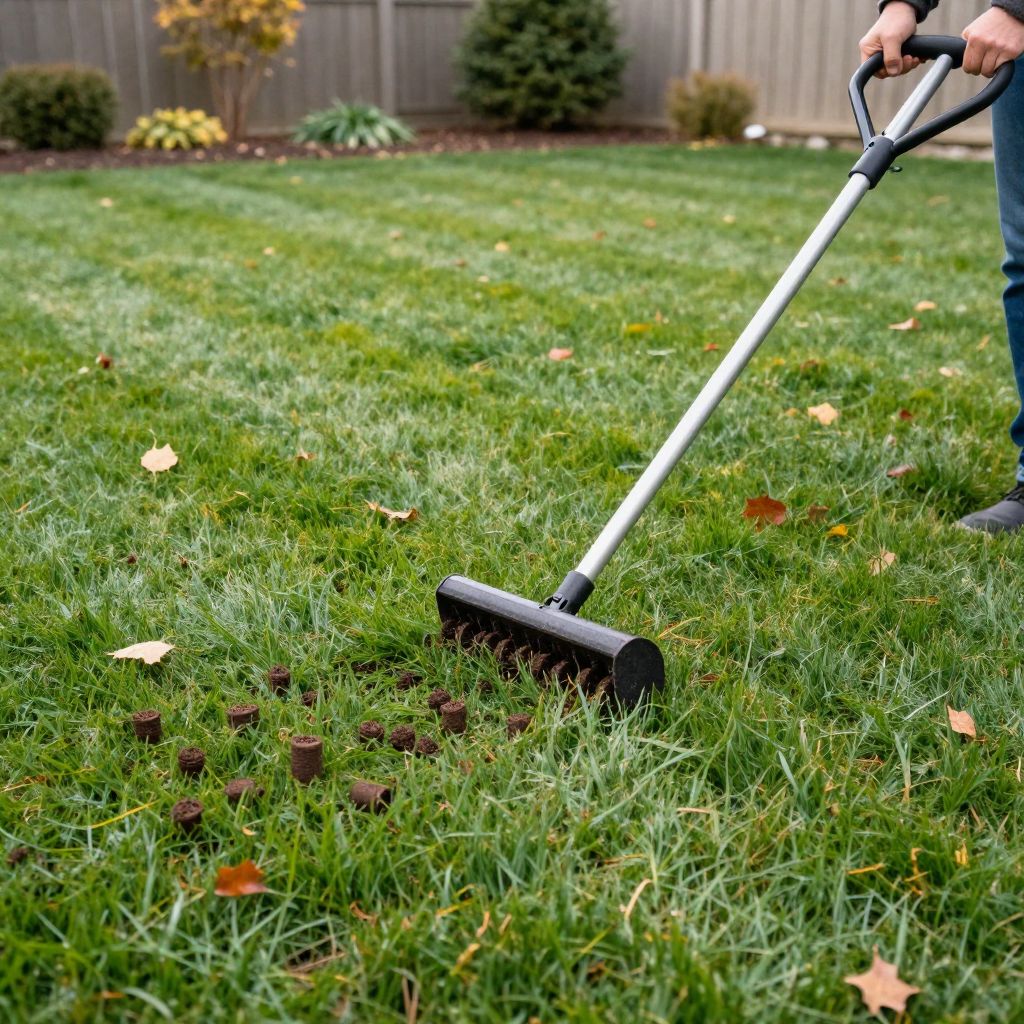
When should I aerate my lawn? The best time depends on your grass type and when it is actively growing. In general, aerate cool-season lawns in early fall or spring, and warm-season lawns in late spring to early summer. Aeration works best when the soil is slightly moist, not soggy or bone dry.
If your lawn gets heavy foot traffic, feels hard underfoot, or puddles after rain, aeration can make a big difference. It opens the soil so air, water, and nutrients can reach the roots more easily, helping turf thicken and recover.
When should I aerate my lawn?
Aerate when your grass is in its main growth period and can recover quickly: cool-season grasses such as Kentucky bluegrass, perennial ryegrass, and tall fescue usually do best in early fall, while warm-season grasses such as bermudagrass, zoysiagrass, and St. Augustinegrass are best aerated in late spring through early summer. Avoid aerating during heat stress, drought, or dormancy.
Why aeration matters
Over time, lawns develop soil compaction, especially in high-traffic areas, clay soils, and newly built yards. Compacted soil limits root growth and slows the movement of water and oxygen.
Aeration creates small openings in the turf and soil, which can improve drainage, reduce runoff, and help fertilizer, compost, and overseeding work more effectively.
Signs your lawn likely needs aeration
- Water pools or runs off instead of soaking in
- The lawn feels hard when you walk on it
- Grass thins out in traffic lanes or play areas
- Roots are shallow and turf dries out quickly
- You have heavy clay soil or construction fill
- Thatch is present, but the main issue seems to be compaction
Best timing by grass type
Cool-season lawns
For cool-season grasses, aim for early fall if possible. Soil is still warm, weeds are less aggressive, and the grass can fill in before winter. Spring is the second-best option if fall is not practical, but weed pressure and summer heat can make recovery less predictable.
Warm-season lawns
For warm-season grasses, aerate in late spring to early summer after the lawn has fully greened up and is growing strongly. That gives the grass enough time to recover during its active season. Avoid aerating too early in spring, when growth is still slow.
Lawns to avoid aerating at the wrong time
- Do not aerate drought-stressed turf. Wait until the lawn is actively growing and adequately watered.
- Avoid frozen ground. Aeration is ineffective and can damage equipment or turf.
- Do not aerate dormant warm-season grass in cool weather. Recovery will be slow or poor.
- Skip extremely wet soil. You may create deep ruts and smear the soil instead of opening it.
What kind of aeration should you use?
For most home lawns, core aeration is the best choice. A core aerator pulls out small plugs of soil, which relieves compaction more effectively than spike aeration. Spike tools can be useful for very light maintenance, but they often just push soil aside and may increase compaction in tight soils.
Core aeration vs. spike aeration
- Core aeration: Best for compacted lawns, clay soil, and long-term improvement.
- Spike aeration: Better for minor surface opening, but less effective in heavily compacted ground.
If your lawn is severely compacted, one pass may not be enough. In that case, combine aeration with topdressing and overseeding for better results.
How to prepare before aerating
Good preparation helps the machine work properly and reduces turf damage. The soil should be moist enough for the tines to penetrate, but not muddy.
- Mow the lawn a little shorter than usual a day or two before aerating.
- Water lightly if the soil is very dry so the ground is easier to penetrate.
- Mark irrigation heads, shallow utilities, and obstacles so you do not damage them.
- Remove sticks, stones, toys, and debris from the lawn.
- Plan to aerate when the grass can recover in the following weeks.
How to aerate a lawn step by step
You can rent a walk-behind core aerator for most average-sized lawns, or hire a lawn service if the area is large or the soil is especially hard.
- Set the aerator to pull plugs rather than simply poke holes.
- Make one full pass over the lawn in a pattern that covers the entire area.
- For compacted lawns, make a second pass at a right angle to the first.
- Leave the soil plugs on the lawn; they usually break down naturally in a few weeks.
- Water lightly afterward if the soil is dry and the weather is warm.
Tip: Aeration is most effective when it is part of a broader lawn-care plan, not a one-time fix for poor soil.
What to do after aerating
What you do next depends on your lawn’s condition. Aeration creates an opportunity to improve the root zone, especially if you follow it with overseeding or topdressing.
Overseeding after aeration
If the lawn is thin, overseeding right after aeration helps seed contact the soil more effectively. This is especially useful for cool-season lawns in fall or for repairing bare patches in warm-season lawns during active growth.
Topdressing after aeration
A thin layer of compost or screened topsoil can help improve soil structure over time. Spread it lightly so it settles into the holes without burying the grass. Keep the layer thin; too much material can smother turf.
Watering after aeration
Keep the lawn evenly moist while seed germinates or while the turf recovers. Do not flood the area. The goal is steady moisture, not saturated soil.
How often should you aerate?
Most lawns do not need aeration every year, but compacted, high-traffic, or clay-heavy lawns may benefit from annual treatment. Others may only need it every two to three years. The right interval depends on soil type, use, and how quickly compaction returns.
- High traffic or clay soil: often once a year
- Moderate use and decent soil: every 2 to 3 years
- Lightly used, healthy lawn: only when compaction symptoms appear
If you are unsure, test a small section with a screwdriver or soil probe. If it is difficult to push into moist soil, compaction is likely part of the problem.
Common mistakes to avoid
- Aerating during drought or extreme heat
- Working on soggy soil and creating ruts
- Using spike aeration when the lawn really needs core aeration
- Forgetting to overseed thin areas after aeration
- Applying heavy fertilizer immediately after stressing the lawn
- Aerating too late in the season for the grass to recover
Troubleshooting poor results
If your lawn still looks weak after aeration, the issue may be more than compaction. Poor drainage, excessive thatch, shade, low fertility, or turfgrass that is poorly matched to the site can all slow recovery.
If water still sits on the surface after core aeration, the soil may be severely compacted or the yard may have drainage problems that aeration alone cannot solve. In that case, consider adding compost, improving grading, or addressing low spots and runoff patterns.
When aeration is not enough
- Deep shade may require a more shade-tolerant groundcover or turf species
- Persistent puddling may need drainage correction
- Heavy thatch may require dethatching before or along with aeration
- Poor soil structure may improve slowly with repeated topdressing and organic matter
Final takeaways
So, when should you aerate your lawn? Do it when the grass is actively growing, the soil is moist but not wet, and the lawn has time to recover. For most cool-season lawns, that means early fall; for warm-season lawns, late spring to early summer is usually best.
If you want to get the most from the job, combine aeration with overseeding, light topdressing, and steady watering. For more practical lawn care advice, you may also want to read about how to overseed a lawn and how to improve clay soil in the garden.