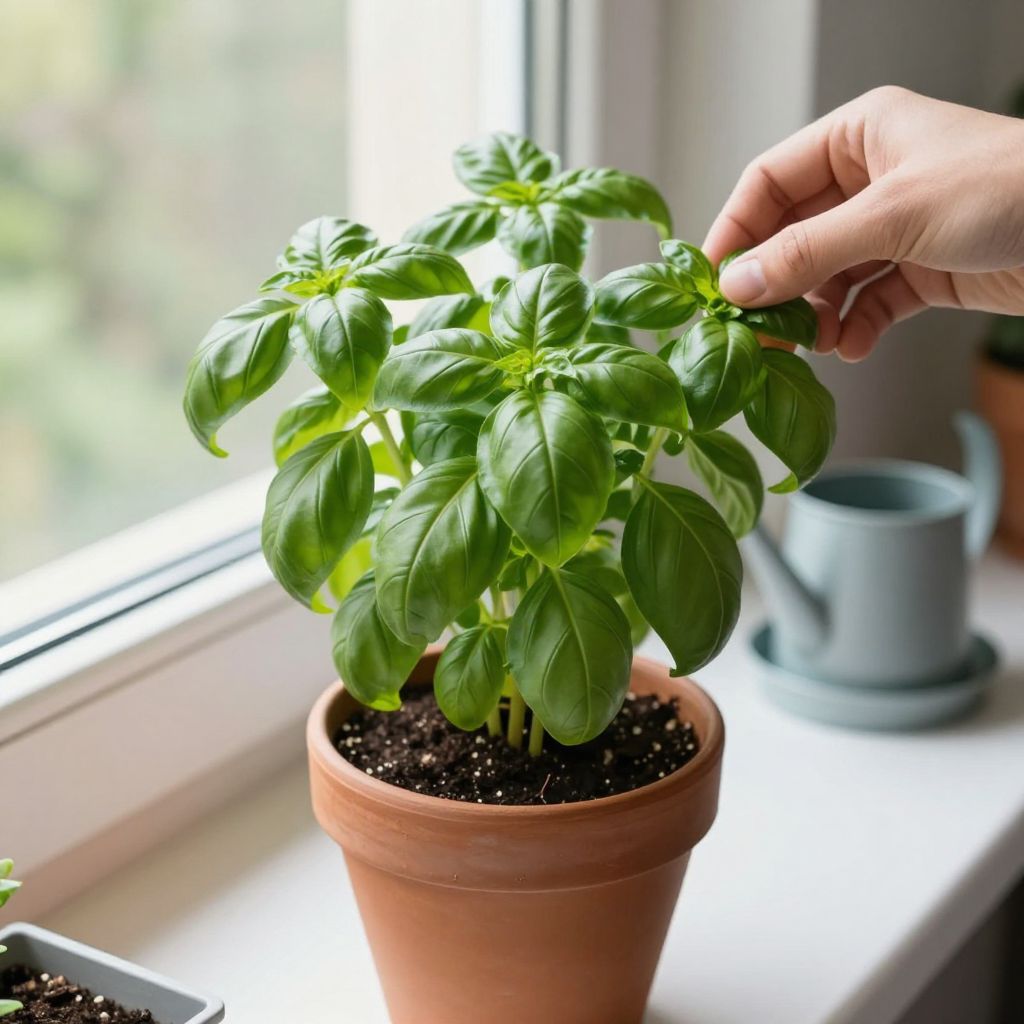
Can you grow basil indoors? Yes—you can, and it can do very well if you give it strong light, warm temperatures, regular pinching, and fast-draining soil. Basil is one of the easiest herbs to keep on a sunny windowsill or under grow lights, but it does need more light and more consistent care indoors than many beginners expect.
The biggest challenge is not keeping basil alive, but keeping it compact, flavorful, and productive. With the right setup, you can harvest fresh leaves for months instead of ending up with a tall, weak plant that flowers too quickly.
Can you grow basil indoors?
Yes, basil (Ocimum basilicum) grows well indoors when it gets at least 6 hours of strong light, warm room temperatures, and evenly moist but not soggy soil. The key is to prevent legginess by pinching it often and to avoid cold drafts, low light, and overwatering.
What basil needs indoors
Basil is a warm-season herb, so indoor growing works best when you can mimic a bright, sheltered summer environment. If any one of the basics is missing—especially light—the plant usually becomes thin, pale, and less flavorful.
Light
Basil is a true sun lover. A south- or west-facing window is often best, but even a bright window may not be enough in winter or in dim homes.
- Best case: 6 to 8 hours of direct sun or very bright light daily.
- Grow lights: A full-spectrum LED placed close enough to keep growth compact can make a big difference.
- Signs of too little light: long stems, small leaves, pale color, and weak flavor.
Temperature and air movement
Basil prefers warmth and dislikes cold windowsills. Keep it away from chilly drafts, air conditioners, and cold glass in winter.
- Ideal indoor temperatures are generally warm room temperatures.
- Sudden cold can slow growth or damage leaves.
- Gentle air circulation helps reduce fungus problems, but avoid blasting the plant with dry heat.
Pot size and drainage
Good drainage is essential. Basil roots resent sitting in water, and indoor pots can stay wet longer than outdoor containers.
- Use a pot with drainage holes.
- A container about 6 to 8 inches wide is a good starting size for one plant.
- If you grow several basil plants together, use a wider container and avoid crowding them.
How to plant basil indoors
You can start basil from seed, buy a young plant, or root cuttings from an existing plant. Seeds are economical, but a nursery plant gives you a faster harvest.
Starting from seed
- Fill a small pot or seed tray with a light, well-draining potting mix.
- Moisten the mix before sowing.
- Scatter seeds lightly and cover them with a thin layer of mix, about 1/8 inch deep.
- Keep the soil evenly moist and warm until germination.
- Move seedlings to brighter light as soon as they emerge.
Thin seedlings if they are crowded. Basil grows better with room to breathe than packed tightly into one pot.
Starting from a store-bought plant
Many grocery-store basil plants are crowded into one pot, which looks full but usually shortens their indoor life. If possible, divide the plant gently into smaller sections and repot them into separate containers.
- Check for roots circling tightly around the pot.
- Use fresh potting mix rather than garden soil.
- Water thoroughly after repotting, then let excess drain away.
Best soil mix
Basil does best in a light potting mix that drains well but still holds some moisture. A quality indoor potting mix is usually enough on its own, though you can improve it with a little compost if the mix is very lean.
- Avoid heavy garden soil indoors.
- Do not use a mix that stays soggy for long periods.
- If the potting mix is dense, blend in perlite or another airy amendment.
Watering basil indoors the right way
Watering is one of the most common indoor basil problems. The goal is steady moisture, not constant wetness. Let the top inch of soil dry slightly, then water thoroughly until excess runs from the drainage holes.
How to tell when to water
- Touch the soil with your finger rather than following a strict schedule.
- Water when the top layer feels dry but the soil below is still slightly moist.
- If the pot feels very light and the leaves droop in the heat, the plant may be thirsty.
Common watering mistakes
- Overwatering: causes yellow leaves, limp stems, and root rot.
- Underwatering: causes wilting, crispy edges, and slow growth.
- Leaving water in saucers: keeps roots too wet.
If your basil keeps yellowing even though the soil is damp, check drainage and reduce watering frequency. If the plant dries out too fast, it may need a larger pot or a brighter but less heat-stressed location.
How to keep basil bushy indoors
Indoor basil often grows tall and spindly unless you prune it regularly. Pinching the tips is the simplest way to encourage branching and a fuller plant.
Pinching and pruning
- Wait until the plant has several sets of true leaves.
- Pinch or snip the top growing tip just above a pair of leaves.
- New side shoots will form below the cut.
- Repeat often as the plant grows.
Do not let basil flower if you want leafy growth. Once flower buds appear, remove them promptly so the plant puts energy into leaves instead of seed production.
Harvesting leaves
Harvesting is part of good basil care, not a setback. Regular cutting keeps the plant productive and compact.
- Take leaves from the top or cut stems just above a leaf pair.
- Never remove all the leaves from one stem.
- Leave enough foliage for the plant to keep growing.
Feeding basil indoors
Basil in containers uses up nutrients faster than basil grown in the ground. Still, too much fertilizer can create lush but weak growth with less flavor, so feed lightly and only when needed.
- If your potting mix already contains compost or slow-release nutrients, you may not need to feed right away.
- If growth slows and leaves look pale, a mild balanced fertilizer can help.
- Follow the product label and avoid overfeeding.
For most indoor gardeners, the safest approach is modest feeding during active growth and less or none during low-light winter periods.
Common pests and diseases
Indoor basil can still run into pest and disease problems, especially when the air is still or the soil stays too wet. Catching issues early makes them much easier to manage.
Common pests
- Aphids: small soft-bodied insects on tender growth.
- Spider mites: tiny pests that can cause stippling and fine webbing in dry air.
- Whiteflies: small flying insects that may rise from the plant when disturbed.
Rinse pests off with water, remove badly infested leaves, and improve air movement. If needed, use a gentle insecticidal soap labeled for edible plants, following the label carefully.
Common diseases
- Powdery mildew: a white, dusty coating on leaves, often from poor airflow.
- Damping off: seedlings collapse when soil stays too wet and conditions are cool.
- Root rot: caused by waterlogged soil and poor drainage.
To prevent disease, use clean pots, fresh potting mix, and good drainage. Water the soil, not the leaves, and avoid crowding plants too tightly together.
Propagating basil indoors
If you already have a healthy basil plant, cuttings are an easy way to create new plants. This is especially useful when a plant starts to get woody or when you want a backup in case one pot declines.
Simple stem cutting method
- Cut a 4- to 6-inch stem just below a leaf node.
- Remove the lower leaves.
- Place the stem in water or directly into moist potting mix.
- Keep it warm and bright, but out of harsh direct sun at first.
- Transplant once roots are well formed, if rooting in water.
Fresh cuttings often root quickly in warm indoor conditions, but they still need good light afterward to grow into sturdy plants.
Why indoor basil sometimes fails
Most indoor basil problems come from a few predictable causes. If you know what to look for, you can correct the issue before the plant declines.
Leggy, weak growth
This usually means the plant needs more light. Move it closer to a brighter window or use a grow light, then pinch the stems back to encourage branching.
Yellow leaves
Yellowing can mean overwatering, poor drainage, low light, or nutrient depletion. Check the soil first, then the light level, and only feed if the plant is actively growing and otherwise healthy.
Bitter or poor flavor
Basil flavor drops when the plant is stressed, too old, flowering, or growing in low light. Regular pruning and strong light help maintain better taste and aroma.
Sudden wilting
Wilting can happen from dry soil, root damage, or heat stress near a sunny window. Check moisture and make sure the pot is not overheating against hot glass.
Seasonal care for indoor basil
Indoor basil can grow year-round, but its needs change with the seasons. In bright, warm months, it may grow quickly and need more frequent watering and pruning. In winter, growth often slows because daylight is weaker and shorter.
- In low light, reduce watering because the plant uses less moisture.
- Keep the plant away from cold windows at night.
- Expect slower growth unless you supplement with a grow light.
If your home is naturally dim in winter, it may be easier to keep one small basil plant healthy than to maintain a large one.
Best practices for long-term success
To keep basil going indoors for as long as possible, focus on consistency rather than perfection. Basil responds best to steady light, warmth, and regular harvesting.
- Use a pot with drainage holes.
- Give the plant as much light as you can.
- Pinch often to keep it compact.
- Water only when the soil begins to dry at the top.
- Repot if roots fill the container or growth stalls.
Conclusion
So, can you grow basil indoors? Absolutely—and with the right light, drainage, and pruning, it can become one of the most rewarding herbs on your windowsill. Start with one healthy plant or a few seeds, then adjust your care based on how quickly the soil dries and how strongly the plant grows.
For more indoor herb success, you may also want to read about how to grow parsley indoors and best herbs for a sunny windowsill.