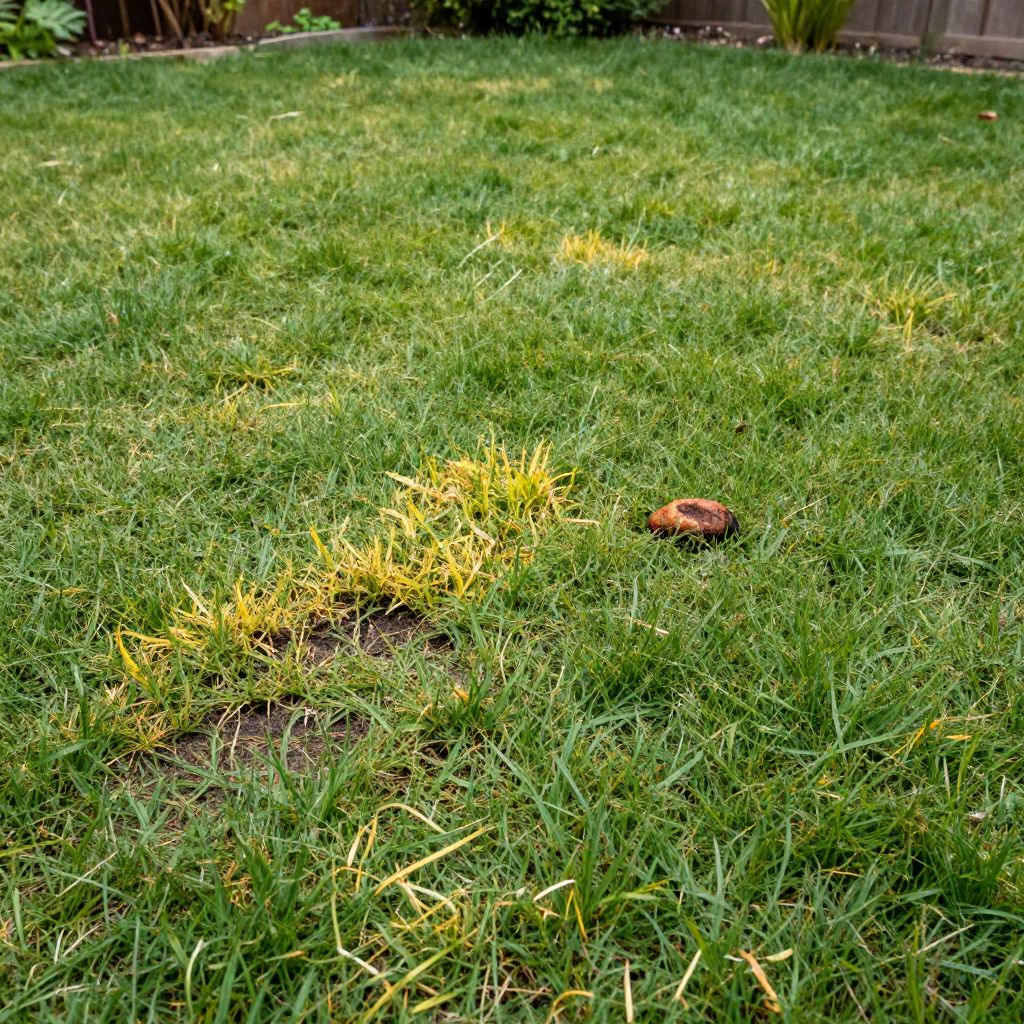
Does dog poop kill grass? It can, especially when the waste is left in one spot, repeated over the same area, or not cleaned up quickly. Dog feces are high in nitrogen and can burn turf, while the salt and acidity in urine often cause the more obvious brown patches.
The good news is that most lawns can recover if you act early. With prompt cleanup, light soil care, and the right reseeding or patch repair, you can usually restore damaged grass and reduce repeat injury.
Does dog poop kill grass?
Yes, dog poop can damage or kill grass if it sits on the lawn long enough, especially in warm weather. Fresh piles block sunlight and air, smothering blades underneath, and as waste breaks down it can create harsh conditions for turf. The surrounding grass may turn yellow or brown, then thin out.
Why dog waste damages lawns
Dog waste affects grass in a few different ways, and it helps to know which problem you are seeing before you try to fix it.
1. Smothering and shade
A pile of feces physically covers the grass. Even a small mound can flatten blades and prevent light from reaching them. If it stays there for days, the grass underneath often dies from lack of light and airflow.
2. High nitrogen and salts
Dog poop contains concentrated nutrients, but too much of a good thing is still too much. In one spot, the breakdown products can burn turf roots and leaves, leaving a scorched patch or thinning the crown.
3. Soil contamination and compaction
Repeated droppings in the same area can change the soil surface, especially if the ground is already compacted or poorly drained. That makes it harder for grass roots to recover and easier for bare spots to expand.
How to tell if dog poop is the real cause
Not every brown patch is caused by dog waste. Before you reseed, check the pattern and the site conditions so you do not treat the wrong problem.
- Localized round patches often point to waste sitting in one place.
- Yellowing around the edge can happen as turf is stressed by nutrients and moisture changes.
- Repeated damage in the same route or potty spot usually means the area needs protection or redesign.
- Patchy grass in shade, heavy traffic, or poor drainage may be a mix of causes, not just dog poop.
What to do right after dog poop lands on the lawn
Fast cleanup is the best way to protect grass. The longer waste remains, the more likely it is to stain, smother, or burn the turf.
- Remove the waste promptly with a bag, scoop, or gloved hand tool.
- Lift it cleanly rather than dragging it across the grass, which can smear the area.
- Rinse the spot lightly with water if the area is small and you want to dilute residue. Avoid flooding clay soil or creating runoff.
- Check the turf after a few days for yellowing, thinning, or dead blades.
If the grass still looks healthy, no further action may be needed. If the area is already browned or bare, move on to patch repair.
How to repair grass damaged by dog poop
Repair depends on whether the grass is merely stressed or actually dead. If the crown is alive, it may fill back in on its own. If not, you will need to renovate the spot.
For lightly damaged grass
- Rake out dead blades gently.
- Water the spot deeply once or twice over the next week if the soil is dry.
- Avoid heavy foot traffic until the turf perks up.
- Wait and watch for new growth before reseeding.
For bare or dead patches
- Remove all dead grass and any remaining waste residue.
- Loosen the top 1 to 2 inches of soil with a hand rake or cultivator.
- Mix in a small amount of finished compost if the soil is poor or compacted.
- Level the spot so water does not pool.
- Seed with a grass type suited to your lawn conditions, or patch with sod if you need faster coverage.
- Keep the surface evenly moist until seedlings establish.
Use only finished compost. Never use fresh manure or incompletely broken-down waste on a lawn, because it can introduce more pathogens and create more burn risk.
Should you water after dog poop damage?
Yes, but carefully. A light rinse can help dilute residue on a small spot, while deep watering helps a recovering lawn if the soil is dry. The goal is to support turf, not wash waste into drains or low spots.
Good watering habits for recovery
- Water deeply enough to moisten the root zone, not just the surface.
- Let the top layer dry slightly between waterings so roots are encouraged downward.
- Avoid frequent shallow watering, which can keep damaged turf weak.
- Do not waterlogged the area; soggy soil slows recovery and invites disease.
How to prevent repeat damage
If your dog uses the same section of lawn, prevention matters more than patching. Repeated damage in one place will keep undoing your repair work.
Create a designated potty area
Many homeowners have better results when they train the dog to use a specific zone instead of the main lawn. A gravel strip, mulch bed, or tough groundcover area can reduce turf damage and make cleanup easier.
Rotate use of the lawn
If your dog has a favorite route or corner, redirect activity with fencing, temporary barriers, or a different walking pattern. Even a small change can protect high-value turf areas.
Clean up quickly every time
Prompt removal is the simplest and most effective habit. The less time waste sits on the grass, the lower the risk of burns, stains, and dead patches.
Common mistakes to avoid
It is easy to make lawn damage worse while trying to fix it. These mistakes are common and usually preventable.
- Leaving waste in place for days because the patch seems small.
- Overwatering the spot and creating soggy soil conditions.
- Applying fertilizer right after damage, which can stress already injured turf.
- Seeding without soil contact, so the seed dries out or washes away.
- Ignoring compacted soil, which keeps roots from filling in the area.
What about urine versus poop?
Dog poop can kill grass, but urine often causes the more classic “burned” circles. Urine is usually higher in soluble nitrogen and salts, so it can scorch turf quickly. If you see a brown center with a greener ring around it, urine may be the bigger issue.
That said, poop and urine often happen in the same area, so both may contribute to lawn decline. Treat the site as a stressed patch and improve cleanup, watering, and soil recovery together.
Can dog poop go in compost?
For most home gardeners, dog feces should not go into a regular compost pile used for vegetables, herbs, or ornamental beds. It can carry pathogens and needs special high-heat composting methods that are difficult to manage safely at home.
If you want to reduce lawn mess, focus on disposal methods recommended for your local waste system rather than trying to compost it casually. Keep it out of garden beds, edible crops, and ordinary compost bins.
When to call the damage something else
If the patch keeps expanding after cleanup, the cause may not be dog waste alone. Look for grubs, fungal disease, drought stress, shallow roots, or compacted soil. A lawn problem that spreads beyond the original spot usually needs broader diagnosis.
If you are unsure, compare the damaged area with nearby turf. A single isolated spot suggests waste injury, while multiple irregular patches may point to a different lawn issue.
Conclusion: protect the lawn and repair early
Does dog poop kill grass? It can, but quick cleanup and simple patch repair usually prevent lasting damage. Remove waste promptly, rinse and monitor small spots, and reseed bare areas with soil contact and steady moisture.
If you want more help keeping turf healthy, look for practical lawn-care reading on repairing bare spots, improving soil drainage, and choosing grass that fits your local climate and shade conditions.