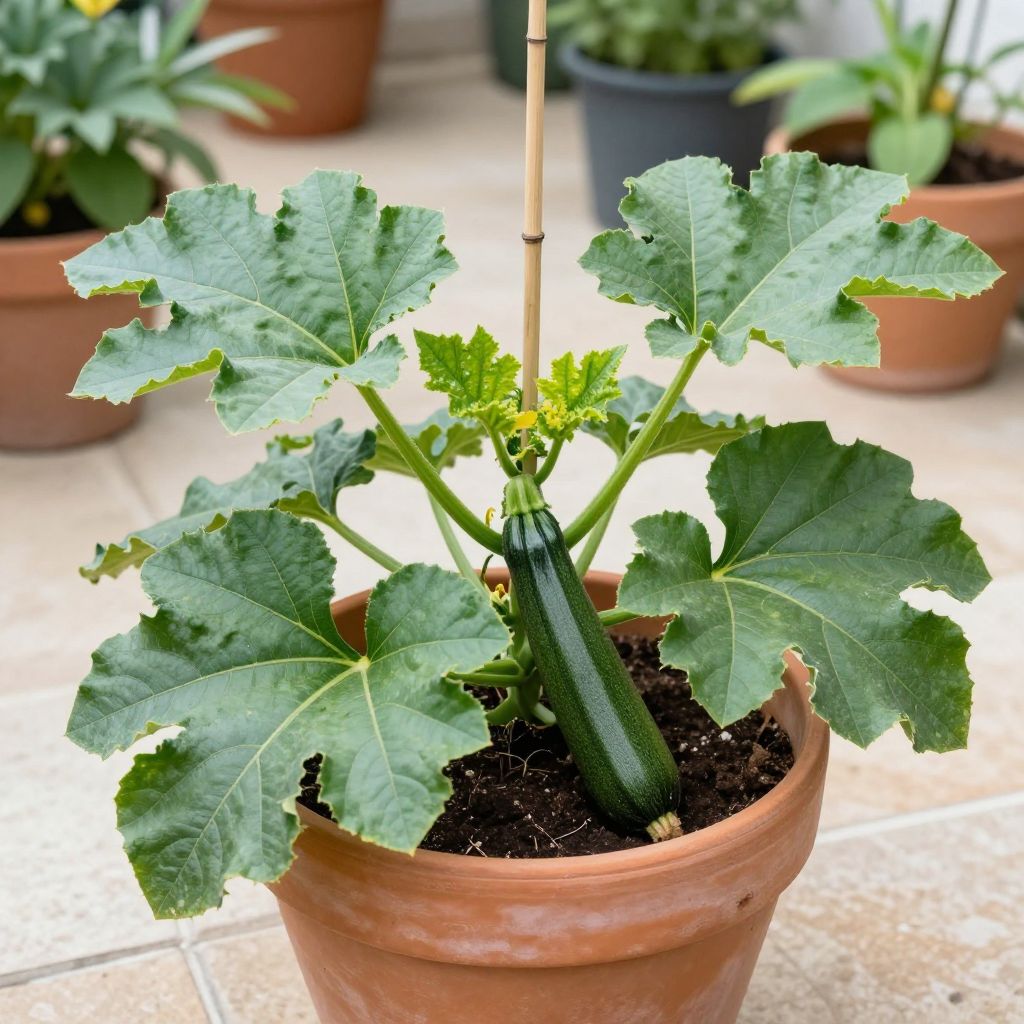
Can you grow zucchini in a pot? Yes—you absolutely can, as long as you give the plant enough root space, sun, water, and support. Container-grown zucchini can be very productive, but it needs a larger pot and more attentive care than many smaller vegetables.
The key is choosing a compact setup that keeps the roots cool, moist, and well-fed without becoming waterlogged. If you match the pot size, soil mix, and light conditions to zucchini’s fast growth, you can harvest plenty of tender squash from a patio, balcony, or small yard.
Can You Grow Zucchini In A Pot?
Yes, zucchini grows well in a pot if the container is large enough, drains well, and gets full sun. Use a pot at least 18 inches wide and deep, plant one zucchini per container, and keep the soil evenly moist and fertile. Container plants may need more frequent watering and feeding than garden-grown plants.
Choosing the Right Pot for Zucchini
Zucchini has a vigorous root system and a sprawling top, so pot size matters more than with many vegetables. A small container can stunt growth, dry out too quickly, and reduce flowering and fruit set.
Best container size
- Minimum: about 18 inches wide and deep
- Better: 20 to 24 inches wide for easier moisture management
- One plant per pot: zucchini gets crowded fast
Choose a sturdy container that will not tip over once the plant gets large. Fabric pots, large nursery pots, half-barrels, and heavy-duty planters all work well if drainage is excellent.
Drainage is not optional
Make sure the pot has several drainage holes. Zucchini roots dislike sitting in soggy soil, and poor drainage can quickly lead to root stress, yellowing leaves, and disease problems.
Best Soil Mix for Container Zucchini
Zucchini performs best in a rich, loose, moisture-retentive potting mix rather than garden soil. Garden soil compacts in containers and often drains poorly, which can suffocate roots.
Use a high-quality potting mix and improve it with compost if needed. A good container blend should hold moisture but still drain freely after watering.
What to look for in a potting mix
- Light, fluffy texture
- Good drainage and aeration
- Added compost or slow-release nutrients
- No heavy clay or dense topsoil
If your mix seems too fast-draining, blend in a little compost to improve moisture retention. If it feels heavy, add a coarse amendment such as perlite or extra potting mix to keep roots from staying wet too long.
Sunlight and Temperature Needs
Zucchini is a warm-season crop that needs strong light to flower and fruit well. In containers, sun exposure is even more important because the plant has less soil volume to buffer stress.
How much sun does zucchini need?
Give your potted zucchini at least 6 to 8 hours of direct sun daily. More sun usually means stronger growth and better fruit production, especially in cooler climates.
Temperature considerations
Zucchini grows best in warm weather and slows down when nights are cool. If you start plants too early outdoors, cold soil and chilly nights can delay growth and increase rot problems.
In hot climates, a container may dry out quickly, so afternoon shade can help if temperatures become extreme. In cooler regions, place the pot in the warmest, brightest spot you have.
How to Plant Zucchini in a Pot
You can direct sow zucchini seeds in a large container or transplant a young seedling. Direct sowing is often simpler because zucchini dislikes root disturbance, but transplants can work if handled carefully.
- Fill the pot with moist potting mix, leaving about 1 to 2 inches of space at the top.
- Plant 2 seeds about 1 inch deep in the center of the pot.
- After germination, thin to the strongest seedling if both sprout.
- If transplanting, set one healthy seedling at the same depth it was growing in its nursery pot.
- Water thoroughly after planting and keep the soil evenly moist while roots establish.
If you are transplanting, do it on a mild day and avoid disturbing the root ball. Zucchini can sulk after transplanting, so gentle handling helps it settle in faster.
Watering Container Zucchini the Right Way
Container zucchini usually needs more frequent watering than in-ground plants because pots dry out faster. Uneven moisture can lead to poor growth, blossom-end issues, bitter fruit, or stressed leaves.
How to check moisture
Before watering, feel the soil 1 to 2 inches below the surface. If it feels dry at that depth, water deeply until excess drains from the bottom.
The goal is steady moisture, not constant saturation. A pot that stays soggy can cause root problems just as quickly as a pot that dries out completely.
Common watering mistakes
- Letting the pot dry out completely between waterings
- Watering only the surface instead of soaking the root zone
- Leaving the pot standing in a saucer of water
- Watering on a rigid schedule instead of checking the soil
Mulching the top of the pot with a thin layer of straw or shredded leaves can help slow evaporation, especially during hot weather. Keep mulch a little away from the stem to reduce rot risk.
Feeding Zucchini in a Pot
Zucchini is a heavy feeder, and container plants use nutrients quickly. Without enough fertility, you may get lots of leaves but few fruits, or weak growth that struggles to support flowering.
How to fertilize
Start with a potting mix that contains compost or slow-release nutrients, then monitor plant growth. If the plant is growing well but flowering poorly, it may need more feeding or more sun.
Use a balanced vegetable fertilizer according to the label directions, or top-dress with compost during the season if your mix needs a gentle nutrient boost. Avoid overdoing nitrogen, which can encourage leafy growth at the expense of fruiting.
Supporting and Pruning Potted Zucchini
Most zucchini varieties are bush-type plants, but they still spread. In a container, the leaves can quickly shade the center of the plant and make watering and harvesting harder.
Should you prune zucchini?
Light pruning can help airflow and access, but do not remove too much foliage. The leaves feed the plant and protect developing fruit from sunscald.
- Remove yellow, damaged, or diseased leaves
- Trim only what is necessary to improve airflow
- Keep the center open enough to inspect flowers and fruit
If the plant becomes top-heavy, a small stake or cage can help keep stems from sprawling over the pot edge. Support is especially useful in windy spots or on balconies.
Pollination and Fruit Set in Containers
Zucchini produces separate male and female flowers, and fruit set depends on pollination. In containers, you may still get plenty of flowers but fewer fruits if pollinators are scarce or weather is poor.
How to improve pollination
- Grow the pot where bees and other pollinators can reach it
- Avoid spraying insecticides on open flowers
- Hand-pollinate early in the morning if needed
To hand-pollinate, use a small brush or remove a male flower and gently transfer pollen to the center of a female flower. Female flowers have a tiny swollen fruit behind the bloom.
If tiny fruits form and then yellow or shrivel, poor pollination is often the reason. Weather stress, lack of pollinators, or inconsistent watering can all contribute.
Pests and Diseases to Watch For
Container zucchini can still face the same pests and diseases as garden plants. The good news is that pots make it easier to inspect leaves and catch problems early.
Common pests
- Aphids
- Spider mites
- Squash bugs
- Cucumber beetles
Check the undersides of leaves regularly. If you spot pests early, remove them by hand, rinse them off with water, or use a suitable low-impact control method for edible plants.
Common diseases
- Powdery mildew
- Root rot from poor drainage
- Leaf spot issues in humid, crowded conditions
Good airflow, morning watering, clean pots, and proper spacing all help reduce disease pressure. If powdery mildew appears as a white coating on leaves, remove the worst affected foliage and improve airflow around the plant.
Harvesting Zucchini from a Pot
Harvest zucchini frequently to keep the plant producing. Fruits can grow surprisingly fast, and small to medium-sized zucchini are usually the most tender and flavorful.
When to harvest
Pick zucchini when fruits are still young and firm, before they become oversized and seedy. Regular harvesting encourages the plant to keep flowering and setting more fruit.
Use clean pruners or a knife to cut the stem rather than twisting the fruit off. This reduces damage to the plant and keeps the harvest neat.
Common Problems and Easy Fixes
If your container zucchini is struggling, the cause is often one of a few predictable issues. Most problems can be corrected if you notice them early.
- Lots of leaves, few fruits: increase sun, check pollination, and avoid excess nitrogen
- Wilting in midday: check soil moisture and pot size; small containers dry too quickly
- Yellowing leaves: look for nutrient stress, overwatering, or poor drainage
- Small or aborted fruit: improve pollination and keep watering consistent
- Powdery white coating on leaves: thin crowded growth and remove affected leaves
One of the most common mistakes is trying to grow zucchini in a pot that is too small. If the plant seems to stall, moving to a larger container early in the season can make a big difference.
Is Container Zucchini Worth It?
Yes, growing zucchini in a pot is worth it if you have enough sun and a large container. It is a practical option for patios, balconies, and small gardens, and it can be easier to monitor than a sprawling ground planting.
The best results come from giving the plant room, rich soil, steady moisture, and regular harvesting. If you can provide those basics, potted zucchini can be a productive and satisfying crop.
If you want to keep improving your vegetable container garden, look for more guides on container vegetable gardening and growing squash successfully for additional practical tips.