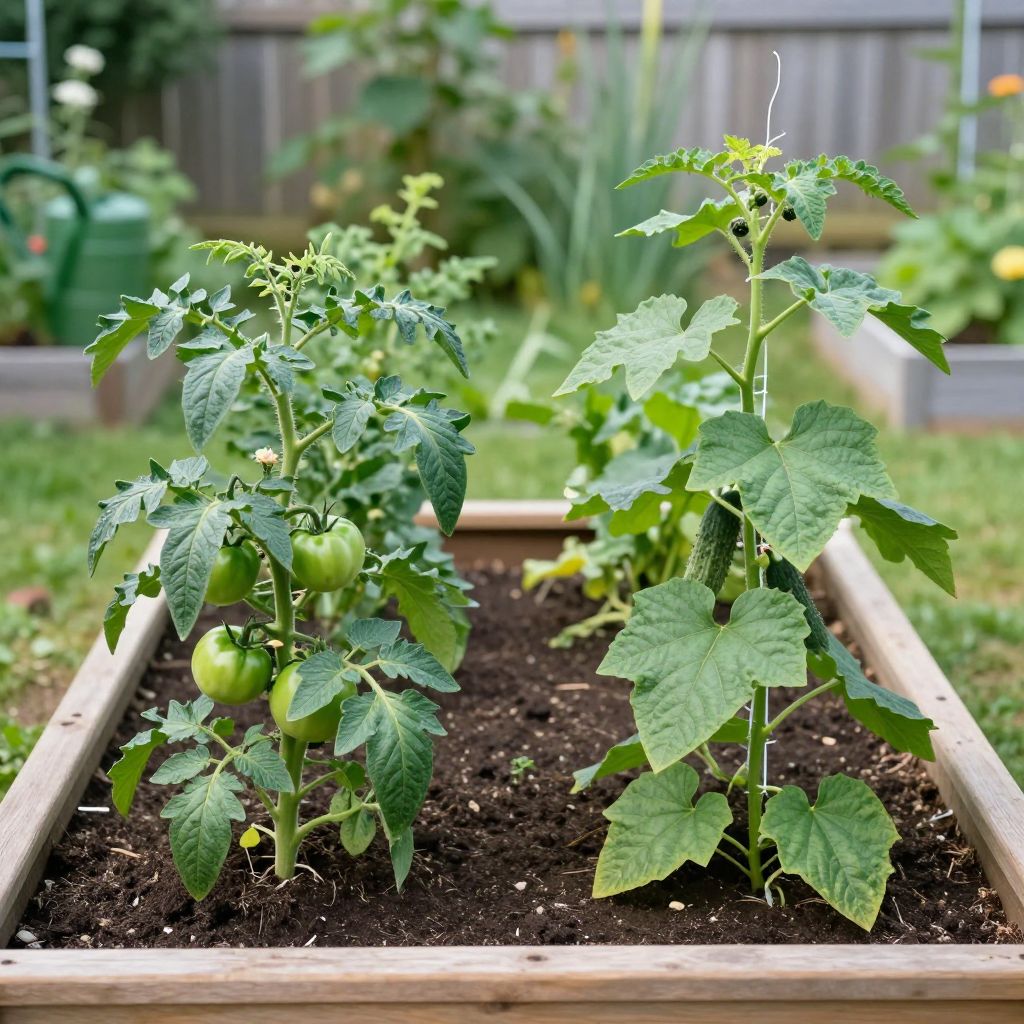
Can you plant tomatoes and cucumbers together? Yes, you can grow them in the same garden bed or large container if you give both crops enough space, sunlight, water, and airflow. They are not perfect companions in every situation, but with good planning they can share a planting area successfully.
The main challenge is that tomatoes and cucumbers have different growth habits and disease concerns. If you manage spacing, trellising, and watering carefully, you can reduce problems and harvest both crops from the same space.
Can You Plant Tomatoes And Cucumbers Together?
Yes, tomatoes and cucumbers can be planted together, especially in a sunny vegetable bed or a large container setup. The key is to prevent overcrowding, keep foliage dry when possible, and support both plants with stakes or trellises so air can move freely and disease risk stays lower.
Why Tomatoes And Cucumbers Can Work In The Same Garden
Tomatoes and cucumbers both like warm weather, full sun, and fertile soil, so their basic growing needs overlap. That makes them workable neighbors in many home gardens, as long as you do not treat them as if they were identical crops.
Shared growing needs
- Sun: Both grow best in full sun, usually at least 6 to 8 hours a day.
- Soil: Both prefer rich, well-drained soil with plenty of organic matter.
- Warmth: Neither crop likes cold soil or frost.
- Regular moisture: Both perform best when soil stays evenly moist, not soggy.
Where they differ
Tomatoes are usually grown as upright plants that benefit from pruning and support. Cucumbers may climb, sprawl, or trail depending on the variety, and they often need more frequent watering during fruiting.
That difference matters because a sprawling cucumber vine can shade tomato leaves, block airflow, and make harvesting harder if the plants are packed too tightly.
Best Way To Plant Tomatoes And Cucumbers Together
If you want both crops in one area, the safest approach is to grow them side by side with support, not tangled together. Give each plant its own root space and vertical structure so leaves dry faster and you can reach the fruit easily.
Spacing guidelines to follow
- Leave enough room between tomato plants for their mature size and airflow.
- Plant cucumbers a short distance away so vines do not climb directly into tomato stems.
- Use trellises, cages, or stakes to keep both crops upright.
- Avoid crowding in small raised beds unless you are using compact varieties and strong vertical support.
A good rule is to think in layers: tomatoes on one side or in the back, cucumbers on a trellis nearby, with open space between them for access and airflow.
Container gardening option
If you are growing in pots, use large containers rather than trying to squeeze both crops into one small planter. Tomatoes need substantial root space, and cucumbers also grow quickly and drink heavily during hot weather.
- Choose a deep container with drainage holes.
- Use a high-quality potting mix, not garden soil.
- Install a stake or cage for tomatoes and a separate trellis for cucumbers if possible.
- Water carefully, because containers dry out faster than in-ground beds.
Soil, Compost, And Drainage For Healthy Growth
Tomatoes and cucumbers both do better in soil that drains well but still holds moisture. The best planting site is one that has been improved with compost or other organic matter before planting.
What to aim for
- Loose soil: Roots need oxygen as well as water.
- Organic matter: Compost helps improve structure and moisture retention.
- Good drainage: Standing water can lead to root stress and disease.
If your soil is heavy clay, work in compost and consider raised beds. If your soil is very sandy, compost helps it hold moisture long enough for both crops to use it.
Watering Tips When Growing Tomatoes And Cucumbers Together
Watering is one of the biggest reasons this pairing succeeds or fails. Tomatoes dislike erratic watering because it can contribute to fruit problems, while cucumbers need consistent moisture for tender, well-formed fruit.
How to water wisely
- Water at the base of the plants instead of spraying the leaves.
- Check the soil before watering; it should be moist, not saturated.
- Water deeply so roots grow downward.
- Mulch around plants to reduce evaporation and soil splash.
Try to keep foliage dry whenever possible. Wet leaves can encourage fungal disease, especially in humid weather or crowded beds.
Common watering mistakes
- Overwatering both crops because they look wilted in midday heat.
- Letting containers dry out completely, then soaking them heavily.
- Using overhead watering late in the day.
- Ignoring drainage problems in compacted or waterlogged soil.
Sunlight, Airflow, And Plant Support
Full sun is essential for both crops, but airflow is just as important when they share space. Dense foliage traps moisture and creates ideal conditions for leaf diseases.
Support systems that help
- Tomatoes: Stakes, cages, or string support keep fruit off the ground.
- Cucumbers: Trellises help vines grow vertically and save space.
- Mulch: Keeps soil from splashing onto leaves and fruit.
Vertical growing also makes pruning, inspection, and harvesting much easier. It is especially useful if you are planting both crops in a small backyard bed.
Why airflow matters
Good airflow helps leaves dry faster after rain or watering. That reduces the chance of common fungal issues and makes it easier to spot pests early.
Pruning And Training For Better Results
Pruning is not always necessary for cucumbers, but training them on a trellis is very helpful. Tomatoes often benefit from selective pruning, depending on the type you are growing.
Tomato care
- Remove damaged or diseased leaves promptly.
- Keep the plant supported so stems do not collapse into cucumber vines.
- If you grow indeterminate tomatoes, light pruning can improve airflow.
Cucumber care
- Guide vines onto the trellis while they are young and flexible.
- Keep fruit visible so you can harvest before it becomes oversized.
- Do not let cucumber vines smother the base of the tomato plant.
If the plants begin to overlap too much, prune or redirect the cucumber vines first. Cucumbers usually spread faster and can quickly dominate a shared space.
Pests And Diseases To Watch For
Tomatoes and cucumbers can attract different pests, but some problems become more likely when they are planted close together. The biggest risk is usually not the plants “fighting” each other, but the garden becoming too crowded and humid.
Common issues
- Aphids: Can cluster on tender new growth.
- Whiteflies: Often found on the undersides of leaves.
- Powdery mildew: More likely in warm, humid, crowded plantings.
- Blight and leaf spots: Can spread more easily when leaves stay wet.
- Cucumber beetles: May damage cucumbers and spread disease.
Prevention steps
- Inspect leaves at least once or twice a week.
- Remove badly affected leaves if disease appears.
- Keep weeds down around the bed.
- Rotate crops each season if possible.
- Do not plant too densely.
If one crop becomes diseased, act quickly. Early removal of infected foliage and better airflow can slow the spread, but severely affected plants may need to be removed to protect the rest of the garden.
When It Makes Sense Not To Plant Them Together
Although tomatoes and cucumbers can grow together, there are times when separate beds are the better choice. If your garden is very small, poorly ventilated, or already prone to fungal disease, mixing them may create more problems than it solves.
Consider separate planting if:
- Your space is too tight for trellises and access paths.
- Your climate is very humid and disease pressure is high.
- You have heavy soil that stays wet after rain.
- You cannot water at the base of plants consistently.
In those situations, growing one crop in the ground and the other in a container can be a smart compromise.
Harvesting And Ongoing Care
Harvesting regularly keeps both plants productive. Pick cucumbers while they are still tender and before they become oversized, and harvest tomatoes as they ripen fully for the best flavor.
Simple maintenance routine
- Check plants every few days during peak growth.
- Pick ripe fruit promptly to encourage more production.
- Remove yellowing or damaged leaves.
- Adjust ties or supports as stems grow thicker.
As the season progresses, keep an eye on whether one plant is shading the other. If needed, redirect cucumber vines or thin tomato foliage slightly so both continue to get enough light.
Final Verdict
Can you plant tomatoes and cucumbers together? Yes, and many gardeners do it successfully. The best results come from giving each crop enough room, using support structures, watering at the base, and keeping the planting area open enough for light and airflow.
If you are planning your garden now, sketch the bed first and decide where each plant will go before you dig. For more practical vegetable-growing help, you may also want to read related gardening guides on trellising vegetables for small spaces and improving garden soil with compost.