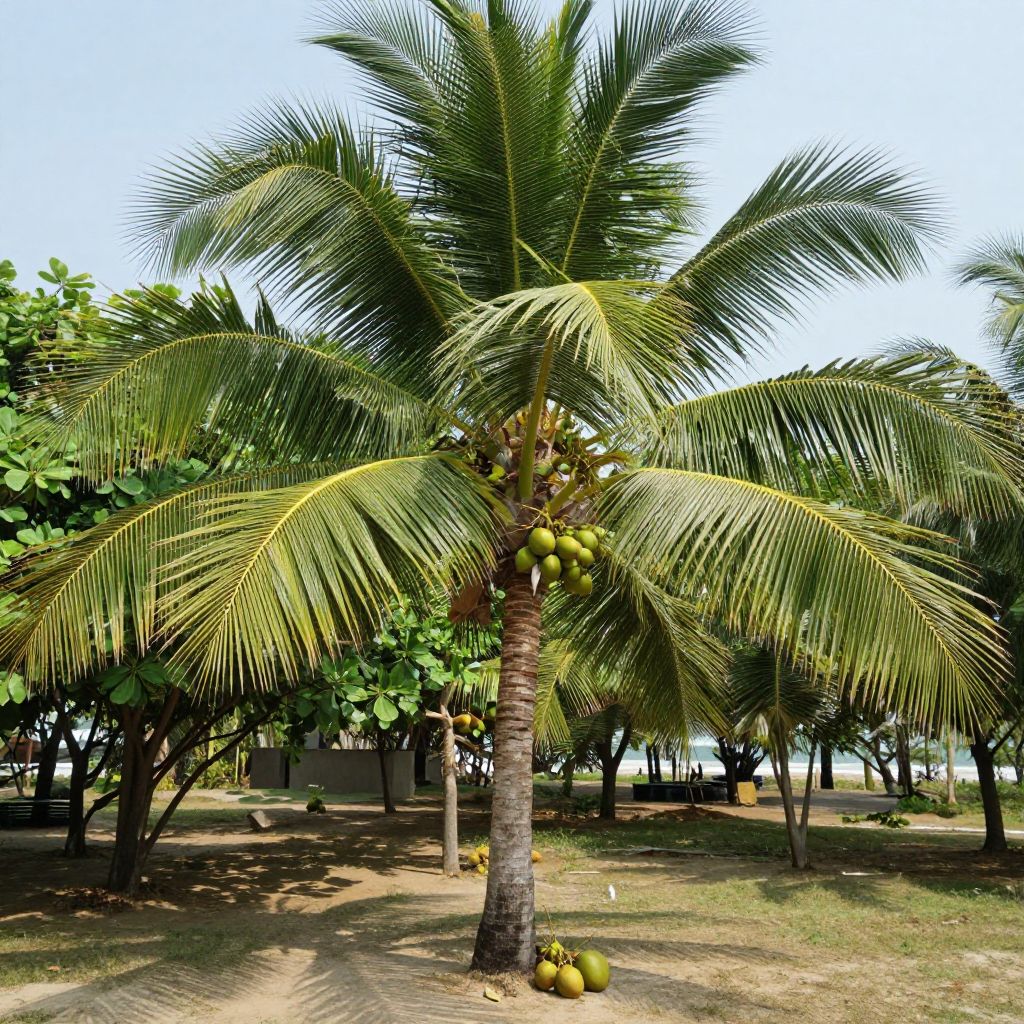
Do all palm trees have coconuts? Not at all. Many palm species never produce coconuts, and most palms you see in landscapes are not coconut palms. If you want to grow a palm for shade, texture, or tropical style, it helps to know which species actually make coconuts and which are grown only for their foliage or shape.
The good news is that palm care is often similar across species, but coconut palms have their own needs for heat, sun, moisture, and space. Choosing the right palm for your climate and yard matters more than expecting every palm to fruit.
Do all palm trees have coconuts?
No. Only coconut palms (Cocos nucifera) produce coconuts, and even then they need the right warm, frost-free conditions to fruit well. Most other palms produce different fruits, such as dates, berries, or small drupes, or no useful edible fruit at all.
What makes a palm a coconut palm?
Coconut palms are a specific tropical palm species, not a general trait shared by all palms. They grow a tall, ringed trunk, long feather-like fronds, and large fibrous fruits that we call coconuts. If a palm is not Cocos nucifera, it will not make true coconuts.
Common palms that do not make coconuts
- Queen palm (Syagrus romanzoffiana)
- Areca palm (Dypsis lutescens)
- Windmill palm (Trachycarpus fortunei)
- Fan palms such as Washingtonia and Chamaerops
- Parlor palm (Chamaedorea elegans)
- Sago palm (Cycas revoluta) — not a true palm at all
That last example is important: many plants sold as “palms” are not true palms. A sago palm is a cycad, so it will never produce coconuts.
How to tell whether your palm will produce coconuts
Start by identifying the species. If the plant tag, nursery label, or local extension advice names Cocos nucifera, you have a coconut palm. If it is any other palm species, it will not produce coconuts, even if it looks tropical.
Quick identification checklist
- Look for the botanical name on the label or receipt.
- Check whether the fronds are feather-like or fan-shaped.
- Notice the trunk shape and overall size at maturity.
- Compare the plant with reliable local nursery references.
- If needed, ask a local extension office or experienced nursery staff.
Do not rely on common names alone. A plant called “palm” may be a true palm, a cycad, or even a completely different houseplant with a palm-like look.
Growing conditions coconut palms need
Coconut palms are true tropical plants. They grow best in warm temperatures, full sun, and sandy, well-drained soil. They are sensitive to frost and perform poorly in cool, windy, or waterlogged sites.
Sunlight
Give coconut palms full sun for best growth and fruiting. Young palms can tolerate a little light shade, but mature palms need strong light to stay vigorous and produce fruit.
Temperature and climate
Coconut palms are suited to consistently warm climates. They are damaged by frost, and prolonged cool weather can slow growth or reduce fruit set. If you garden in a marginal climate, choose a different palm species that handles cooler conditions better.
Soil and drainage
Use loose, sandy, or sandy-loam soil that drains quickly. Coconut palms dislike heavy clay and standing water. If your soil holds water after rain, improve drainage before planting or choose another site.
Watering
Young coconut palms need regular moisture while they establish, but the soil should never stay soggy. Once established, they prefer deep watering during dry spells rather than frequent shallow sprinkling. Adjust watering to your climate, soil type, and rainfall.
How to plant a coconut palm
If you live in a suitable climate and want to grow a coconut palm, planting correctly gives it the best start. The goal is a stable root zone, good drainage, and enough room for a large mature canopy.
- Choose a site with full sun and excellent drainage.
- Dig a hole only as deep as the root ball and 2 to 3 times as wide.
- Set the palm so the top of the root ball sits level with or slightly above the surrounding soil.
- Backfill with the native soil unless it is extremely poor; avoid creating a “bathtub” of amended soil that traps water.
- Water thoroughly to settle the soil.
- Mulch lightly, keeping mulch a few inches away from the trunk.
Do not bury the trunk or pile mulch against it. Both mistakes can encourage rot and stress the palm.
Caring for coconut palms through the seasons
Young and mature palms need different attention. Newly planted palms focus on root establishment, while mature palms need consistent moisture, nutrition, and protection from pests and nutrient deficiencies.
Spring and summer care
During active growth, monitor moisture closely and water deeply when the top layer of soil begins to dry. In hot, windy weather, palms may need more frequent irrigation than nearby shrubs or turf.
Fall and winter care
In warm climates, reduce watering slightly if rainfall increases and growth slows. In marginal areas, protect the crown and trunk from cold snaps as needed, but remember that coconut palms are not cold-hardy enough for frost-prone gardens.
Feeding
Use a palm fertilizer if your soil is deficient, especially in sandy sites where nutrients leach quickly. Palms commonly need potassium, magnesium, and micronutrients. Follow the product label and local guidance, because soil type and rainfall change how often feeding is needed.
Pruning and maintenance
Palms are not pruned like broadleaf trees. Remove only fully brown, dead fronds, and leave healthy green fronds in place. Green fronds are still feeding the palm and supporting fruit development.
Pruning mistakes to avoid
- Do not “hurricane cut” or remove too many fronds at once.
- Do not cut yellowing fronds too early unless they are clearly declining and mostly dead.
- Do not damage the trunk with tools or climbing spikes.
- Do not remove the central spear leaf, which is the growing point.
If the spear leaf is damaged or pulled out, the palm may die. That growing point is essential for recovery.
Common pests and diseases
Coconut palms can face insect pressure and fungal problems, especially when stressed by poor drainage, cold injury, or nutrient imbalance. Healthy palms are much less likely to struggle.
Typical pest issues
- Scale insects on fronds and stems
- Mealybugs on stressed indoor or nursery palms
- Rhinoceros beetles in some tropical regions
- Spider mites in dry, dusty conditions
Typical disease issues
- Bud rot, often after cold or wet damage
- Root rot from poor drainage
- Leaf spotting when airflow is poor or the palm is stressed
The best prevention is simple: plant in draining soil, avoid overwatering, keep the crown clean, and correct nutrient deficiencies before they become severe.
Can you grow a coconut palm indoors?
You can keep a young coconut palm indoors for a short time if you have very bright light, warmth, and humidity, but it is not a practical long-term houseplant for most homes. Coconut palms eventually become large and need much more light than a typical window provides.
Indoor care basics
- Place it in the brightest possible south- or west-facing window.
- Keep it warm and away from cold drafts.
- Use a fast-draining potting mix.
- Water when the top inch or two of mix dries, but never let the pot sit in water.
- Increase humidity if indoor air is very dry.
If your home is dim, a coconut palm will usually decline over time. In that case, choose a true indoor palm such as parlor palm or areca palm instead.
Will your palm ever produce coconuts?
Even if you are growing a real coconut palm, fruiting is not guaranteed. The palm must be mature, healthy, and growing in a climate warm enough for flowering and fruit development. Poor light, cold stress, drought, and nutrient shortages can all reduce or prevent coconut production.
Reasons a coconut palm may not fruit
- The plant is not actually a coconut palm.
- It is too young to flower.
- Temperatures are too cool for long enough periods.
- It lacks full sun.
- Soil drainage or fertility is poor.
- It has been stressed by pests, disease, or transplant shock.
In many home landscapes, the main goal is ornamental value rather than harvest. A healthy palm with no coconuts can still be an excellent landscape plant.
Choosing the right palm for your garden
If you want the tropical look but do not live in a coconut-friendly climate, pick a palm that suits your conditions instead of trying to force a coconut palm to perform. Matching the plant to the site is the easiest way to avoid disappointment.
Good questions to ask before buying
- How cold does my site get in winter?
- Does my soil drain quickly or stay wet?
- Do I want fruit, shade, or just an ornamental effect?
- How much space will the palm need at maturity?
- Will I be able to provide enough sun and water?
If you answer those questions honestly, you will choose a palm that thrives rather than one that struggles.
Conclusion: the simple answer and your next step
So, do all palm trees have coconuts? No—only coconut palms produce coconuts, and they need warm, sunny, well-drained conditions to do it well. Your next step is to identify your palm by its botanical name, then match its care to the species and your local climate.
If you want to keep learning about palm selection and care, look for more guides on choosing the right palm for your landscape and improving drainage for tropical plants.