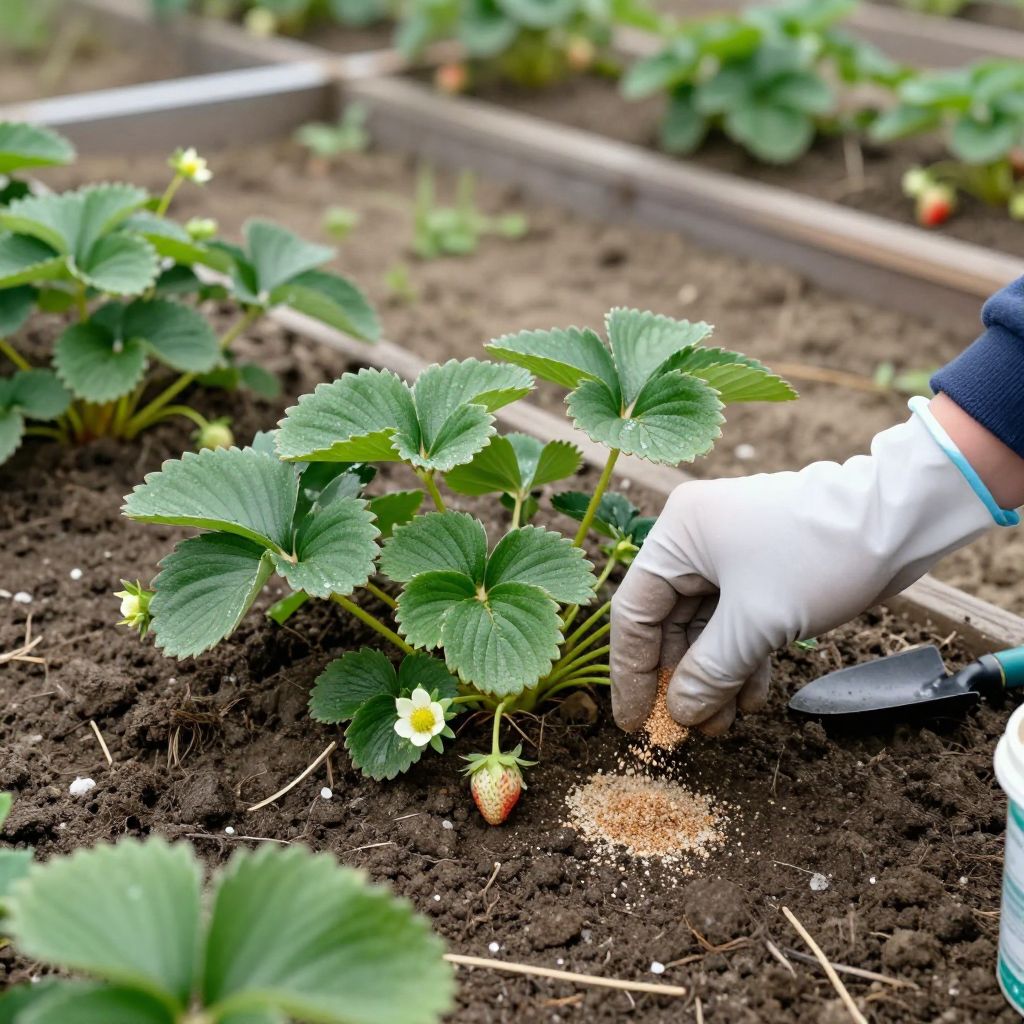
Wondering when to fertilize strawberries so you get healthy plants and better harvests without pushing too much leafy growth? Timing matters as much as the fertilizer itself. Feed at the right stage, and your plants can build strong roots, set flowers, and support fruiting more effectively.
The best schedule depends on whether your strawberries are newly planted, established, or growing in containers. Climate, soil fertility, and plant age all affect the right timing, so use the guidance below as a flexible seasonal plan rather than a rigid calendar.
When to fertilize strawberries?
Fertilize strawberries in early spring as new growth begins, then again lightly after the first harvest if your plants need support. Avoid heavy feeding during flowering and fruiting, and do not overfertilize young or newly planted strawberries, since too much nitrogen can reduce berries and encourage soft, leafy growth.
How strawberry growth affects fertilizing timing
Strawberries do not need constant feeding. They usually respond best to fertilizer when they are actively growing roots and leaves, then again after fruiting when they are rebuilding energy for the next season.
Key growth stages to watch
- Planting and establishment: Focus on soil preparation rather than strong fertilizer.
- Early spring growth: The main time for feeding established plants.
- Flowering and fruiting: Keep feeding light or pause if plants are already vigorous.
- After harvest: A light feeding can help plants recover and prepare for next year.
- Late season dormancy: Stop fertilizing as growth slows and plants harden off.
Best seasonal timing for strawberry fertilizer
In most gardens, the first feeding happens in early spring when crowns begin pushing fresh leaves. If you grow strawberries in a mild climate, that may be late winter or very early spring; in colder areas, wait until the soil is workable and active growth has started.
Spring feeding
Apply fertilizer when you see new leaves and the plants are waking up. This is the most important feeding for established strawberry beds because it supports flowering and fruit development.
- Use a balanced fertilizer or one with slightly more potassium than nitrogen if your soil is already fertile.
- Work it into the soil lightly around the plants, not against the crowns.
- Water after feeding so nutrients move into the root zone.
After harvest
Once the main crop is finished, a light feeding can help plants recover, especially if they look tired or if the bed produced heavily. This is especially useful for June-bearing strawberries that produce one main crop and then spend the rest of the season rebuilding.
Do not use a heavy dose at this stage. You want healthy foliage and root recovery, not a flush of soft growth that may be more prone to disease.
Late summer and fall
In many climates, late-season fertilizing is unnecessary and can be counterproductive. Feeding too late may encourage tender growth that is damaged by cold weather. If your plants are healthy and your soil is reasonably fertile, skip fall fertilizer and let the plants settle into dormancy.
How to fertilize strawberries by plant age
Newly planted strawberries need a gentler approach than established beds. The goal is to help roots settle in without forcing top growth too soon.
Newly planted strawberries
- Mix compost into the planting area before planting.
- Hold off on strong fertilizer for the first few weeks unless your soil is very poor.
- Watch for signs of establishment, such as fresh leaves and firm crowns.
If you do feed at planting time, keep it modest and avoid direct contact with roots or crowns. A rich planting hole can sometimes do more harm than good if it burns tender roots or creates uneven growth.
Established strawberry beds
Once plants are established, they usually benefit from a spring feeding each year. If the bed is productive and the leaves are deep green with good fruiting, you may only need a light application of compost or a mild fertilizer.
Container-grown strawberries
Strawberries in pots and hanging baskets often need more frequent attention because nutrients leach out faster with watering. Feed more lightly but a little more often than in-ground plants, especially during active growth.
- Use a container-friendly fertilizer or diluted feed if growth slows.
- Check drainage carefully; soggy pots can cause root stress even if you fertilize correctly.
- Refresh the potting mix each season if the container becomes compacted or depleted.
What kind of fertilizer works best?
Strawberries usually do best with a balanced, moderate fertilizer rather than a high-nitrogen product. Too much nitrogen can produce lush leaves at the expense of flowers and fruit.
Good options for home gardeners
- Compost: A gentle way to improve soil structure and add slow-release nutrients.
- Balanced granular fertilizer: Useful for spring feeding in established beds.
- Low-to-moderate nitrogen formulas: Helpful when foliage is already vigorous.
- Organic amendments: Such as well-rotted manure or compost, if fully aged and used carefully.
When in doubt, choose the lighter option. Strawberries are more likely to suffer from overfeeding than from slightly underfeeding in a decent garden soil.
Soil, sunlight, and watering matter too
Fertilizer works best when the growing conditions are right. Strawberries need full sun for strong flowering and fruiting, plus well-drained soil that does not stay soggy after rain or irrigation.
Soil conditions that improve fertilizer results
- Well-drained soil: Prevents root problems and nutrient loss.
- Organic matter: Compost helps hold moisture while improving soil texture.
- Moderate fertility: Rich enough for growth, but not excessively nitrogen-heavy.
Water consistently, especially after fertilizing and during flowering and fruit fill. Uneven watering can make fruit smaller or misshapen, even if your feeding schedule is good.
Common fertilizing mistakes to avoid
Many strawberry problems come from feeding too much, too late, or at the wrong stage. A few simple corrections can make a big difference in plant health and crop quality.
1. Overfertilizing with nitrogen
This is the most common mistake. Plants may look impressive with large leaves, but fruiting can drop and disease risk may rise because the canopy stays dense and damp.
2. Fertilizing too close to the crown
Keep fertilizer a short distance away from the plant crown. Direct contact can irritate tender tissue and waste nutrients where roots are not actively absorbing them.
3. Feeding at the wrong season
Late-season feeding can trigger soft growth that is vulnerable to cold. In cold-winter regions especially, stop fertilizing well before dormancy.
4. Ignoring poor drainage
If water sits around the roots, fertilizer will not fix the problem. Improve drainage first, or use raised beds or containers where necessary.
How to tell if your strawberries need fertilizer
Not every strawberry bed needs the same feeding schedule. Use the plants themselves as your guide.
- Likely need feeding: Pale leaves, weak growth, poor flowering, or reduced fruit size in a well-watered bed.
- May not need much: Strong green foliage, good flowering, and steady fruiting.
- Possible overfeeding: Very lush leaves, few blossoms, soft growth, or repeated disease issues.
If you are unsure, start with compost or a light fertilizer application rather than a heavy one. You can always add a little more later if the plants truly need it.
Pruning, runners, and maintenance after fertilizing
Fertilizing works best when paired with simple maintenance. Remove old, damaged, or diseased leaves when needed, and manage runners so the plant’s energy goes where you want it.
Runner management
Strawberries send out runners to make new plants. That is useful for propagation, but too many runners can weaken fruit production if you let them spread unchecked.
- Trim runners if you want larger, more productive parent plants.
- Root a few healthy runners if you want to expand your patch.
- Keep new plantlets separate from crowded mother plants when possible.
Mulching
A light mulch of straw, pine needles, or shredded leaves can help keep soil moisture even and fruit cleaner. Just keep mulch away from the crown so the plant base does not stay too wet.
Pests and diseases that can affect feeding decisions
Healthy, well-fed strawberries are more resilient, but fertilizer will not solve pest or disease problems on its own. In fact, overfertilized plants can sometimes be more attractive to soft-bodied pests or more prone to fungal issues.
Watch for these common issues
- Gray mold on ripening fruit in damp conditions
- Leaf spots or blights on crowded, poorly ventilated plants
- Slugs and birds damaging fruit
- Aphids on soft new growth
If disease pressure is high, improve airflow, water at soil level, and avoid pushing extra nitrogen. A balanced care routine is usually more effective than feeding harder.
Simple seasonal fertilizing plan
If you want an easy approach, use this as a general guide and adjust for your local climate and soil.
- Before planting: Work compost into the bed and make sure drainage is good.
- Early spring: Feed established strawberries as new growth begins.
- During flowering and fruiting: Keep feeding light and avoid high nitrogen.
- After harvest: Give a modest recovery feeding if the plants look depleted.
- Late season: Stop fertilizing and let the plants harden off for dormancy.
Conclusion
When to fertilize strawberries comes down to plant stage and season: feed in early spring, consider a light post-harvest boost, and avoid heavy late-season fertilizing. Start with compost, watch how your plants respond, and adjust based on your soil and climate. If you want to improve your setup further, you may also find this guide to growing strawberries indoors helpful for container care and year-round growing.