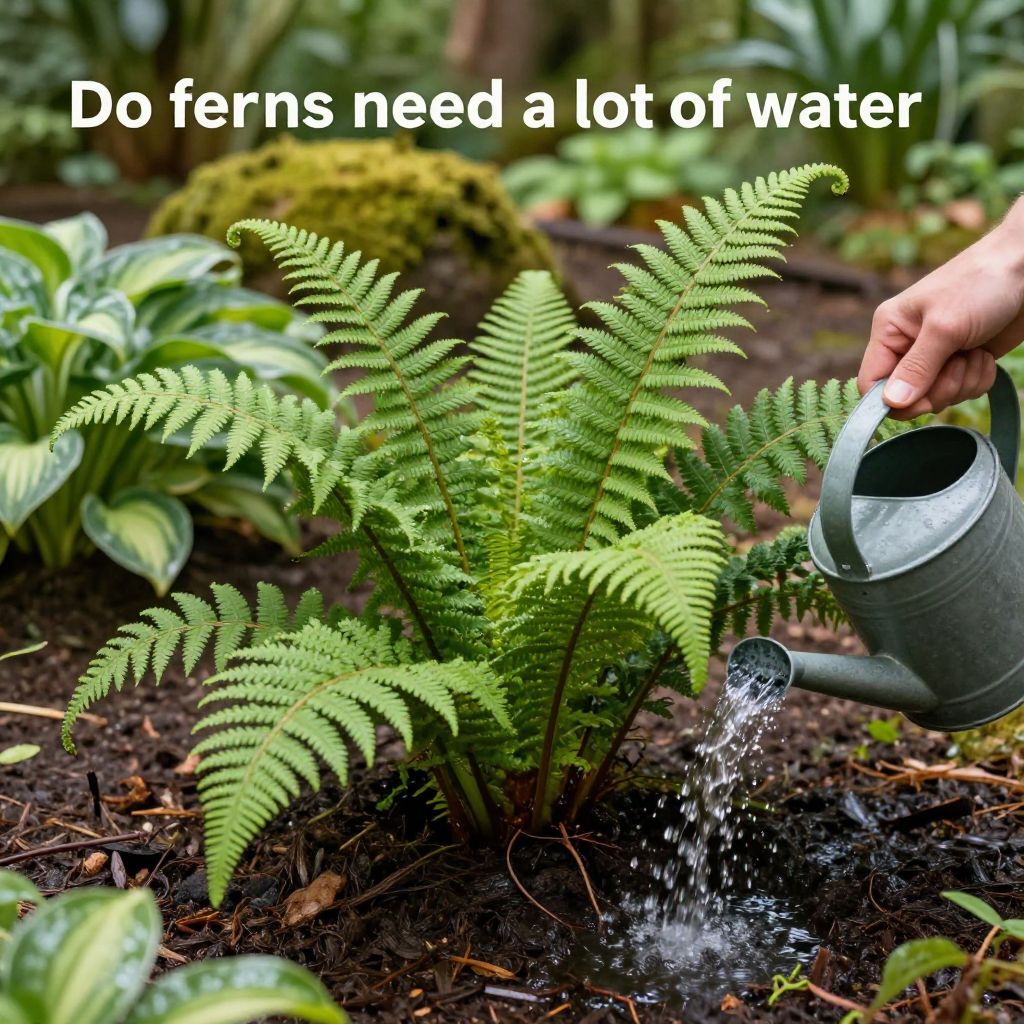
Do ferns need a lot of water? In most cases, yes, ferns like consistently moist soil, but not soggy conditions. They are not drought-loving plants, and they usually decline fast if the root ball dries out. That said, the right amount of water depends on whether the fern is indoors or outdoors, the pot size, light levels, soil type, and season.
The goal is steady moisture with good drainage. If you keep the soil evenly damp, avoid waterlogging, and adjust for heat, wind, and indoor heating, most ferns will stay lush and healthy.
Do ferns need a lot of water?
Ferns generally need more frequent watering than many houseplants and ornamentals because their roots prefer evenly moist soil. They do best when the top layer of soil never fully dries out, but they also fail quickly in standing water. Think “moist, not muddy” rather than “constantly wet.”
How much water ferns actually need
The right amount of water depends on the fern species, the growing medium, and where it is planted. A fern in a small pot in bright indoor light may need water far more often than one growing in a shaded garden bed with rich, moisture-retentive soil.
General moisture target
- Keep the soil evenly moist to the touch.
- Water when the top 1/2 to 1 inch of soil begins to dry.
- Never let the root zone stay bone dry for long.
- Avoid leaving pots sitting in water unless the fern is in a setup designed for that, such as a self-watering container used carefully.
Signs your fern needs water
- Fronds look limp or start to droop.
- Leaf tips turn brown and crisp.
- The pot feels unusually light.
- The soil pulls away from the sides of the container.
Signs you are overwatering
- Soil stays wet for days.
- Fronds yellow and collapse.
- The plant looks weak even though the soil is damp.
- You notice sour-smelling soil or root rot.
What affects fern watering needs?
Ferns do not all drink at the same rate. Your local climate, the potting mix, and the amount of light all affect how quickly moisture disappears from the soil.
Indoor ferns
Indoor ferns often dry out faster than people expect, especially in heated or air-conditioned rooms. Dry indoor air can cause fronds to brown at the tips even when the soil is only slightly dry.
- Check container moisture more often in winter.
- Use pots with drainage holes.
- Keep them away from heating vents and drafty windows.
Outdoor ferns
Outdoor ferns usually need less watering if they are planted in shade, mulched well, and grown in soil that holds moisture. But they may need extra water during hot spells, windy weather, or long dry periods.
- Shade reduces evaporation.
- Mulch helps keep roots cool and moist.
- Sandy soil dries faster than loam or humus-rich soil.
Potted ferns
Potted ferns almost always need the most attention. Containers dry out faster than garden soil, especially small pots, hanging baskets, and porous clay containers.
- Smaller pots dry faster than larger ones.
- Hanging baskets may need daily checks in warm weather.
- Well-draining mixes are essential, but they still must hold enough moisture.
Best soil and potting mix for fern moisture
Ferns need a potting mix that holds moisture without becoming compacted. A good mix should feel light, airy, and rich in organic matter. If the soil dries too fast, the fern will struggle no matter how often you water.
What to look for in soil
- High organic matter content, such as compost or leaf mold.
- Good drainage to prevent root rot.
- A texture that stays moist but still allows air around the roots.
Simple soil improvements
- For garden beds, work in compost before planting.
- For pots, use a quality houseplant or foliage mix and amend it with organic material if needed.
- Add mulch around outdoor ferns to slow moisture loss.
How to water ferns the right way
The best watering method is slow, thorough, and consistent. You want water to reach the full root zone, not just wet the surface.
- Check the soil with your finger before watering.
- Water at the base of the plant rather than over the fronds when possible.
- Apply water until it begins to drain from the bottom of the pot or soak into the root zone outdoors.
- Empty saucers after watering so roots do not sit in excess water.
- Recheck moisture a day or two later if conditions are hot or dry.
Should you mist ferns?
Misting can briefly raise humidity, but it does not replace proper watering. It may help some indoor ferns feel better in dry rooms, but the effect is short-lived. If your home air is very dry, a pebble tray, grouping plants together, or using a humidifier is usually more effective.
How often should you water ferns?
There is no single schedule that works everywhere. Instead of watering on fixed days, check the soil and adjust to your conditions. In warm weather, a fern in a pot may need water every day or every few days. In cool, shaded conditions, it may need water much less often.
Use this simple rule
- Water when the surface begins to dry but before the root ball dries out.
- Do not wait until the fronds are crispy.
- Do not water just because the calendar says so.
Common watering mistakes to avoid
Most fern problems come from moisture extremes. Either the plant dries out too much, or the roots are kept wet for too long.
- Letting the pot dry completely between waterings.
- Using a pot without drainage holes.
- Watering lightly every day instead of soaking the root zone thoroughly.
- Leaving water in saucers for long periods.
- Assuming all ferns need the same care.
How to tell if your fern is underwatered or overwatered
These two problems can look similar at first because both can cause poor growth and browning fronds. The soil condition is the best clue.
Underwatered fern
- Soil is dry and may pull away from the pot edge.
- Fronds feel dry, thin, or crispy.
- The plant perks up somewhat after watering if the roots are still healthy.
Overwatered fern
- Soil stays wet and heavy.
- Fronds yellow before browning.
- The plant may not recover quickly after watering.
- Roots may smell rotten or look mushy.
Light, humidity, and temperature matter too
Watering is only part of fern care. If the light is too strong or the air is too dry, the plant will lose moisture faster and may seem to “need” more water than it should.
Ideal growing conditions
- Light: Bright, indirect light or dappled shade.
- Humidity: Moderate to high humidity is best for many ferns.
- Temperature: Stable temperatures are better than hot, dry swings.
Direct sun can scorch fronds and dry soil too quickly. Deep shade is often fine, but very dark conditions can slow growth and reduce the plant’s ability to use water well.
Pruning and maintenance for healthier watering
Regular grooming helps you spot moisture problems early. Remove dead or damaged fronds so the plant can focus on healthy growth and so you can better judge how the fern is responding to your care.
- Snip off brown or yellow fronds at the base.
- Keep the crown clear of fallen debris.
- Refresh mulch outdoors as needed to conserve moisture.
- Repot container ferns when roots fill the pot and the mix dries too quickly.
Pests and diseases linked to poor watering
Ferns stressed by improper watering are more likely to develop problems. Too much moisture can encourage root rot and fungal issues, while very dry conditions can attract spider mites on indoor plants.
Watch for these issues
- Root rot: Caused by soggy soil and poor drainage.
- Spider mites: More common in dry indoor air; look for fine webbing and speckled leaves.
- Leaf spot: Can be worsened by wet foliage and poor air circulation.
If you suspect root rot, reduce watering immediately, improve drainage, and repot if the roots are damaged. If spider mites appear, increase humidity and treat the plant promptly with appropriate pest control methods.
Can you propagate ferns from watering care alone?
Watering does not propagate ferns, but healthy moisture management supports successful propagation. Division is the most common method for many garden and house ferns. A well-watered, actively growing plant is more likely to recover quickly after division.
- Divide ferns when they are actively growing and the clump is crowded.
- Keep newly divided plants evenly moist while they establish.
- Avoid letting divisions dry out during the first few weeks.
Quick care checklist for healthy ferns
- Use rich, well-draining soil.
- Keep moisture even, not soggy.
- Check potted ferns often in warm or dry weather.
- Water deeply, then let excess drain away.
- Provide shade or indirect light.
- Increase humidity indoors if the air is dry.
Final thoughts
So, do ferns need a lot of water? They need consistent moisture, but not waterlogged soil. If you check the soil regularly, use a moisture-retentive mix, and adjust for your climate and growing conditions, your fern should stay healthy and full.
For more help with leafy shade plants, you may also want to read related guidance on choosing the right potting mix for houseplants and how to improve garden soil with compost.