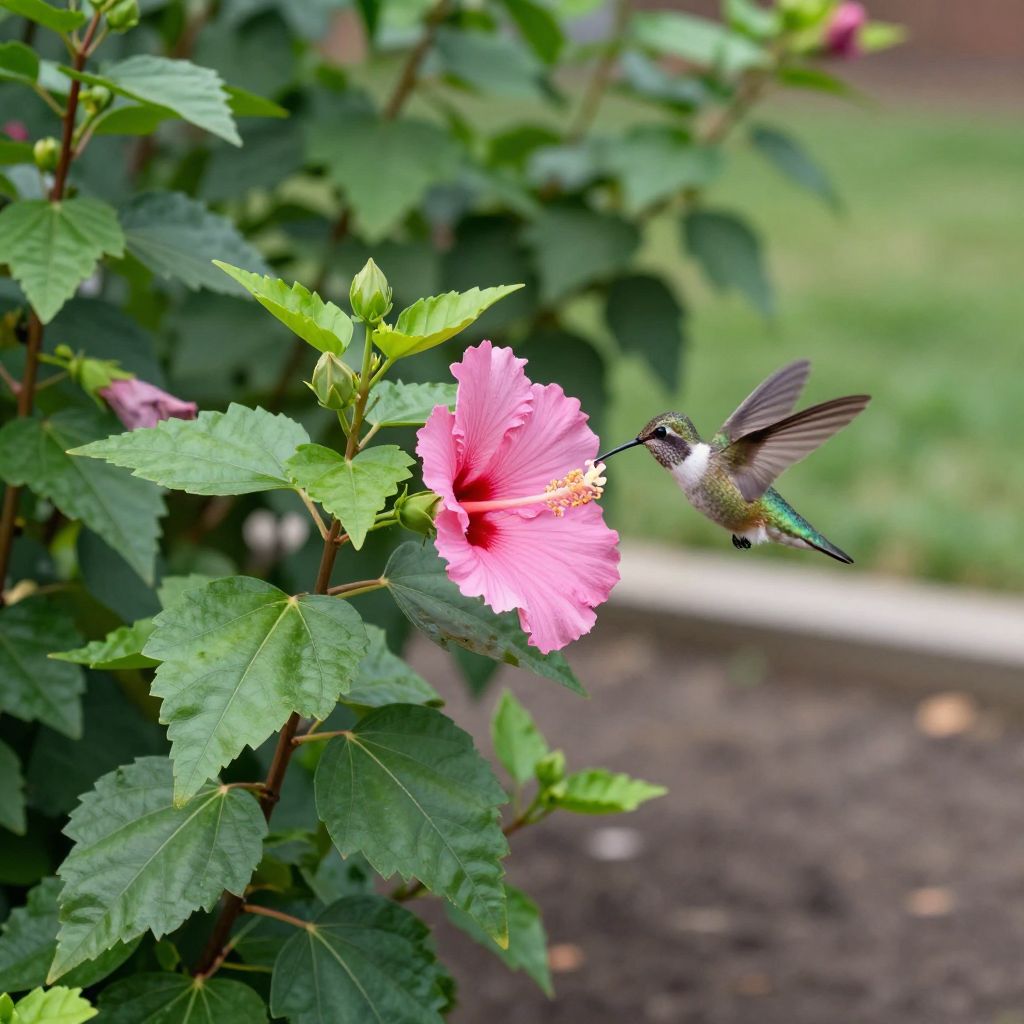
Do hummingbirds like hibiscus? Yes—hummingbirds are often attracted to hibiscus flowers, especially the nectar-rich, tubular blooms many varieties produce. The flowers are not the only reason, though: a healthy hibiscus planted in the right spot can become a reliable stopover in a hummingbird-friendly garden.
That said, not every hibiscus will draw the same level of attention. Flower shape, bloom abundance, plant health, and what else is flowering nearby all affect how much use hummingbirds make of it.
Do hummingbirds like hibiscus?
Yes. Hummingbirds commonly visit hibiscus because the flowers can offer abundant nectar and a shape that fits their long bills. They are especially likely to visit plants with open, colorful blooms in red, pink, orange, or coral, but they may also feed from other colors if nectar is available and the plant is in a good location.
Why hibiscus attracts hummingbirds
Hibiscus flowers are large, showy, and often nectar-rich. Their bloom structure makes them easy for hummingbirds to probe while hovering, and the plant’s repeated flowering can provide a steady food source during the growing season.
What hummingbirds look for
- Nectar access: Flowers that are easy to reach and not too crowded by foliage.
- Color cues: Bright reds and oranges are especially noticeable, though they are not the only colors that work.
- Fresh blooms: Newly opened flowers usually hold the most nectar.
- Safe perches and cover: Nearby shrubs or branches can help hummingbirds rest and watch for threats.
Not all hibiscus are equally attractive
Some hibiscus types are better hummingbird plants than others. In general, single-flowered forms are often more useful than heavily doubled blooms because the nectar is easier to access. If the flower is packed with extra petals, it may look dramatic to people but be less practical for pollinators.
Best hibiscus types for hummingbird gardens
If your goal is to support hummingbirds, choose hibiscus with open flowers and a long bloom season. The exact best choice depends on your climate and whether you are growing indoors, in a container, or in the ground outdoors.
Common garden hibiscus choices
- Tropical hibiscus (Hibiscus rosa-sinensis): Popular in warm climates and containers; often blooms repeatedly in bright colors.
- Hardy hibiscus (Hibiscus moscheutos and related hybrids): Large summer flowers and strong nectar appeal in suitable climates.
- Rose of Sharon (Hibiscus syriacus): A woody shrub with many flowers that can support pollinators through summer.
Local climate matters. A tropical hibiscus may thrive in a frost-free garden but need winter protection or indoor care in colder regions, while hardy hibiscus can handle winter dormancy outdoors where temperatures drop.
How to grow hibiscus for more hummingbird visits
To make hibiscus more attractive to hummingbirds, focus on strong growth and abundant flowering. A stressed plant may survive, but it usually produces fewer blooms and less nectar.
1. Give it enough sun
Most hibiscus flower best in full sun to light shade. In hot climates, some afternoon shade can protect leaves and blossoms from scorching, but too much shade often reduces flowering.
2. Plant in rich, well-drained soil
Hibiscus like soil that holds moisture but does not stay soggy. Work in compost before planting if your soil is poor, sandy, or compacted. Good drainage is especially important because waterlogged roots can weaken the plant and reduce bloom production.
3. Water consistently
Hibiscus perform best with even moisture, especially during active growth and flowering. Water deeply when the top layer of soil begins to dry, then let excess drain away. Container plants usually need more frequent watering than plants in the ground.
4. Feed lightly and appropriately
Too much nitrogen can push leafy growth at the expense of flowers. Use a balanced approach to feeding, especially if your soil is already fertile. Compost and slow, steady nutrition are usually better than heavy feeding that causes lush foliage but fewer blooms.
5. Keep blooms coming
Regularly removing spent flowers can encourage more buds on many hibiscus varieties. Some types drop old blooms naturally, while others benefit from light grooming to keep the plant tidy and focused on new growth.
How to plant hibiscus for a hummingbird-friendly garden
Placement matters as much as plant choice. A hibiscus tucked into a dark corner may grow, but it is less likely to become a hummingbird magnet than one planted where birds can easily see and reach it.
- Choose a sunny or partly sunny site with room for the plant to mature.
- Improve the soil with compost if it is thin, heavy, or low in organic matter.
- Dig a hole about twice as wide as the root ball, but no deeper than the plant’s current root depth.
- Set the plant at the same level it was growing before.
- Backfill, water thoroughly, and mulch lightly to conserve moisture.
Keep mulch a few inches away from the main stem so moisture does not collect against the base. This helps prevent rot and discourages pests from hiding too close to the plant.
Pruning hibiscus without reducing blooms
Pruning can improve shape, airflow, and flowering, but timing matters. If you prune at the wrong time, you may remove developing buds and reduce the number of flowers hummingbirds can visit.
Pruning tips by plant type
- Tropical hibiscus: Light pruning after a flush of bloom can help maintain shape.
- Hardy hibiscus: Cut back dead stems in late winter or early spring, depending on your climate and when new growth emerges.
- Rose of Sharon: Prune sparingly to control size and encourage branching, usually during dormancy or just before growth resumes.
Always use clean, sharp pruners. Remove dead, damaged, or crossing stems first, then shape the plant only as needed.
Common hibiscus problems that reduce hummingbird interest
If hummingbirds are not visiting, the issue may be the plant rather than the birds. A hibiscus that is stressed, underblooming, or covered in pests will be less appealing.
Pests to watch for
- Aphids: Cluster on new growth and buds, causing distortion.
- Whiteflies: Tiny flying insects that weaken plants and leave sticky residue.
- Spider mites: More common in hot, dry conditions; cause stippling and dull leaves.
- Japanese beetles or caterpillars: May chew foliage or flowers in some areas.
Diseases and stress issues
- Root rot: Often linked to poor drainage or overwatering.
- Bud drop: Can happen from temperature swings, drought stress, or sudden changes in light.
- Yellowing leaves: May signal nutrient imbalance, excess water, or root problems.
For most home gardeners, the best first response is simple: improve growing conditions, remove heavily damaged growth, and rinse pests off with a strong stream of water when appropriate. If a problem keeps returning, inspect the undersides of leaves and check whether the plant is getting too much shade or too much water.
How to make your hibiscus more useful to hummingbirds
Hibiscus works best as part of a larger nectar garden. Hummingbirds are more likely to stay if they can move from one blooming plant to another instead of relying on a single source.
Combine hibiscus with other hummingbird plants
- Salvia
- Bee balm (Monarda)
- Trumpet vine
- Penstemon
- Salvia guaranitica and similar nectar plants suited to your region
Mixing bloom shapes and bloom times helps extend the season. A garden with staggered flowering is more useful than one plant that blooms heavily for only a short period.
Create a bird-friendly layout
- Place hibiscus where hummingbirds can see it from a distance.
- Include nearby shrubs or small trees for perching.
- Avoid broad pesticide use, which can reduce insect prey and harm birds indirectly.
- Keep a water source nearby, such as a mister or shallow moving water feature, if practical for your space.
Indoor and container hibiscus care
If you grow hibiscus in a pot, you can still attract hummingbirds, especially on a patio, balcony, or sunny porch. Container plants dry out faster than in-ground plants, so they need closer attention.
Container care basics
- Use a pot with drainage holes.
- Choose a quality potting mix that drains well but holds some moisture.
- Water when the top inch or so of mix feels dry, adjusting for heat and wind.
- Rotate the pot occasionally so growth stays even.
- Move tropical types indoors before frost if your climate requires it.
Indoor hibiscus may flower less if light is too low. A very bright window or supplemental light can help, but outdoor placement during warm weather usually gives the best chance of blooms and hummingbird visits.
Seasonal care and timing
Hibiscus growth and bloom patterns change through the year, so your care should change too. In warm months, focus on watering, flowering, and pest checks. In cooler months, growth may slow, and some types need protection or dormancy.
What to do through the seasons
- Spring: Refresh mulch, inspect for winter damage, and begin feeding lightly as growth resumes.
- Summer: Water consistently, deadhead if needed, and watch for pests during hot spells.
- Fall: Reduce feeding as growth slows and prepare tender plants for cooler temperatures.
- Winter: Protect or overwinter tender hibiscus according to your local climate.
Quick troubleshooting guide
If your hibiscus is healthy but hummingbirds still ignore it, check these common issues before assuming the birds are absent from your area.
- Few flowers: Increase sun, correct pruning timing, and avoid overfeeding with high-nitrogen fertilizer.
- Flowers drop quickly: Look for heat stress, drought, or sudden temperature changes.
- Plant looks lush but blooms poorly: Reduce excess nitrogen and improve light exposure.
- No hummingbirds nearby: Add more nectar plants and provide a more diverse habitat.
Conclusion
Do hummingbirds like hibiscus? Absolutely—when the plant is healthy, blooming well, and placed in a good garden spot, hibiscus can be a strong hummingbird magnet. For the best results, grow it in bright light, keep the soil evenly moist but well drained, and pair it with other nectar plants. If you are planning your planting area, start by choosing one hibiscus with open blooms and set it where you can watch the visits happen.
If you want to build a fuller pollinator border, you may also enjoy reading about how to grow bee balm for hummingbirds and the best flowering shrubs for pollinators.