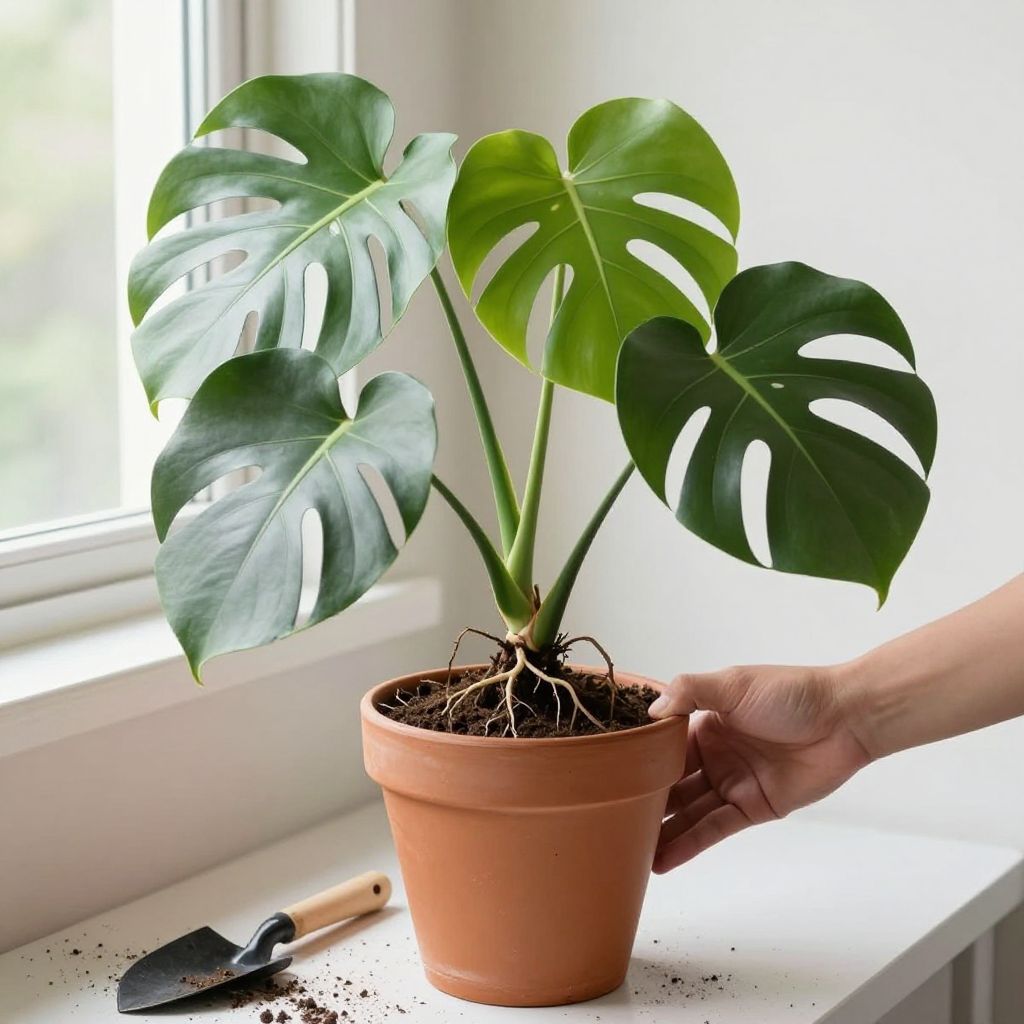
Do monsteras like to be root bound? Many plant owners notice their Monstera starts looking fuller and climbing more strongly once the roots fill the pot a bit. That can be true, but there is a difference between mildly root bound and badly cramped.
The goal is not to keep a Monstera squeezed forever. A slightly snug pot can support healthy growth, but severe root crowding eventually slows the plant down and can cause watering and nutrient problems.
Do Monsteras Like To Be Root Bound?
Yes, monsteras often tolerate being slightly root bound, and many grow well when their roots have filled most of the pot. But they do not thrive long-term in a tightly packed container. A little root snugness can encourage stability and leaf production; extreme crowding usually leads to stress, poor watering performance, and stalled growth.
Why a Slightly Tight Pot Can Help Monstera Growth
Monstera deliciosa and related houseplant monsteras are climbing aroids that naturally produce strong aerial and soil roots. In a pot, a modestly snug root system can help the plant focus energy on foliage and support rather than endlessly expanding roots.
That said, the benefit is only moderate. A Monstera is not a plant that should be kept pot-bound for years as a rule. It still needs room for healthy roots, oxygen in the potting mix, and enough moisture to move through the root ball evenly.
What “slightly root bound” looks like
- Roots may circle the inside of the pot, but the plant still drinks normally.
- New leaves continue to emerge, even if more slowly.
- The plant feels stable in the container.
- Water soaks in and drains without immediately running out the sides.
What “too root bound” looks like
- Roots are densely packed and circling heavily at the bottom.
- Water drains too quickly or sits on top of the mix.
- The plant dries out very fast, sometimes within a day or two.
- Leaves get smaller, growth slows, or lower leaves yellow despite normal care.
- The pot may bulge, crack, or lift from the root mass.
Signs Your Monstera Needs Repotting
Instead of repotting on a strict schedule, check the plant itself. Monsteras grow at different speeds depending on light, temperature, pot size, and season, so the right time to repot depends on how the roots and foliage are behaving.
- Roots emerge from drainage holes or push the plant upward.
- The pot dries out much faster than it used to.
- Water runs straight through without moistening the mix.
- Leaves become smaller or growth slows noticeably during the active season.
- The plant becomes top-heavy and unstable.
- Roots are visible at the soil surface and are tightly coiled.
If your Monstera still looks vigorous and the root ball is only moderately full, you can often wait. If it is clearly stressed, repotting is usually the better choice than leaving it cramped.
How Root Bound Affects Watering and Nutrition
Root crowding changes how the pot behaves. A dense root ball can make it harder for water to spread evenly through the mix, and that can create dry pockets or sudden drought stress. It can also reduce access to fresh potting mix, which limits nutrient availability over time.
In a severely root bound Monstera, you may see a frustrating cycle: the plant dries out quickly, then you water more often, but the center of the root ball may still stay too dry or too wet. That uneven moisture is one reason crowded plants decline.
Practical watering adjustments for a snug Monstera
- Check moisture with your finger or a moisture meter before watering.
- Water slowly and thoroughly until excess drains from the bottom.
- If the mix is very compacted, soak the pot briefly from the bottom or water in stages so the roots can absorb evenly.
- Empty the saucer after watering so the plant is not left sitting in runoff.
A root bound Monstera is not a reason to water more often on a fixed schedule. Always adjust to the potting mix, pot size, season, and indoor conditions.
When to Repot a Monstera
Repot when the plant is clearly outgrowing its container, not just because it has been a year or two since the last move. Many Monsteras do well being repotted every 1 to 2 years when actively growing, but slower-growing plants may need less frequent attention.
The best time is usually during active growth, when the plant can recover more quickly. In many homes that means spring or early summer, but your indoor conditions matter more than the calendar.
Choose a pot only one size larger
Move up just 1 to 2 inches wider in diameter for most houseplant Monsteras. A pot that is too large can stay wet too long and increase the risk of root rot.
Use a chunky, well-draining mix
Monsteras prefer an airy potting medium rather than dense garden soil. A good mix should hold some moisture while still allowing oxygen around the roots.
- Quality indoor potting mix
- Orchid bark or coco chips for structure
- Perlite or pumice for drainage
- Optional small amount of compost for nutrients, if the mix is still airy
Avoid heavy, compacted soil that stays soggy. Monsteras need moisture, but they also need air around the roots.
How to Repot a Root Bound Monstera
Repotting a crowded Monstera is straightforward if you work gently. The main goal is to loosen the root ball just enough to encourage outward growth without tearing healthy roots unnecessarily.
- Water the plant lightly the day before if the mix is very dry.
- Prepare a pot with drainage holes and a fresh, airy potting mix.
- Slide the plant out and inspect the roots.
- Gently tease apart any tightly circling outer roots.
- Trim only dead, mushy, or badly damaged roots with clean pruners.
- Set the plant at the same depth it was growing before.
- Backfill with fresh mix and firm lightly, not tightly.
- Water thoroughly and let excess drain away.
If the plant is only mildly root bound, you do not need to aggressively break apart the entire root mass. A light loosening is usually enough.
When to divide instead of repot
If your Monstera has multiple stems or is extremely crowded, division can be an option. This is more advanced and should only be done if the plant is healthy and you can separate sections with their own roots.
Should You Ever Leave a Monstera Root Bound?
Sometimes, yes. If the plant is healthy, growing steadily, and the pot is only slightly tight, you can leave it alone for a while. This is especially reasonable if you want to avoid disturbing a plant during a low-light season or while it is recovering from stress.
Still, “leave it alone” should not mean “ignore it indefinitely.” Once a Monstera becomes severely root bound, growth and health usually suffer.
Good reasons to wait
- The plant is growing well and the roots are only moderately full.
- You recently repotted and the plant is still adjusting.
- It is a difficult season for recovery in your home, such as very low light.
- You are trying not to disturb a flowering or newly propagated plant, if applicable.
Good reasons to repot now
- Roots are circling densely and crowding the pot.
- The plant dries out too fast to manage comfortably.
- Growth has stalled despite good light and care.
- The potting mix has broken down and stays wet or compacted.
- You suspect root rot, pests, or a badly damaged root system.
Common Mistakes to Avoid
Many Monstera problems blamed on being root bound are actually caused by poor drainage, low light, or overwatering. A healthy root system needs the right container and the right environment.
- Using a pot that is too large after repotting, which can keep the mix wet too long.
- Choosing a dense soil that suffocates roots.
- Letting the plant sit in standing water.
- Repotting only by the calendar instead of checking root health.
- Pulling roots apart roughly and damaging too much of the root ball.
- Ignoring low light, which can make the plant look weak even in a good pot.
Light, Support, and General Care Matter Too
Root space is only one part of Monstera care. Even a perfectly potted plant will struggle if it does not get enough light, support, or moisture balance.
Most Monsteras do best in bright, indirect light. They also appreciate a moss pole, stake, or trellis once they begin climbing. Support helps the plant grow larger leaves and keeps the stems from sprawling as the plant matures.
Quick care checklist for healthy growth
- Bright, indirect light
- Pot with drainage holes
- Chunky, airy potting mix
- Even moisture, not constant sogginess
- Support for climbing stems
- Regular inspection for pests such as spider mites, mealybugs, and scale
Pests and Root Stress
Stressed, root bound Monsteras can be more vulnerable to pests and disease because the plant is already working harder to take up water and nutrients. Check leaves, stems, and the undersides of foliage regularly.
If you notice sticky residue, fine webbing, cottony clusters, or raised bumps on stems, address pests promptly. Also watch for yellowing leaves, soft stems, or a sour smell from the potting mix, which can point to overwatering or root rot rather than simple crowding.
Conclusion: The Best Balance for a Monstera
So, do Monsteras like to be root bound? They can handle being slightly root bound, but they do not like being severely cramped. The healthiest approach is to let the plant become a little snug, then repot before the root ball becomes dense enough to interfere with watering, growth, and root health.
Take a few minutes to check your Monstera’s drainage, root space, and potting mix today. If the roots are crowded but still healthy, move it up one pot size with a chunky mix and give it room to keep growing.
If you want to keep improving your Monstera care, it also helps to read more about Monstera deliciosa care basics and how to repot a Monstera safely.