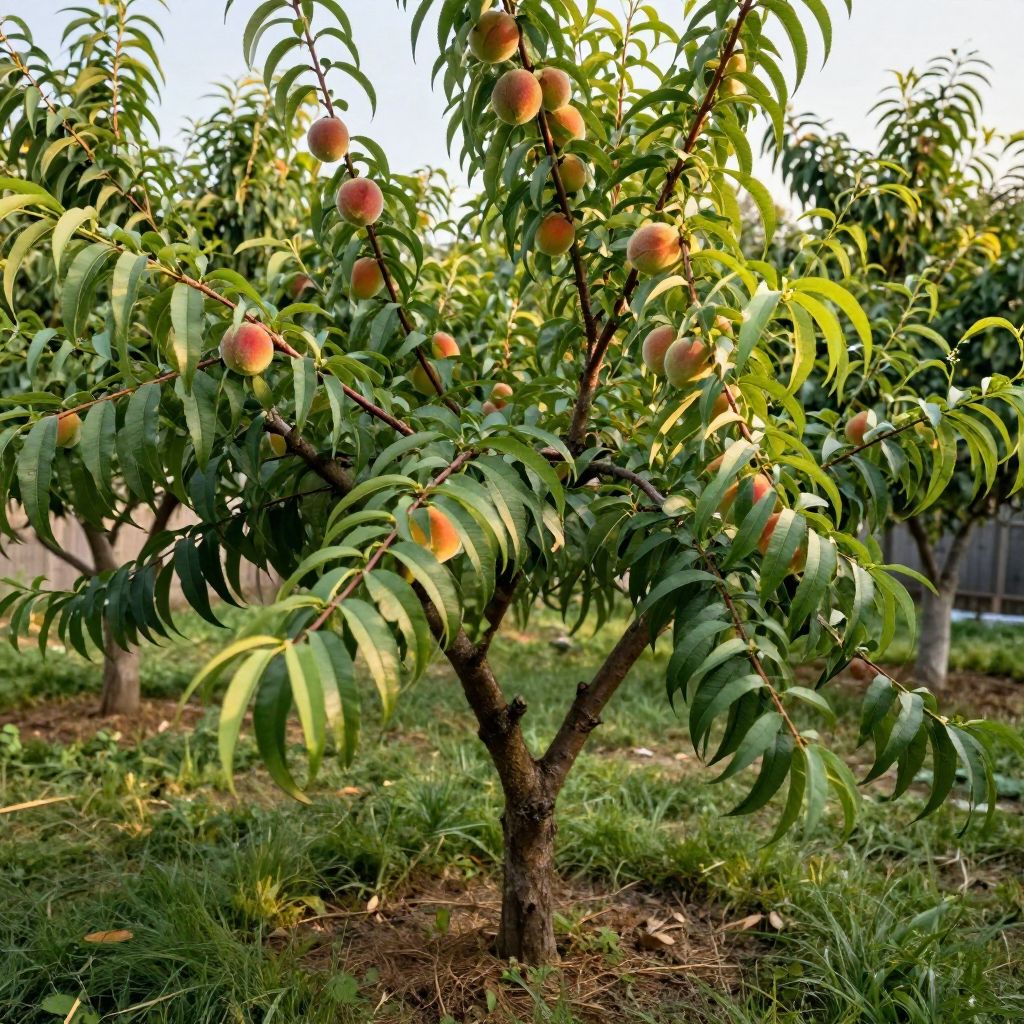
Do peaches grow on trees? Yes—they grow on deciduous fruit trees, not vines or shrubs, and the edible fruit comes from the peach tree, Prunus persica. If you want good harvests, the real question is less “tree or not” and more whether your climate, soil, and care can support healthy growth.
Peach trees are rewarding but a little demanding. They need full sun, well-drained soil, regular pruning, and protection from common pests and diseases to produce sweet, good-quality fruit.
Do peaches grow on trees?
Yes. Peaches grow on peach trees, usually small to medium-sized fruit trees in the genus Prunus. The fruit forms on branches that were grown the previous season, so tree structure, sunlight, and pruning all affect how much fruit you get. Healthy trees can bear well for many years with proper care.
What a peach tree needs to grow well
Peach trees are best suited to places with warm summers, enough winter chill for dormancy, and a site that drains quickly after rain. They do not like soggy roots, deep shade, or crowded planting spots.
Sunlight
Give peach trees full sun, meaning at least 6 to 8 hours of direct light daily. More sun usually means better flowering, stronger growth, and sweeter fruit.
Soil and drainage
Peaches grow best in fertile, loamy soil that drains well. Heavy clay can work only if it is improved and planted in a raised bed or mound, because standing water can stress roots and invite disease.
If your soil drains slowly, test it before planting. Dig a hole about 12 inches deep, fill it with water, and see how long it takes to empty. If water remains for hours, choose a better site or build up the planting area.
Climate and winter chill
Peach trees need a period of winter dormancy, and many varieties require a certain amount of cold weather to flower properly. Because chill needs vary by variety, choose a tree that matches your local climate rather than guessing.
How to plant a peach tree
Planting correctly gives your tree the best start. The most common mistake is planting too deeply or in poorly drained soil, which can weaken the tree from the beginning.
- Choose a sunny site with room for the mature canopy.
- Dig a hole wider than the root ball, but no deeper than the roots.
- Set the tree so the root flare sits at or slightly above soil level.
- Backfill with native soil unless your soil is extremely poor; avoid creating a “pot” of loose compost that traps water.
- Water thoroughly to settle the soil.
- Mulch with 2 to 4 inches of organic material, keeping mulch a few inches away from the trunk.
Do not bury the graft union. On many nursery trees, the graft should remain above the soil line so the tree grows properly.
Container growing
Peach trees can be grown in large containers if you choose a compact variety and use a pot with excellent drainage. Container trees dry out faster than in-ground trees, so monitor moisture closely and repot as roots fill the container.
Watering, feeding, and mulch
Young peach trees need consistent moisture while they establish roots, but they should never sit in waterlogged soil. Mature trees usually need less frequent watering, though fruit development can suffer during extended dry periods.
Watering tips
- Water deeply rather than giving frequent shallow sprinkles.
- Check soil moisture a few inches below the surface before watering again.
- Increase watering during hot, dry weather and while fruit is swelling.
- Reduce watering if the soil stays damp for long periods.
Compost can help improve soil structure and fertility, especially in poor soils. A light topdressing in spring is usually enough for established trees; avoid overfeeding, which can push leafy growth at the expense of fruit.
Mulch benefits
Mulch helps conserve moisture, moderate soil temperature, and suppress weeds. Keep it loose and airy, and refresh it as it breaks down. Never pile mulch against the trunk, because that can encourage rot and pests.
Pruning peach trees for fruit production
Pruning is one of the most important parts of peach tree care. Peach trees fruit on one-year-old wood, so regular pruning helps keep the tree open to light and encourages productive new shoots.
Why pruning matters
- Improves air circulation and reduces disease pressure.
- Lets sunlight reach fruiting wood.
- Keeps the tree manageable for harvesting and spraying if needed.
- Encourages strong, productive new growth.
Basic pruning approach
Many home gardeners train peaches to an open-center shape, which helps light reach the interior. Remove crowded, crossing, damaged, or inward-growing branches, and keep the center from becoming dense.
Prune during the dormant season in your climate, and make clean cuts with sharp, sanitized tools. If you are unsure how much to remove, start conservatively and improve the structure over time rather than overcutting the tree in one season.
Common pests and diseases
Peach trees can be affected by insects and fungal or bacterial diseases, especially in humid climates or when trees are crowded. Good airflow, sanitation, and regular inspection are your best defenses.
Common pests
- Peach tree borers can damage trunks and lower branches.
- Aphids cluster on tender growth and can distort leaves.
- Scale insects may weaken branches over time.
- Curculios and other fruit pests can damage developing fruit in some regions.
Common diseases
- Peach leaf curl causes thickened, distorted leaves in spring.
- Brown rot can affect blossoms, shoots, and ripening fruit.
- Bacterial spot may create leaf and fruit lesions in warm, wet conditions.
To reduce problems, rake up fallen leaves and mummified fruit, prune for airflow, and avoid overhead watering late in the day. Choose disease-resistant varieties when possible, especially if peach leaf curl is common in your area.
When to act
If leaves curl, fruit spots develop, or branches die back, inspect the tree promptly. Early action is easier than trying to correct a major outbreak later in the season.
How long until a peach tree fruits?
Young peach trees often begin producing fruit within a few years, but timing depends on the tree’s age at planting, variety, growing conditions, and care. A tree that gets strong sun, proper pruning, and balanced moisture is more likely to establish well and fruit earlier.
Do not expect heavy crops immediately. In the first couple of seasons, it is often better to focus on root growth and structure than on maximizing yield.
Why a peach tree may not fruit
- Not enough sun
- Improper pruning that removes fruiting wood
- Late frost damaging blossoms
- Too much nitrogen fertilizer
- Poor pollination or weather during bloom
- A variety not suited to your climate
Harvesting peaches at the right time
Peaches are best picked when they are fully colored, fragrant, and slightly soft at the stem end. They do not improve much after picking, so timing matters more than with some other fruits.
Gently lift the fruit and twist it from the branch. If it resists strongly, give it more time. If birds, insects, or cracking are becoming a problem, harvest as soon as the fruit is ripe enough to use.
Signs of ripeness
- Good background color for the variety
- Sweet aroma
- Fruit yields slightly to gentle pressure
- Easy release from the branch
Growing peaches in a home landscape
Peach trees can be attractive as well as productive, but they need enough space and regular maintenance. Plant them where you can reach the canopy for pruning, thinning, and harvest.
Because they bloom early, avoid low spots where cold air settles and late frosts are more likely to damage flowers. A slightly elevated, sunny site is often better than a sheltered but shaded corner.
Good companion planting habits
Keep the area under the tree relatively clear so you can monitor pests, reduce competition, and maintain airflow. Low-growing groundcovers or mulch are usually better than dense plantings right against the trunk.
Practical mistakes to avoid
- Planting in shade or poor drainage
- Burying the trunk flare or graft union
- Overwatering during cool, wet weather
- Skipping annual pruning
- Leaving fallen fruit and diseased leaves under the tree
- Choosing a variety that does not match your climate
Conclusion
So, do peaches grow on trees? Absolutely—and with the right site, pruning, and disease prevention, a peach tree can become a productive part of your garden. Start by checking your sunlight, drainage, and climate fit, then choose a suitable tree and give it a careful first planting.
For more fruit-tree help, you may also want to read about pruning fruit trees and improving garden soil drainage.