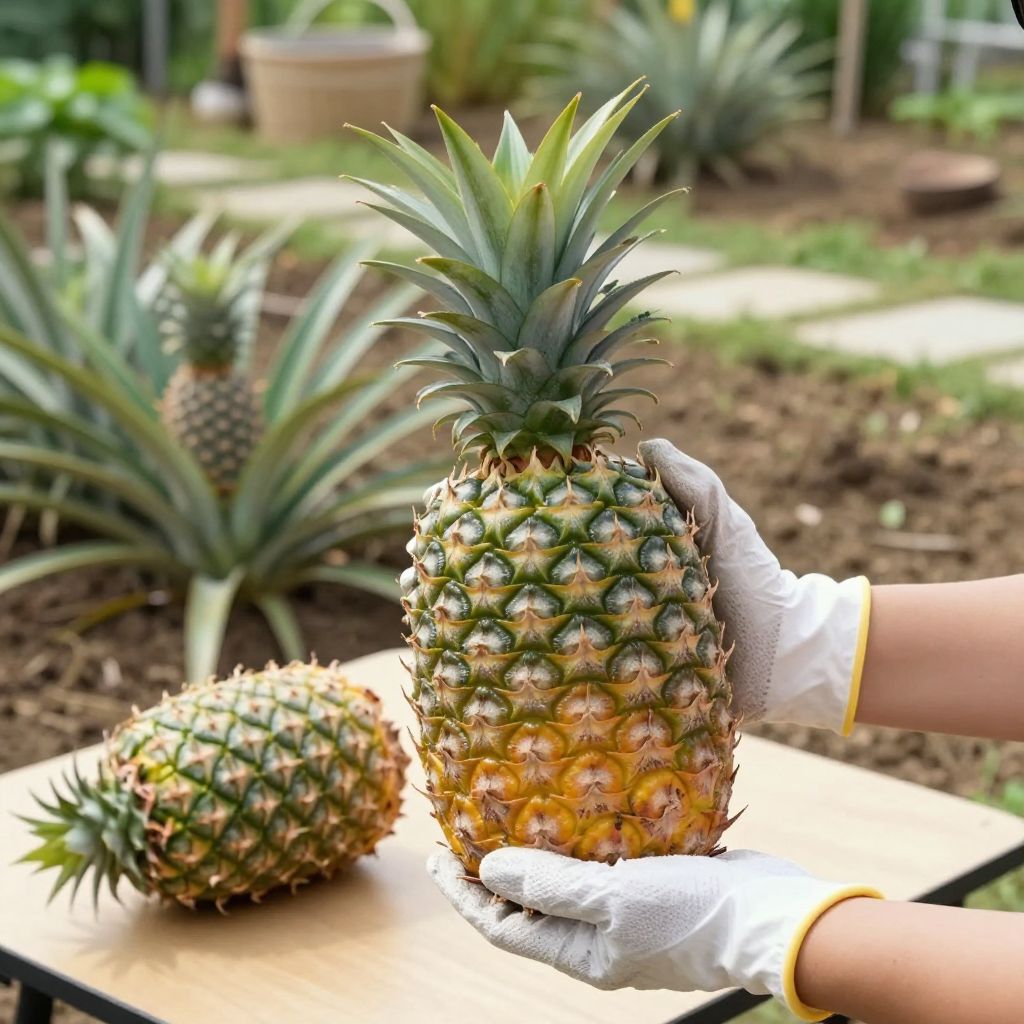
Do pineapples ripen after picking? If you’ve harvested a pineapple too early, you’re probably hoping it will sweeten on the counter the way some fruits do. Pineapples are different: they can soften and smell more fragrant after harvest, but they do not truly ripen or get significantly sweeter once picked.
That means the best flavor comes from harvesting at the right stage. If you grow pineapples at home, knowing when to pick, how to handle the fruit, and how to care for the plant will make a bigger difference than trying to ripen it later.
Do pineapples ripen after picking?
No. Pineapples do not continue ripening in the same way bananas, peaches, or tomatoes do. After picking, they may become softer, more aromatic, and slightly less acidic, but they will not develop much more sugar. For the sweetest fruit, harvest a pineapple when it is fully mature and showing good color and fragrance.
How to tell when a pineapple is ready to harvest
Because pineapples don’t improve much after harvest, timing matters. A ripe pineapple should look and smell mature before you cut it from the plant.
Signs of maturity
- Color change: The shell shifts from green to yellow or golden from the base upward.
- Fragrance: A ripe fruit has a sweet pineapple scent, especially near the base.
- Plump eyes: The fruit segments look full, not flat or sharply angular.
- Size: It has reached the expected size for the plant and variety.
- Firmness: It should feel firm but not rock-hard.
Color alone is not enough. In warm climates, pineapples can color up before they are fully sweet, while in cooler or shaded conditions they may stay greener longer even when mature.
Signs you picked too early
- Little or no aroma
- Very tart flavor
- Small, undeveloped fruit segments
- Hard flesh with low juice content
If you harvest too soon, the fruit may still be edible, but it usually won’t reach the sweetness you were hoping for.
What happens to a pineapple after harvest?
After picking, a pineapple may continue to soften for a short time as starches shift and the fruit loses moisture. That can make it seem riper, but sweetness changes very little. In practical terms, the fruit is mostly “finished” at harvest.
That is why home growers should focus on harvest timing rather than post-picking ripening. Once cut, the fruit quality will slowly decline, especially if it is stored too warm or too long.
How to harvest a pineapple for the best flavor
Use clean, sharp pruners or a knife and cut the fruit with a short section of stem attached. Handle it gently, because bruising can speed spoilage and affect texture.
- Check the fruit for color, fragrance, and size.
- Grip the fruit firmly and inspect the crown and base.
- Cut the stem 1 to 2 inches below the fruit.
- Place the pineapple in a shaded, cool spot right away.
- Use or refrigerate it soon after harvest.
If the fruit is nearly ready but not quite at peak color, you can still harvest it when the first signs of yellowing appear. Waiting too long on the plant can invite pests, splitting, or over-softening in hot weather.
Can you improve flavor after picking?
You cannot truly ripen a pineapple after picking, but you can preserve its best possible quality. Keep it at room temperature only briefly if you want the aroma to develop a little more, then refrigerate it if you are not eating it soon.
Best storage practices
- Keep the fruit whole until you are ready to use it.
- Store it in a cool, dry place out of direct sun.
- Refrigerate if you need to hold it for a few days.
- Avoid sealing it in airtight plastic while warm, which can trap moisture.
Do not expect a green, immature pineapple to become sweet on the counter. It may soften, but the flavor will remain disappointing compared with a properly harvested fruit.
Growing pineapples so they ripen well on the plant
If you grow pineapple plants, the real goal is to help the fruit mature fully before harvest. Pineapples are tropical bromeliads that need warmth, bright light, and excellent drainage to produce quality fruit.
Light and temperature
Pineapples grow best in full sun or very bright light. Indoors, place the plant in the brightest window you have, or use supplemental grow lights if natural light is limited.
They prefer warm conditions and are sensitive to cold. Growth slows in cool weather, and fruit development can stall if temperatures drop too much. If you garden outdoors, protect plants from frost and prolonged chill.
Soil and drainage
Good drainage is essential. Pineapples dislike soggy soil, which can lead to root rot and poor fruit development.
- Use a loose, well-draining potting mix for containers.
- In the ground, plant in sandy or amended soil that drains quickly.
- Avoid heavy clay unless you improve it substantially with organic matter and drainage adjustments.
A slightly acidic to neutral soil is generally suitable, but drainage matters more than perfect pH for most home gardeners.
Watering and feeding
Water thoroughly, then let the upper layer of soil dry a bit before watering again. Pineapples tolerate short dry periods better than constant wetness.
Feed lightly during active growth if your soil is poor, but avoid overfertilizing. Too much nitrogen can push leafy growth at the expense of fruit quality. Compost can help improve soil structure outdoors, while container plants benefit from a balanced, gentle feeding approach suited to bromeliads or fruiting tropicals.
Common mistakes that affect pineapple flavor
Several growing errors can leave you with fruit that looks ready but tastes flat. Most of them are easy to avoid once you know what to watch for.
- Harvesting too early: The most common mistake and the hardest to fix afterward.
- Too little light: Weak light slows sugar development and fruit coloring.
- Overwatering: Wet roots can reduce plant vigor and fruit quality.
- Poor drainage: Standing water encourages rot and stunted growth.
- Overfeeding with nitrogen: You may get lush leaves but bland fruit.
If your pineapple plant is healthy but the fruit is underwhelming, review light, drainage, and harvest timing first. Those three factors usually explain most flavor problems.
Indoor vs. outdoor pineapple growing
Whether you grow pineapples in a pot indoors or in a warm outdoor garden, the same basic rule applies: the fruit should be harvested ripe, not expected to ripen later.
Indoor plants
Indoor pineapples often need extra light to develop good fruit. Rotate the pot occasionally so the plant grows evenly, and make sure the container drains freely. Watch for mealybugs and scale, which can hide in leaf bases.
Outdoor plants
Outdoor pineapple plants usually produce better fruit when they receive strong sun and steady warmth. In humid climates, keep air moving around the plant to reduce fungal issues. In cooler regions, container growing may be easier because you can move the plant to shelter when needed.
Pests and diseases that can affect fruit quality
Healthy foliage supports better fruiting. If the plant is stressed by pests or disease, fruit may stay small, pale, or less flavorful.
- Mealybugs and scale: These sap-feeding pests weaken the plant and can attract ants.
- Root rot: Usually caused by poor drainage or overwatering.
- Leaf spot and fungal issues: More likely in wet, crowded, or poorly ventilated conditions.
Inspect the base of the plant and leaf axils regularly. Early detection makes control much easier and helps the plant put energy into fruit development rather than recovery.
Propagating pineapples for future harvests
After you harvest a pineapple, you can often start a new plant from the crown. This is one of the easiest ways to keep a home pineapple patch going.
- Twist or cut off the leafy crown from the fruit.
- Remove a few lower leaves to expose a short stem.
- Let the crown dry for a day or two.
- Root it in a small pot with a well-draining mix.
- Keep it warm, bright, and only lightly moist while roots form.
Propagation won’t help the fruit you already picked, but it does give you another chance to grow a plant that can produce better-timed fruit in the future.
Quick answer: what to do if your pineapple was picked too early
If you harvested too soon, the best move is to accept that it will not become much sweeter. Let it sit briefly at room temperature only if you want a little more aroma, then refrigerate it and use it sooner rather than later. For the next fruit, wait for stronger color, fragrance, and size before cutting.
Conclusion
So, do pineapples ripen after picking? Not really. They may soften and smell sweeter, but they do not gain much sugar once harvested. The best strategy is to grow the plant well, watch for clear maturity signs, and pick the fruit at the right stage. If you have a pineapple plant now, check its color and fragrance today and plan your harvest accordingly.
If you’re interested in improving your tropical container setup, you may also want to read more about container plant drainage and soil mix basics and how to grow tropical fruit plants indoors.