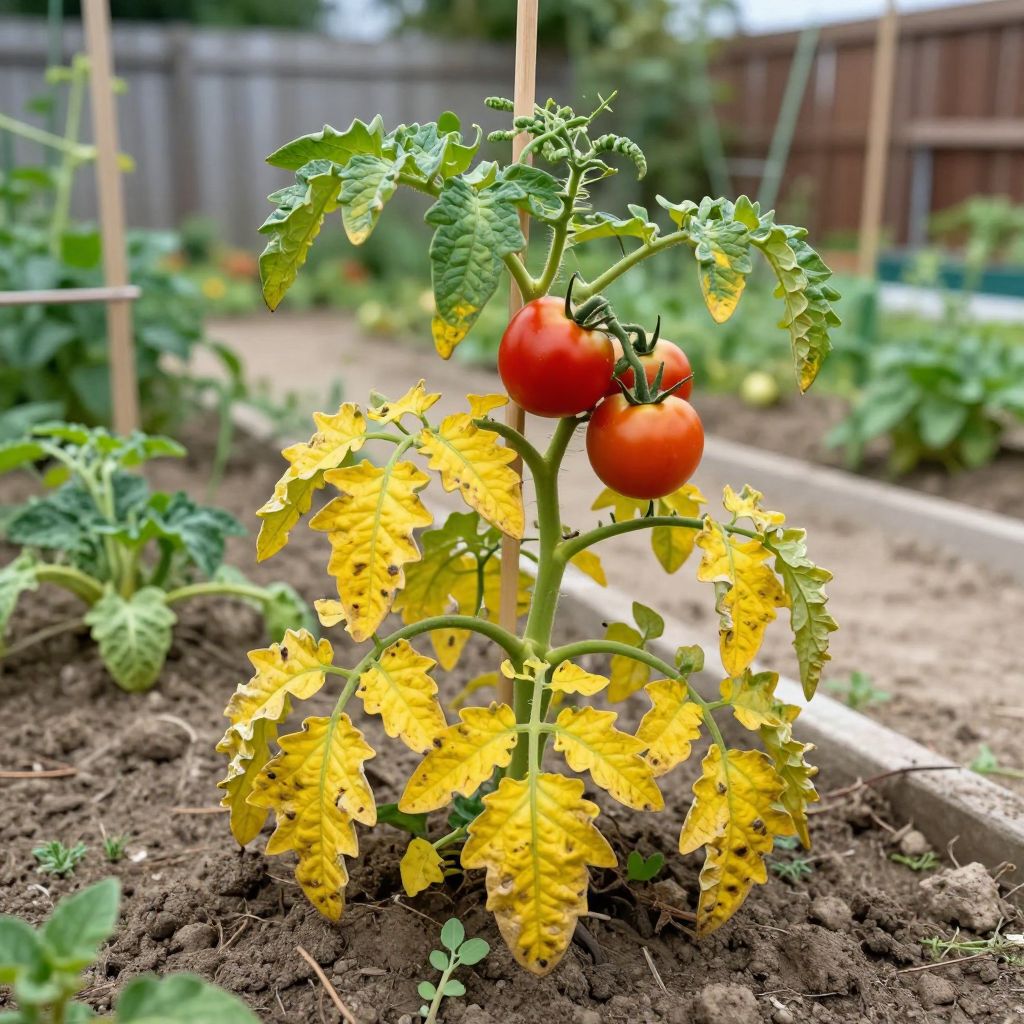
Why is my tomato plant turning yellow? Yellowing leaves usually mean the plant is stressed, not that it is doomed. The cause is often something simple such as uneven watering, poor drainage, low nutrients, or too little light, but pests and diseases can also be involved. The key is to look at where the yellowing starts and how fast it spreads.
Tomatoes are resilient, and many yellowing problems can be corrected if you catch them early. A careful check of the leaves, stems, soil, and roots will usually point you toward the right fix.
Why is my tomato plant turning yellow?
Tomato plants turn yellow when they cannot take up water, nutrients, or enough energy to support healthy growth. The most common causes are overwatering, underwatering, nitrogen deficiency, poor drainage, root stress, low light, pests, and diseases. Start by checking the oldest leaves, newer growth, and soil moisture to narrow down the problem.
Check the pattern of yellowing first
The pattern of yellowing tells you a lot. Before changing anything, look closely at which leaves are affected and whether the yellowing is uniform, patchy, or between the leaf veins.
What the symptoms can mean
- Lower, older leaves turning yellow first: often a nitrogen shortage, normal aging, or root stress.
- Whole plant looks pale or yellow: often poor light, poor nutrition, or waterlogged roots.
- Yellow leaves with brown spots or halo marks: may indicate disease.
- Yellowing with curled leaves or sticky residue: often a pest problem.
- Yellowing on new growth first: can point to iron or other micronutrient issues, or root damage.
Common causes and how to fix them
1. Overwatering or poor drainage
One of the most common reasons for yellow tomato leaves is soil that stays too wet. When roots sit in soggy soil, they cannot get enough oxygen, and the plant begins to yellow, droop, and stall.
Check the soil with your finger 2 to 3 inches down. If it feels wet for days after watering, drainage is likely the issue.
- Let the top layer of soil dry slightly before watering again.
- Make sure containers have drainage holes.
- Empty saucers under pots so water does not sit around the roots.
- In beds, improve drainage by mixing in compost and avoiding compacted soil.
- If the plant is in a low spot that collects water, consider moving or replanting it.
Important: Yellow leaves caused by waterlogged roots often do not turn green again, but new growth can recover if conditions improve.
2. Underwatering or irregular watering
Tomatoes need consistent moisture, especially once they are flowering and fruiting. If the soil dries out too much and then gets soaked, the plant can yellow, wilt, and drop leaves.
Irregular watering is especially common in containers, raised beds, and hot weather.
- Water deeply so moisture reaches the root zone.
- Mulch with straw, shredded leaves, or other organic mulch to slow evaporation.
- Check containers daily in warm weather, since pots dry faster than garden beds.
- Water at the base of the plant rather than overhead when possible.
3. Nitrogen deficiency
Tomatoes are heavy feeders. If older leaves turn pale yellow while the veins may stay slightly greener, the plant may be short on nitrogen.
This is more likely in sandy soil, in containers, or after repeated harvests without replenishing nutrients.
- Top-dress garden beds with finished compost.
- Use a balanced fertilizer or a tomato fertilizer according to the label directions.
- Avoid overdoing high-nitrogen fertilizer, which can produce lots of leafy growth but fewer flowers and fruit.
If the plant is already fruiting, a light feeding is usually better than a strong one. Too much fertilizer can stress roots and cause more problems than it solves.
4. Lack of sunlight
Tomatoes need full sun to stay vigorous. If they receive too little direct light, they may grow leggy, weak, and yellow. This is common when plants are shaded by trees, fences, buildings, or nearby crops.
- Look for at least 6 to 8 hours of direct sun in most climates.
- Prune nearby plants only if they are truly blocking light.
- If tomatoes are in pots, move them to a sunnier spot.
- For indoor starts, use a strong grow light if natural light is limited.
5. Cold stress or temperature swings
Tomatoes dislike cold nights and sudden weather changes. Cool soil and chilly temperatures can slow nutrient uptake and cause leaves to yellow, especially in spring or during an early fall cold snap.
If temperatures are still low for your area, the plant may improve as the weather warms.
- Use row covers or cloches for temporary protection in cool weather.
- Wait to transplant outdoors until night temperatures are reliably mild for your region.
- Keep container plants away from cold concrete or windy spots.
6. Pests that weaken the plant
Insects can cause yellowing by feeding on sap, damaging leaves, or spreading disease. Common tomato pests include aphids, whiteflies, spider mites, and whitefly-like insects. Their damage often shows up as pale, speckled, curled, or sticky leaves.
Inspect both sides of the leaves and the growing tips.
- Rinse small infestations off with a strong spray of water.
- Remove heavily infested leaves if needed.
- Encourage beneficial insects by avoiding unnecessary broad-spectrum sprays.
- Check for fine webbing, sticky honeydew, or clusters of tiny insects.
If the plant is badly stressed, pests can take advantage quickly. Healthy, well-watered tomatoes usually tolerate light pest pressure better.
7. Fungal and bacterial diseases
Some diseases begin with yellowing before spots, wilting, or leaf drop appear. Early blight, Septoria leaf spot, and bacterial leaf spot are common examples in home gardens.
These problems often start on lower leaves and move upward, especially in warm, humid conditions or when leaves stay wet for long periods.
- Remove affected lower leaves if the disease is limited.
- Water at soil level to keep foliage dry.
- Improve air circulation by spacing plants properly.
- Mulch to reduce soil splash onto leaves.
- Discard badly diseased foliage in the trash, not the compost, if disease is active.
Tip: If yellowing is paired with dark spots, wilting, or rapid spread, act quickly. Disease problems are easier to slow early than after they are widespread.
8. Root damage or transplant shock
Recently transplanted tomatoes may yellow for a short time while roots recover. This can happen after rough handling, root pruning, compacted soil, or planting too early into cold ground.
- Keep newly transplanted plants evenly moist, not soggy.
- Avoid heavy fertilizing until the plant shows new growth.
- Protect young transplants from strong wind and cold nights.
- Do not disturb the root zone more than necessary.
If the plant was healthy before transplanting and the yellowing is mild, it may simply need time.
9. Natural aging of lower leaves
Sometimes the oldest leaves yellow simply because the plant is redirecting energy to new growth and fruit. This is normal if only a few lower leaves are affected and the rest of the plant looks healthy.
In that case, you can trim off the yellowing leaves to improve airflow and keep the plant tidy.
- Remove only leaves that are fully yellow or damaged.
- Use clean pruners or scissors.
- Do not strip too many leaves at once, since tomatoes still need foliage to feed the fruit.
How to diagnose the problem step by step
- Check the soil moisture. Feel 2 to 3 inches down. Wet, sticky soil suggests overwatering or poor drainage; bone-dry soil suggests underwatering.
- Look at the pattern. Older leaves first often point to nutrients or aging; new leaves first may point to root or micronutrient issues.
- Inspect the leaves closely. Look for spots, holes, webbing, sticky residue, or tiny insects.
- Assess light exposure. Count how many hours of direct sun the plant gets.
- Check the roots if needed. In a container, roots that smell sour or look brown and mushy may be rotting.
- Review recent changes. Think about watering habits, fertilizer use, cold snaps, transplanting, or heavy rain.
What to do right away
If you want a practical starting point, make these adjustments first. They solve many yellowing problems without causing new ones.
- Water only when the soil needs it, not on a fixed schedule.
- Make sure the plant has good drainage.
- Remove badly yellowed or diseased lower leaves.
- Check for pests under leaves and on stems.
- Feed lightly if the plant is pale and the soil is poor.
- Give the plant more sun if it is shaded for much of the day.
How to prevent yellow tomato leaves
Prevention is mostly about steady care. Tomatoes do best when their roots stay evenly moist, their leaves stay dry, and their soil remains fertile but not overloaded with fertilizer.
Good habits for healthy plants
- Plant in well-drained soil enriched with compost.
- Use mulch to reduce stress from heat and drying.
- Space plants so air can move around them.
- Water at the base rather than soaking the foliage.
- Rotate tomato planting areas from year to year when possible.
- Clean up fallen leaves and old plant debris to reduce disease pressure.
For container tomatoes, use a large enough pot, fresh potting mix, and a container with drainage holes. Pots that are too small dry out fast and can worsen yellowing from both drought and nutrient shortages.
When yellowing is a sign of a bigger problem
If the whole plant is yellowing quickly, wilting despite moist soil, or showing blackened stems, severe spotting, or root rot, the issue may be more serious than a simple care mistake. In that case, remove the worst-affected material, improve growing conditions, and avoid replanting tomatoes in the same spot if disease is suspected.
If your tomato plant is turning yellow, start with the easiest checks: soil moisture, drainage, sunlight, and leaf symptoms. Most problems can be corrected with a few careful changes, and the plant may still produce well if new growth stays healthy. For more help with tomato care, look into related guidance on tomato pruning and common tomato diseases.