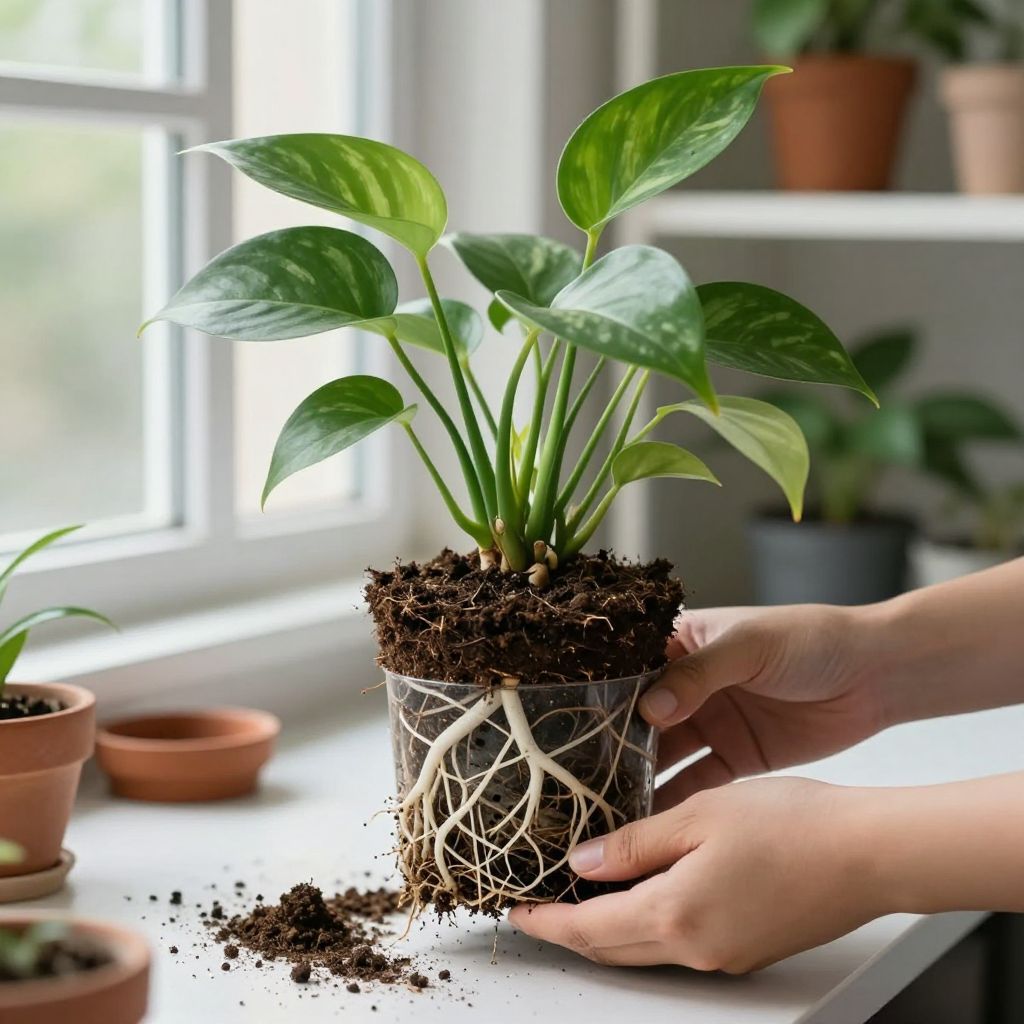
Do pothos like to be root bound? In many cases, yes—pothos often tolerate a snug pot better than a roomy one. A slightly crowded root system can help keep growth manageable and may even encourage fuller vines, but there is a limit. When the roots become tightly packed and the plant starts drying out too fast, it’s time to repot.
The key is learning the difference between “comfortably snug” and “too cramped.” With the right balance, your pothos can stay healthy, leafy, and easy to care for indoors.
Do pothos like to be root bound?
Yes, pothos (Epipremnum aureum) usually do well when their roots are a little crowded. A mildly root-bound pothos often grows steadily and may put more energy into leaves and vines instead of making lots of roots. But if the pot is severely packed, growth slows, watering becomes difficult, and the plant can decline.
Why a slightly root-bound pothos can be a good thing
Pothos are naturally adaptable houseplants. In a pot that is only slightly snug, they often stay compact, establish well, and avoid the stress that can come from too much extra soil staying wet around the roots.
Benefits of a lightly snug pot
- More controlled growth for indoor spaces where you do not want a vine to outgrow its spot too quickly.
- Less risk of overwatering than in an oversized pot filled with wet soil.
- Encourages a fuller look when paired with pruning and good light.
That said, root-bound is not a goal you should push too far. A pothos that is extremely cramped will eventually struggle.
Signs your pothos is comfortably snug versus too root bound
Normal signs of a slightly root-bound plant
- Roots may be visible at the drainage holes.
- The plant dries out a bit faster than it used to.
- Growth continues, though perhaps more slowly than when it was smaller.
- Leaves stay healthy and firm.
Signs it needs repotting soon
- Water runs straight through the pot or sits on top without soaking in well.
- The pot feels packed with roots when you lift the plant out.
- Leaves turn yellow, wilt, or look smaller than usual.
- New growth stalls for long periods during active growing season.
- The container may bulge, crack, or become unstable from root pressure.
Important: A pothos that is root bound and also staying wet for too long may be dealing with poor drainage, not just crowded roots. Always check both the roots and the soil.
When to repot a pothos
Repot when the plant is clearly outgrowing its container, not just because a calendar says it is time. Many pothos only need repotting every 1 to 2 years, and some can stay in the same pot longer if they are healthy and watering is still manageable.
Best time to repot
For indoor pothos, repotting is usually easiest during active growth, often in spring or early summer, when the plant can recover more quickly. If your home stays warm and bright year-round, you may have some flexibility. Avoid repotting a stressed plant unless the roots are badly constrained or the soil is failing.
How to repot a root-bound pothos
When your pothos needs more space, move it up only one pot size. A container that is 1 to 2 inches wider in diameter is usually enough. Going too large can leave excess soil wet for too long and increase the chance of root rot.
- Choose a pot with drainage holes.
- Use a well-draining indoor potting mix.
- Gently remove the plant from its pot.
- Loosen circling roots lightly with your fingers.
- Trim any black, mushy, or dead roots with clean scissors.
- Set the plant at the same soil level as before.
- Fill around the roots with fresh mix and water thoroughly.
If the roots are extremely tight, you can make a few shallow vertical cuts along the root ball with a clean knife or tease the roots apart gently. Do this carefully so you do not damage too much healthy tissue.
Soil mix that works well
Pothos prefer a loose, airy mix that drains well but still holds some moisture. A quality houseplant potting mix is usually fine. If your mix stays soggy, improve it with perlite or orchid bark to increase air space around the roots.
What happens if you leave a pothos root bound too long?
A pothos can survive being root bound for a while, but severe crowding eventually causes problems. The plant may become thirsty very quickly, stop growing, and start shedding leaves. In extreme cases, roots can become so dense that water cannot penetrate the pot evenly.
Common problems caused by severe root binding
- Frequent wilting even after watering
- Yellowing leaves from stress or uneven moisture
- Reduced leaf size
- Salt buildup in the potting mix
- Higher risk of root damage during watering and repotting
Another issue is nutrient imbalance. In a very crowded pot, the plant may use up available nutrients faster, but fertilizing heavily is not the answer. Fresh soil and a slightly larger pot are usually better than trying to fix a cramped root system with extra fertilizer.
How to tell if poor growth is from roots, light, or watering
Not every slow pothos is root bound. Low light, overwatering, underwatering, and compacted soil can all cause similar symptoms. Before repotting, look at the whole plant and its environment.
Quick troubleshooting guide
- Root bound: roots circling the pot, water drains too fast, plant dries quickly.
- Overwatered: soil stays wet, stems feel soft, leaves yellow and drop.
- Underwatered: leaves droop, soil pulls from the pot edges, pot feels very light.
- Too little light: long bare stems, slow growth, smaller leaves, wider spacing between leaves.
If the plant is in low light, repotting alone will not solve the problem. Pothos grow best in bright, indirect light, though they can tolerate lower light with slower growth. Better light often improves leaf size and overall vigor more than a bigger pot does.
Pruning, propagation, and root-bound pothos
Root-bound pothos often pair well with pruning. If the plant has become long and sparse, trimming the vines can help it look fuller. You can also use the cuttings to propagate new plants in water or moist potting mix.
Simple pruning tips
- Cut just above a node to encourage branching.
- Remove yellow or damaged leaves as needed.
- Do not remove too much foliage at once if the plant is already stressed.
Propagation is especially useful when repotting. If the root ball is large and tangled, you can refresh the parent plant and start a few new plants from healthy cuttings at the same time.
Watering a root-bound pothos the right way
A root-bound pothos usually needs closer attention to watering because the smaller amount of soil dries more quickly. Water thoroughly until excess drains from the bottom, then empty any saucer so the roots do not sit in standing water.
Helpful watering habits
- Check the top 1 to 2 inches of soil before watering.
- Water more often in bright light and warm rooms.
- Water less often in cooler seasons or low light.
- Make sure the pot has drainage holes every time.
Do not rely on a fixed schedule. Instead, use the feel of the soil and the weight of the pot. Root-bound plants can swing from too dry to too wet faster than larger, less crowded plants.
Common mistakes to avoid
- Using a pot that is far too large after repotting.
- Leaving compacted, stale soil around the roots.
- Ignoring drainage holes.
- Fertilizing heavily instead of repotting.
- Repotting during a period of stress unless necessary.
One of the biggest mistakes is assuming a root-bound pothos always needs a bigger pot immediately. If the plant is healthy and watering is manageable, you may be able to wait. But once roots are circling tightly and the plant struggles to take up water, repotting becomes the better choice.
Do pothos like to be root bound outdoors?
Pothos are most commonly grown as houseplants, but in warm climates they may be grown outdoors in containers or as landscape plants where conditions allow. In containers outdoors, the same rule applies: a little root crowding is fine, but severe binding is not. Outdoor plants may dry out faster in heat, wind, and bright sun, so check moisture more often.
If you grow pothos outdoors in a suitable climate, protect them from direct sun, heavy rain in poorly draining pots, and cold temperatures. Outdoor conditions can speed up both growth and drying, which means a root-bound plant may need repotting sooner than one kept indoors.
Conclusion: the best balance for a healthy pothos
Pothos do like to be a little root bound, but only up to a point. A slightly snug pot can support steady growth and make care easier, while severe crowding leads to stress and poor watering performance. Check the roots, not just the leaves, and repot when the plant clearly needs more room.
If you want to keep learning about pothos care, look for more guidance on indoor plant soil, pruning, and propagation so you can keep your vine healthy as it grows.