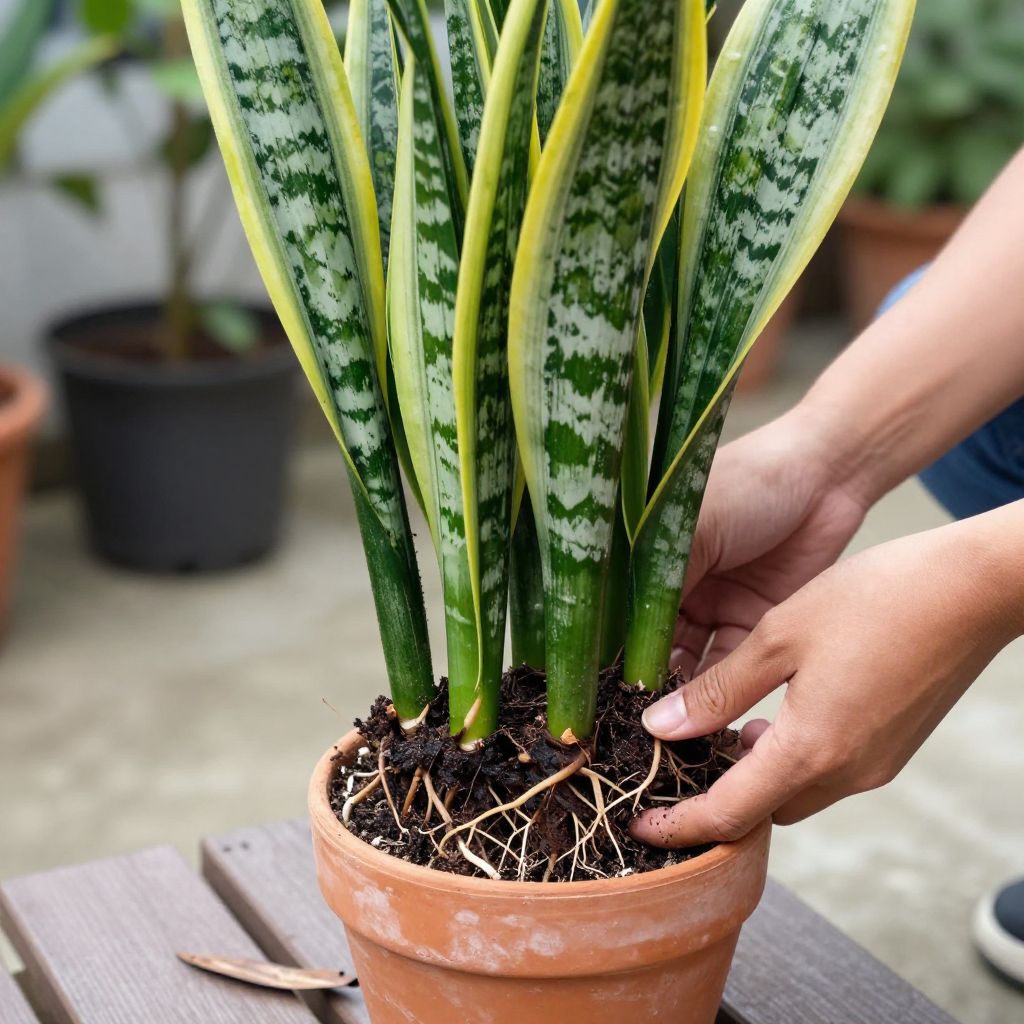
Do snake plants like to be root bound? In most cases, yes. Snake plants (Dracaena trifasciata, formerly Sansevieria) usually grow best when their roots are snug in the pot, and they often flower or stay compact longer under slightly crowded conditions.
That said, there is a difference between “comfortably root bound” and “severely pot bound.” If the pot is packed solid with roots, the plant may slow down, dry out too fast, or start to push itself upward. The goal is to keep snake plants lightly snug, not cramped.
Do snake plants like to be root bound?
Yes, snake plants generally prefer being slightly root bound. A snug pot helps them focus on steady growth instead of making lots of roots, and it also reduces the risk of overwatering. But if roots are circling tightly, breaking the pot, or lifting the plant out of the soil, it is time to repot.
Why snake plants often do better in tight pots
Snake plants are drought-tolerant succulents with thick rhizomes and fleshy roots that store water. In a pot that is too large, the extra soil stays wet longer, which increases the chance of root rot.
A smaller pot dries more evenly and supports the plant’s natural growth habit. For many indoor growers, that means fewer problems and a healthier-looking plant.
Benefits of a slightly root-bound snake plant
- Lower rot risk: less excess soil means less moisture sitting around the roots.
- More stable growth: the plant is less likely to flop or lean in a huge pot.
- Better watering control: you can judge moisture more accurately in a snug container.
- Slower, manageable size: helpful for indoor spaces where you do not want rapid spreading.
How to tell if a snake plant is comfortably snug or truly pot bound
Not every crowded snake plant needs immediate repotting. The key is to look at the plant’s behavior, not just the roots.
Signs it is happily root bound
- Growth is steady, even if slow.
- The plant stays upright and firm.
- Watering needs are normal for the season.
- Leaves look healthy and not wrinkled or soft.
Signs it is too root bound
- Roots are coming out of drainage holes.
- The pot bulges or cracks from pressure.
- Water runs straight through the pot very quickly.
- The plant dries out unusually fast.
- Leaves become crowded, distorted, or start splitting the pot.
- The plant is pushing upward and lifting out of the soil.
Signs the plant needs repotting for health, not just size
- Soil stays wet for too long.
- Leaves feel soft at the base.
- You notice a sour smell from the potting mix.
- Roots are black, mushy, or collapsing.
When to repot a snake plant
Repot only when the plant clearly needs more space or the soil has broken down. Snake plants do not need frequent repotting, and many do well for years in the same container.
For indoor plants, the best time is usually during active growth, often spring or early summer, when the plant can recover more quickly. If your climate is cool or your home has low light in winter, avoid repotting unless the plant is suffering.
Repot sooner if:
- The container is cracking or tipping.
- Roots are severely crowded.
- The potting mix has compacted and drains poorly.
- You suspect root rot and need to inspect the roots.
How to repot a root-bound snake plant
Repotting a snake plant is simple, but the right method matters. Use a pot with drainage holes and only step up one size at a time in most cases.
- Choose a pot that is just 1 to 2 inches wider than the current one.
- Prepare a fast-draining mix, such as cactus or succulent potting soil amended with perlite or pumice.
- Remove the plant carefully and loosen only the outer roots if they are tightly circling.
- Trim away any soft, black, or rotten roots with clean scissors.
- Set the plant at the same depth it was growing before.
- Fill in around the roots and firm the mix lightly.
- Wait a few days before watering if you cut roots, especially if the plant was very dry or damaged.
Do not bury the rhizomes too deeply. Snake plants can rot if the crown sits under wet soil for too long.
What kind of pot works best?
- Terracotta: helpful if you tend to overwater because it dries faster.
- Plastic: fine if you water carefully and the mix drains well.
- Decorative cachepots: use only if the inner pot has drainage holes.
Best soil and drainage for snake plants
Root-bound snake plants often suffer more from poor soil than from tight roots. The best mix is airy, fast-draining, and not overly rich.
Use a cactus or succulent mix, or make your own by blending regular potting soil with perlite, pumice, or coarse sand. The goal is to keep oxygen around the roots and prevent soggy conditions.
Avoid these common soil mistakes
- Heavy garden soil in pots
- Mixes that stay wet for many days
- Oversized pots filled with damp compost
- Containers without drainage holes
Watering a snake plant that is root bound
Root-bound snake plants usually need careful watering, not more frequent watering. Because the pot has less soil, it may dry faster, but the roots can still rot if the mix stays wet.
Water only when the soil is dry several inches down, or when the pot feels noticeably light. In cooler seasons or low-light rooms, the drying time may be much longer than in bright, warm conditions.
Practical watering tips
- Check the soil before watering; do not rely on a calendar alone.
- Water thoroughly, then let excess drain away completely.
- Empty saucers so roots do not sit in water.
- Reduce watering in winter if growth slows.
Light, temperature, and growth when roots are crowded
Snake plants tolerate low light, but they grow best in bright, indirect light. In brighter conditions, a slightly root-bound plant may still grow slowly and stay compact.
Low light does not make a snake plant “need” a bigger pot. In fact, low light plus a large pot is one of the easiest ways to create rot problems. If your plant is in a dim room, keep the pot modest and the soil especially free-draining.
Good growing conditions indoors
- Bright indirect light is ideal.
- Some gentle direct sun is often tolerated, depending on the room and climate.
- Normal indoor temperatures are usually fine.
- Avoid cold drafts and cold, wet soil.
Fertilizing a root-bound snake plant
Snake plants do not need heavy feeding. If the plant is healthy and root bound, a light feeding during the growing season can support gradual growth, but too much fertilizer can cause weak, lush growth and salt buildup in the pot.
Use a balanced houseplant fertilizer sparingly and only when the plant is actively growing. If you recently repotted or the plant is stressed, wait until it has settled in before feeding.
Common problems caused by staying too long in a small pot
A snake plant can remain root bound for quite a while, but not forever. Over time, the roots can become so dense that the plant struggles to take up water and nutrients properly.
What can happen
- The soil dries too quickly to support healthy growth.
- The plant becomes top-heavy and unstable.
- Leaves may look smaller or more crowded.
- Root mass can become so tight that water passes through without soaking in.
If that happens, repotting into a slightly larger container and refreshing the mix usually solves the problem better than simply watering more often.
Propagation and division when a snake plant is root bound
A crowded snake plant is often a good candidate for division. If the clump has multiple fans or separate rhizomes, you can divide it into smaller plants during repotting.
This is one of the easiest ways to manage size and create new plants at the same time. Each division should have healthy roots and at least one strong leaf fan.
Simple division steps
- Remove the plant from the pot.
- Gently separate the rhizomes by hand if possible.
- Use a clean knife only if the roots are tightly fused.
- Pot each division in a small container with drainage.
- Keep the soil lightly dry at first while the roots recover.
Pests and diseases to watch for
Root-bound snake plants are not especially prone to pests, but stressed plants are easier targets. Overcrowded roots and wet soil can also encourage disease.
Watch for these issues
- Mealybugs: white cottony insects in leaf joints or near the soil line.
- Spider mites: fine webbing and stippled leaves, especially in dry indoor air.
- Root rot: soft, dark roots and mushy base tissue from excess moisture.
If you find pests, isolate the plant and treat it promptly. If you find rot, remove damaged roots, refresh the soil, and improve drainage before watering again.
Quick care checklist for a root-bound snake plant
- Keep it in a pot with drainage holes.
- Use a fast-draining succulent mix.
- Water only when the soil is dry.
- Give bright, indirect light when possible.
- Repot only when roots are severely crowded or the soil has broken down.
- Move up just one pot size at a time.
Conclusion: the best balance for snake plants
Snake plants do like to be root bound, but only to a point. A slightly snug pot often keeps them healthier than an oversized container, as long as the soil drains well and you do not overwater.
If your plant is healthy, upright, and not drying out too fast, you can usually leave it alone. If you want more practical houseplant guidance, consider reading about how to choose the right pot for houseplants and how to tell when a plant needs repotting.