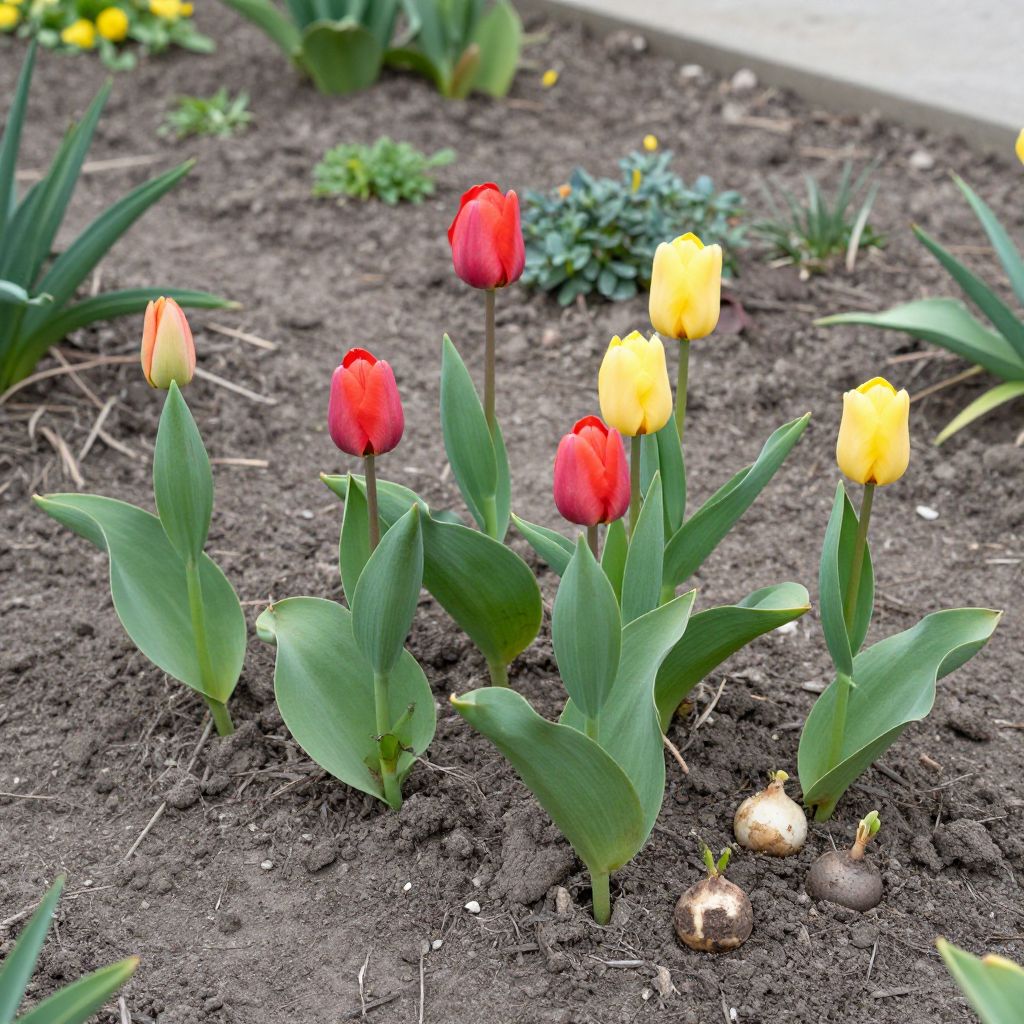
Do tulips spread? Yes, but not in the fast, invasive way many bulbs do. Tulips can naturalize and multiply over time, yet they usually spread slowly and only when they’re planted in the right conditions and left undisturbed.
If you want more tulips each year, the key is understanding how they reproduce: through offsets, bulb division, and sometimes seed. Good drainage, enough sunlight, and proper post-bloom care make the biggest difference in whether your tulips return and multiply.
Do tulips spread?
Tulips do spread, but most garden tulips spread slowly. Healthy bulbs may form small offsets, which are baby bulbs that grow beside the parent bulb. Over time, these can produce more flowers, especially in well-drained soil with enough sun and a proper winter chill.
How tulips spread in the garden
Offsets are the main way
The most common way tulips spread is by producing offsets. These small bulbs develop from the main bulb and can eventually become flowering bulbs of their own.
This process is gradual. In many gardens, you may see a clump become fuller over several years rather than a dramatic expansion in one season.
Seed spread is possible, but slow
Tulips can also spread by seed if flowers are allowed to mature and set seed. This is usually not the main method gardeners rely on because seed-grown tulips take several years to bloom and may not look like the parent plant.
If you want the same flower color and form, offsets are far more reliable than seed.
Naturalizing depends on the type of tulip
Some tulips are better at returning and multiplying than others. Species tulips and some perennializing types tend to naturalize more readily than large, showy hybrid tulips, which often bloom best for a few years and then decline.
If your goal is a long-lasting display, choose tulips known for naturalizing in your climate and soil conditions.
What helps tulips multiply?
Tulips spread best when they are planted in conditions that let the bulb store energy after flowering. The main factors are drainage, sunlight, soil quality, and how much the bulbs are disturbed after planting.
- Well-drained soil: Bulbs rot easily in soggy ground.
- Full sun to light shade: More sun usually means stronger bulbs and better flowering.
- Good post-bloom leaf growth: Leaves must stay intact long enough to feed the bulb.
- Proper planting depth: Bulbs planted too shallow are more vulnerable to weather and pests.
- Undisturbed clumps: Leaving bulbs in place can help offsets mature.
Soil and drainage matter most
If your soil stays wet in winter or spring, tulips are less likely to multiply well. Heavy clay can be improved with compost and careful bed preparation, but in some areas raised beds or containers may be the better option.
Good drainage is especially important because tulip bulbs are prone to rot when they sit in wet soil.
Sunlight supports stronger bulbs
Tulips usually perform best in a sunny spot with at least several hours of direct light each day. In cooler climates, full sun is ideal. In warmer regions, a little afternoon shade can help flowers last longer, but too much shade can weaken bulbs over time.
How to encourage tulips to spread and return
If you want tulips to multiply, focus on helping the bulb rebuild energy after bloom. The flower is only part of the story; the leaves are what feed next year’s bulb and any offsets forming beside it.
- Plant bulbs in autumn in a spot with good drainage and suitable sun.
- Set bulbs at the right depth, usually about 2 to 3 times the bulb’s height.
- Water after planting to settle soil, then avoid overwatering unless conditions are very dry.
- Let foliage stay on the plant after bloom until it yellows naturally.
- Deadhead spent flowers so the plant does not put energy into seed production.
- Leave bulbs undisturbed for a few seasons if the site is suitable.
Deadheading helps the bulb, not the bloom
Once the flower fades, remove the spent bloom before it forms seed. This does not make the same tulip flower again, but it can help the bulb conserve energy for next year and for offset formation.
Leave the leaves alone
Do not cut tulip foliage too early. The leaves need time to photosynthesize and recharge the bulb. If you remove them while they are still green, the bulb may shrink and flower less well the following year.
Why some tulips stop spreading
Many gardeners are disappointed when tulips bloom beautifully the first spring and then weaken. This usually happens because the bulb did not get enough energy after flowering, or because the growing conditions were not ideal for long-term performance.
Common reasons tulips decline
- Poor drainage causing bulb rot.
- Too much shade reducing bulb strength.
- Leaves cut back too early after flowering.
- Overcrowding leading to smaller blooms.
- Hot, dry summers in some climates stressing bulbs underground.
- Bulbs planted too shallowly or in poor soil.
If tulips are declining rather than spreading, the issue is usually site conditions, not the bulbs themselves.
Should you dig up tulip bulbs?
That depends on your goal. If you want the bulbs to spread naturally, leave them in place in a suitable bed. If flowering has declined, or if the planting is too crowded, lifting and replanting can help reset the display.
When to lift tulips
Lift bulbs only after the foliage has yellowed and died back naturally. Digging too early can interrupt the bulb’s energy storage. Once lifted, let the bulbs dry in a cool, airy place before replanting or storing them.
When to divide offsets
Offsets can be separated when the clump becomes crowded and flowering decreases. Small offsets may need a season or two to reach blooming size, so do not expect immediate flowers from every baby bulb.
Can tulips spread in containers?
Tulips can multiply in pots, but they usually spread less reliably than in the ground. Containers dry out and heat up faster, which can stress bulbs and reduce offset formation.
If you grow tulips in containers, use a pot with drainage holes, a free-draining bulb mix, and enough depth for the bulbs. After flowering, keep the foliage growing as long as possible, but understand that many potted tulips are treated as seasonal displays rather than long-term naturalizing plants.
Problems that affect spreading and how to fix them
Bulbs rot before they multiply
This is usually caused by wet soil. Improve drainage by raising the bed, adding organic matter, or choosing a better site. In very heavy soil, tulips may perform better in containers or raised beds.
Flowers are smaller each year
Small flowers often mean the bulb is losing energy. Make sure the leaves are left in place after bloom, avoid overcrowding, and consider whether the site gets enough sun.
Leaves appear but no flowers
Some tulips produce foliage without blooming if the bulbs are too small, too shallow, or stressed. This can happen after a poor season, especially if the plant was cut back early or planted in shade.
Animals dig up bulbs
Squirrels, mice, and other animals may disturb newly planted bulbs. Use a bulb basket, wire mesh, or a layer of coarse gravel in the planting hole if digging pests are a problem in your area.
Best practices for long-term tulip growth
If you want tulips to spread over time, think in terms of bulb health rather than just one spring of bloom. A strong bulb is more likely to produce offsets and return well the following season.
- Choose a site with sun and drainage.
- Plant bulbs at the correct depth and spacing.
- Remove spent flowers, but keep the foliage until it yellows.
- Avoid frequent disturbance of established clumps.
- Refresh poor soil with compost, but do not make it soggy or overly rich.
- Watch for signs of rot, overcrowding, and pest damage.
What to expect year by year
In a good site, tulips may bloom strongly the first year, then either maintain or slowly increase if the bulbs are happy. In less ideal conditions, flowering may decline after the first season even if the foliage still appears healthy.
That is why tulips are often treated as short-lived perennials in many gardens. They can spread, but they usually do so gradually and best under the right conditions.
Conclusion
So, do tulips spread? Yes, but usually slowly through offsets, and only when the bulbs are planted in well-drained soil, given enough sun, and allowed to recharge after flowering. If you want more tulips each year, focus on bulb health, leave the foliage alone, and let the clumps settle in place for a few seasons.
If you want to improve your results, next read about how to plant tulip bulbs for better spring blooms and how to care for bulbs after flowering.