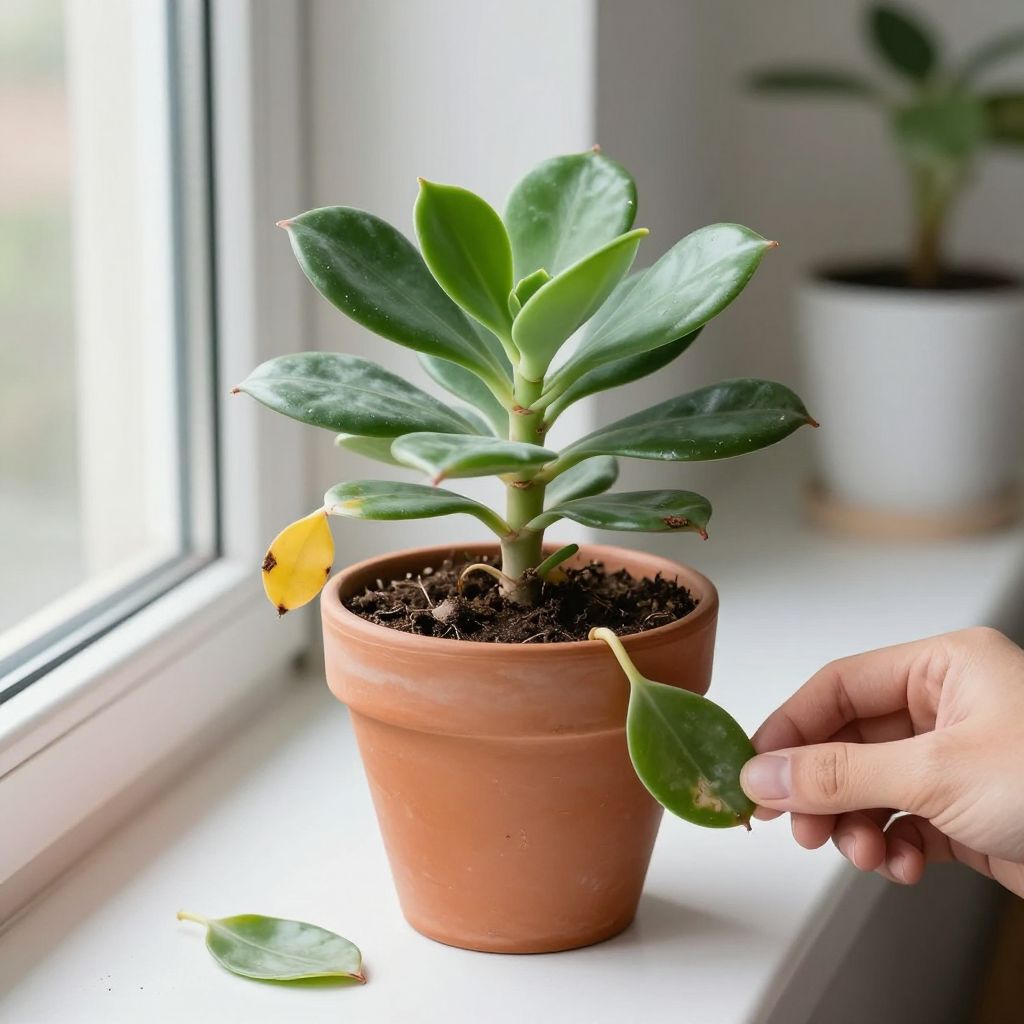
Why is my jade plant dropping leaves? In most cases, a jade plant (Crassula ovata) is reacting to stress from watering problems, low light, cold temperatures, or root issues. The good news is that leaf drop is often reversible if you identify the cause early and adjust care to match the plant’s conditions.
Jade plants are tough succulents, but they dislike sudden changes. A few dropped leaves can be normal, yet repeated leaf loss usually means something in the growing environment needs attention.
Why is my jade plant dropping leaves?
Jade plants usually drop leaves because they are getting too much water, too little light, or exposed to temperature stress. Other common causes include root rot, pests, compacted soil, and abrupt changes in location. Check the plant’s soil, light, and roots first, because those are the most common problems.
Common causes of jade plant leaf drop
1. Overwatering
Overwatering is the most common reason jade plants shed leaves. When roots stay wet too long, they cannot get enough oxygen, and the plant responds by yellowing, softening, and dropping leaves.
Signs of overwatering include:
- Leaves that feel soft, mushy, or translucent
- Yellowing leaves that fall off easily
- Soil that stays wet for days
- A pot that feels heavy long after watering
Important: Jade plants prefer to dry out between waterings. If the soil is still moist below the surface, wait before watering again.
2. Underwatering
Jade plants can also drop leaves when they become too dry for too long. In this case, the leaves often look wrinkled, thin, or slightly shriveled before they fall.
Underwatering is more likely if the plant is in a very small pot, near a hot window, or in a fast-drying mix. A deeply dry root ball can cause the plant to shed older leaves to conserve moisture.
3. Low light
Jade plants need bright light to stay compact and healthy. In low light, they may stretch, weaken, and begin dropping leaves, especially lower leaves.
Look for these clues:
- Long, leggy stems
- Pale or dull foliage
- Leaves dropping from the lower part of the plant
- Slow growth during the active season
Indoors, a south- or west-facing window usually gives better light than a dim corner. Outdoors, jade plants do best in bright light with some protection from harsh afternoon sun in very hot climates.
4. Cold stress or drafts
Jade plants are sensitive to cold. A sudden chill, cold windowpane, frosty night, or air-conditioning draft can trigger leaf drop.
If your plant is near a door, drafty window, or unheated room, move it to a more stable location. Cold damage often shows up as darkened, soft, or translucent leaves before they fall.
5. Root rot
Root rot develops when roots remain wet and begin to decay. This is a serious cause of leaf drop because damaged roots cannot support the plant.
Possible signs include:
- Persistent leaf drop even when watering seems “normal”
- Soft stems near the base
- Musty-smelling soil
- Black, brown, or mushy roots when inspected
If you suspect root rot, act quickly. The sooner you correct it, the better the chance of saving the plant.
6. Poor drainage or unsuitable soil
Jade plants need a fast-draining potting mix. Heavy soil holds water around the roots and can lead to leaf drop, rot, and weak growth.
A suitable mix should drain quickly and not stay soggy. Many gardeners use a cactus or succulent mix, sometimes improved with extra mineral material such as pumice or perlite for better airflow.
7. Sudden changes in environment
Jades often drop leaves after being moved, repotted, or brought indoors for the season. Even if the plant is healthy, it may shed a few leaves while adjusting to different light, temperature, and humidity.
This type of leaf drop is usually temporary. Keep care consistent, avoid overwatering, and give the plant time to settle.
8. Pests
Mealybugs, scale, and occasionally spider mites can weaken jade plants and cause leaf drop. Pests are more likely on stressed plants or those kept indoors with poor airflow.
Check leaf joints, undersides, and stems for:
- White cottony clusters
- Small brown bumps
- Fine webbing or stippled leaves
- Sticky residue on leaves or nearby surfaces
How to diagnose the problem step by step
If you are asking, “Why is my jade plant dropping leaves?” start with a simple inspection. You can usually narrow down the cause in a few minutes by checking the soil, leaves, stems, and location.
- Feel the soil. Insert a finger 1 to 2 inches into the pot. If it is wet, overwatering or poor drainage is likely. If it is bone dry and pulling away from the pot, underwatering may be the issue.
- Look at the leaves. Soft, yellow, or translucent leaves point toward too much water or cold damage. Wrinkled, shriveled leaves suggest dryness.
- Check the stems. Healthy jade stems are firm. Soft or darkened stems can indicate rot.
- Inspect the light. If the plant is stretching toward a window, it may need brighter light.
- Examine for pests. Look closely at nodes, stems, and leaf undersides.
- Consider recent changes. Repotting, moving the plant, or a sudden temperature shift can explain temporary leaf drop.
How to fix jade plant leaf drop
Correct watering
Water only when the potting mix has dried out well. For most indoor jade plants, that means waiting until the top several inches are dry and the pot feels noticeably lighter.
When you water, soak the soil thoroughly, then let excess water drain away completely. Never leave the pot sitting in a saucer of water.
Tip: It is safer to underwater a jade slightly than to keep it constantly moist.
Improve drainage
If the soil stays wet too long, repot into a container with drainage holes and a gritty, well-draining mix. A pot that is too large can also hold excess moisture, so choose a size only slightly bigger than the root ball.
Good drainage helps prevent root rot and keeps the roots healthier between waterings.
Move it to brighter light
Place the plant in bright, indirect light or a few hours of gentle direct sun, depending on your climate and the plant’s current condition. If you move it into stronger light, do so gradually over several days to avoid sunburn.
Rotate the pot occasionally so the plant grows evenly instead of leaning toward the light source.
Protect it from cold
Keep jade plants away from cold windows, drafty doors, and unheated spaces. If you grow one outdoors, bring it inside before cold weather arrives, since jade plants are not frost-tolerant.
Even brief exposure to cold can trigger leaf loss, so aim for steady temperatures rather than dramatic swings.
Deal with pests promptly
If you find mealybugs or scale, isolate the plant from others. Remove visible pests with a cotton swab dipped in rubbing alcohol, or rinse and treat the plant as appropriate for the infestation level.
Repeat checks every few days until you no longer see active pests. Stressed plants recover better when the infestation is controlled early.
Prune damaged growth if needed
If stems are weak, leggy, or damaged, light pruning can help the plant recover and encourage branching. Use clean, sharp pruners and remove only the parts that are clearly unhealthy or overly stretched.
Do not prune heavily if the plant is already stressed from rot or severe leaf drop. First stabilize the growing conditions.
What is normal leaf drop on a jade plant?
A few older leaves dropping from the lower part of the plant can be normal, especially as the plant matures. Minor shedding may also happen after repotting or moving the plant to a new location.
Normal leaf drop is usually limited, slow, and not accompanied by soft stems, widespread yellowing, or a worsening pattern. If the plant keeps losing leaves over time, treat it as a care problem rather than normal aging.
How to prevent jade plant leaf drop
- Use a pot with drainage holes.
- Choose a fast-draining succulent mix.
- Let the soil dry out between waterings.
- Give the plant bright light.
- Keep it away from cold drafts and frost.
- Inspect regularly for mealybugs and scale.
- Repot only when necessary, and handle roots gently.
For indoor plants, consistency matters more than a strict calendar. For outdoor plants, seasonal weather changes may mean watering less in cool, cloudy periods and more during hot, dry spells.
When to repot a jade plant
Repotting can help if the soil stays wet too long, the plant has become rootbound, or the mix has broken down and compacted. Choose a pot only one size larger and refresh the mix with a well-draining blend.
After repotting, expect a short adjustment period. A small amount of leaf drop can happen, but the plant should stabilize once the roots settle into the new soil.
When leaf drop means a serious problem
Seek immediate action if the plant is losing leaves rapidly and the stems are soft, blackened, or collapsing. Those are signs of advanced rot or severe stress.
In that case, remove the plant from the pot, inspect the roots, trim away rotten tissue with clean tools, and repot any healthy sections into fresh, dry, well-draining mix. If most of the plant is damaged, propagation from healthy stem cuttings may be the best option.
Conclusion
If you are wondering why your jade plant is dropping leaves, start with the basics: check the soil moisture, light level, drainage, and temperature. In many cases, a simple correction in watering or placement is enough to stop the problem. Make one change at a time, then watch for new healthy growth.
For more help with succulent care, you may also want to read about succulent care basics and how to identify common houseplant pests.