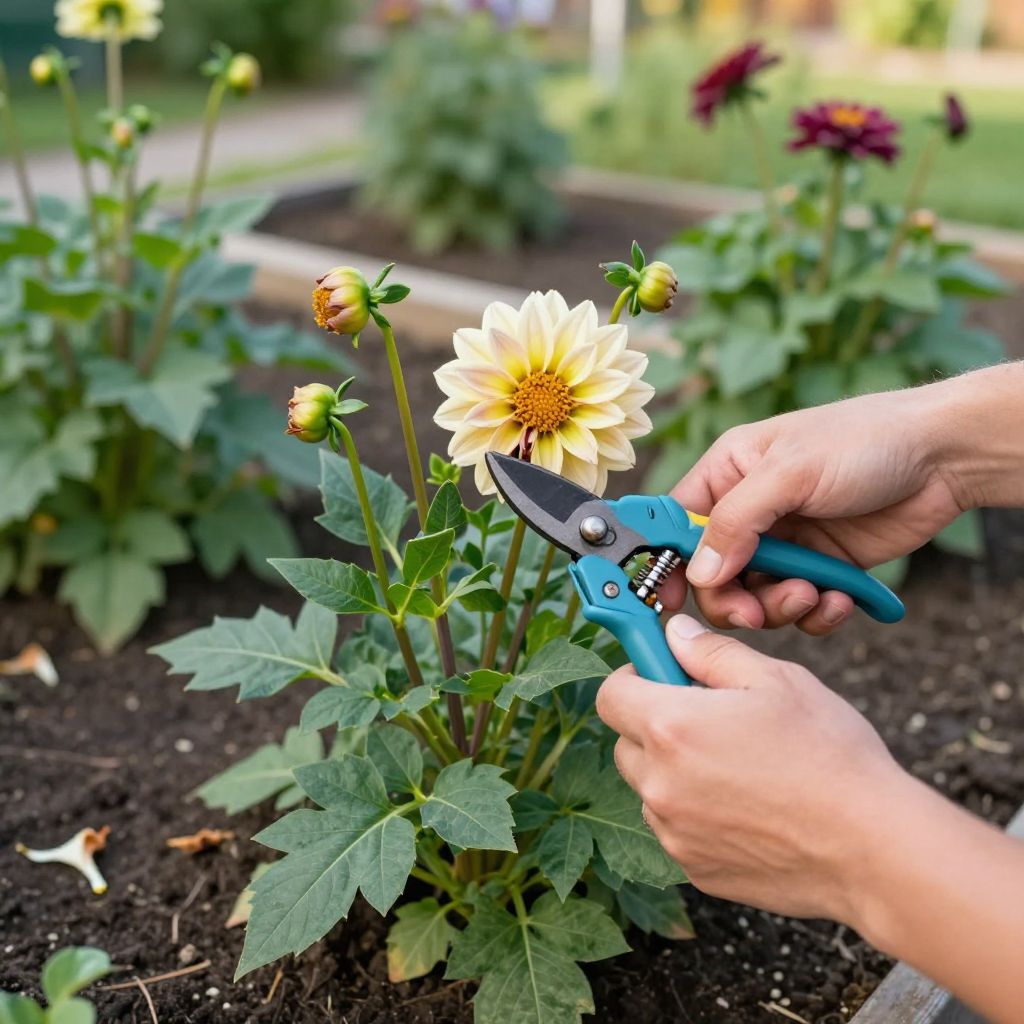
Do you deadhead dahlias? Yes—deadheading dahlias is one of the easiest ways to keep plants flowering longer and looking tidier. By removing spent blooms, you help the plant put energy into making more buds instead of seeds.
It also makes it easier to spot pests, reduces clutter around the plant, and can improve the overall display in borders, containers, and cutting gardens. The key is knowing exactly what to remove and how far down to cut.
Do you deadhead dahlias?
Yes. Deadheading dahlias regularly encourages more flowers, keeps plants neat, and can extend the blooming season. Remove faded blooms as soon as petals drop or the flower head starts to brown, cutting back to the next healthy leaf joint or side bud. This is especially useful during peak flowering in warm, sunny weather.
Why deadheading dahlias helps
Dahlias are naturally generous bloomers, but each spent flower can still use up the plant’s energy if it is left to form seed. Deadheading redirects that energy into new buds, which is why plants often flower more freely when you stay on top of the task.
It also improves appearance. A plant full of faded, papery blooms can look tired even if it is still healthy underneath.
Benefits of deadheading
- More flowers: encourages repeat blooming.
- Cleaner plants: removes browning petals and seed heads.
- Better airflow: helps reduce damp, crowded growth.
- Easier inspection: makes pests and disease symptoms easier to spot.
How to deadhead dahlias correctly
Deadheading is simple, but the cut matters. You want to remove the spent flower without damaging the next bud or leaving a long, unsightly stem stub.
- Look for a flower that has faded, browned, or dropped most of its petals.
- Follow the stem down to the first set of healthy leaves or a visible side bud.
- Use clean snips or scissors to cut just above that point.
- If the stem is soft and small, you can pinch it off with your fingers, but clean cuts are usually neater.
- Remove any damaged petals or debris from around the plant.
Tip: Cut above a leaf joint rather than in the middle of a bare stem. That encourages a cleaner look and helps the plant branch from a natural growth point.
Tools to use
- Clean hand pruners or snips for thicker stems
- Sharp scissors for lighter stems and container plants
- Gloves if stems are rough or you are working in a dense bed
When to deadhead dahlias
The best time to deadhead is during the flowering season, whenever you notice a bloom fading. In most gardens, that means checking plants every few days once they begin producing heavily.
In hot weather, flowers may fade quickly, so you may need to deadhead more often. In cooler conditions, blooms may last longer and the task may be less frequent.
Signs a dahlia bloom is ready to remove
- Petals are dry, curled, or falling away
- The center of the flower is browning
- The bloom has lost its shape and color
- Seed formation is starting after the petals drop
Do not rush to remove every flower the moment it looks a little tired. If a bloom is still fresh enough for cutting, you may want to harvest it for a vase instead of deadheading it in the garden.
Deadheading versus cutting flowers for bouquets
If you grow dahlias for cutting, deadheading and harvesting overlap. A flower you cut for indoor display is effectively deadheaded, as long as you cut it back to a healthy stem position.
For the best vase life, cut blooms early in the morning or in the cool part of the day. Choose flowers that are fully open or nearly open, depending on the variety and your preference.
How to cut dahlias for the vase
- Use clean, sharp snips.
- Cut the stem long enough to place in water comfortably.
- Remove lower leaves that would sit below the waterline.
- Place stems in water right away.
If you regularly harvest blooms, you may not need to deadhead as often, because you are already removing spent or usable flowers during picking.
What happens if you do not deadhead dahlias?
If you skip deadheading, dahlias will still bloom, but the plant may look messier and may slow down sooner. Some varieties will keep flowering reasonably well on their own, but most benefit from regular cleanup during the main season.
Leaving spent blooms on the plant can also make it harder to see whether the plant needs staking, thinning, or pest control. In dense growth, old flowers can trap moisture and debris.
Common deadheading mistakes to avoid
Deadheading is easy, but a few simple mistakes can reduce flowering or damage the plant.
- Cutting too low: removing more stem than needed can eliminate future buds.
- Leaving long stubs: these look untidy and can die back.
- Using dirty tools: unclean blades can spread disease between plants.
- Confusing buds with spent flowers: some dahlias produce side buds near the main bloom.
- Ignoring weak stems: if a stem is damaged, cut back to healthy tissue.
If you are unsure where to cut, look for the next healthy leaf node. That is usually the safest place to shorten the stem without sacrificing future growth.
How deadheading fits into dahlia care
Deadheading works best when the rest of the plant is growing well. Dahlias need good sunlight, fertile soil, steady moisture, and excellent drainage to keep producing flowers.
Growing conditions that support more blooms
- Sun: full sun is best in most climates, though very hot regions may benefit from light afternoon protection.
- Soil: rich, well-drained soil helps roots stay healthy.
- Water: water deeply when the soil begins to dry, but avoid soggy conditions.
- Mulch: helps conserve moisture and suppress weeds.
- Support: taller varieties often need staking to prevent stem breakage.
Healthy, unstressed plants respond better to deadheading than weak plants growing in poor soil or standing water. If blooms are sparse, the issue may be light, drainage, or nutrition rather than deadheading alone.
Should you pinch, prune, or deadhead dahlias?
These tasks are related, but they are not the same. Deadheading removes faded flowers. Pinching usually means removing the growing tip on young plants to encourage branching. Pruning may involve cutting back stems for shape, size, or cleanup later in the season.
Quick comparison
- Deadheading: removes spent blooms during flowering.
- Pinching: shapes young plants and can increase branching.
- Pruning: trims growth for maintenance or seasonal cleanup.
For most home gardeners, the main task during bloom season is deadheading. Pinching is usually done earlier in the plant’s life, while pruning is more often part of general maintenance.
Pests and diseases to watch for while deadheading
Deadheading is a good time to inspect the plant closely. Look under leaves and around stems for signs of trouble before problems spread.
Common issues
- Aphids: clusters of tiny insects on new growth.
- Slugs and snails: ragged damage, especially in damp gardens.
- Powdery mildew: white coating on leaves, often in crowded or dry-air conditions.
- Botrytis or gray mold: soft, moldy growth on fading flowers in wet weather.
Removing old blooms can reduce the amount of decaying material where fungal problems may start, but it will not cure a disease already established on the plant. If you see infected growth, remove it promptly and dispose of it rather than composting it if disease is active.
Can deadheading improve dahlia performance in containers?
Yes. Container-grown dahlias often benefit even more from deadheading because pots can dry out quickly and plants have less room to recover from stress. Keeping the plant tidy helps it focus on fresh growth and makes watering and feeding easier to manage.
Check container dahlias often, especially in hot or windy weather. In small pots, spent blooms and weak stems can build up quickly and crowd new buds.
Seasonal care tips for better flowering
Deadheading is most effective when paired with sensible seasonal care. As the plant grows, keep an eye on watering, support, and overall shape.
- Water deeply during dry spells rather than giving frequent shallow splashes.
- Mulch around the base, but keep mulch away from the main stem.
- Stake tall plants before they flop over.
- Feed only as appropriate for your soil and plant stage, especially if growth is lush but flowers are few.
- Remove damaged or diseased foliage along with spent blooms when needed.
Toward the end of the season, flowers may slow naturally as days shorten or temperatures change. Deadheading can still help, but it will not override seasonal decline.
Final answer: should you deadhead dahlias?
Yes, you should deadhead dahlias if you want a tidier plant and more repeat blooms. The job is simple: remove faded flowers back to the next healthy leaf joint or bud, keep tools clean, and check plants regularly during the blooming season. For more seasonal care ideas, you may also want to read about dahlia planting and growing basics and how to care for flowering borders in summer.