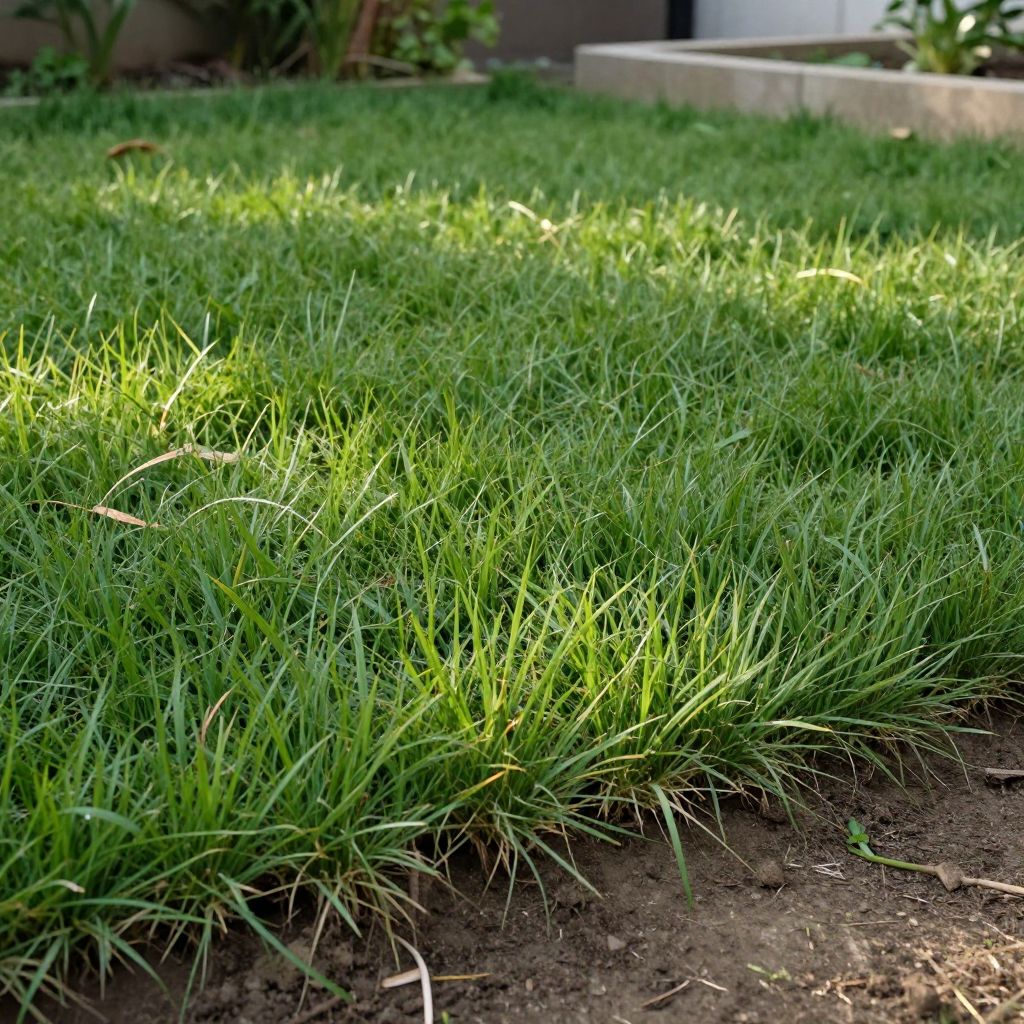
Does grass spread, or do you need to reseed every year? The answer depends on the type of grass you have and how healthy your lawn is. Some grasses spread quickly by runners or underground stems, while others mainly grow in clumps and need overseeding to fill bare spots.
If your lawn is thinning, patchy, or creeping into flower beds, understanding how grass spreads will help you manage it better. The right mowing, watering, and soil care can encourage healthy spread without creating a weedy, uneven lawn.
Does grass spread?
Yes, many grasses spread naturally, but not all do it the same way. Lawn grasses spread either by above-ground runners called stolons, underground stems called rhizomes, or by forming clumps that slowly enlarge. Whether your lawn fills in on its own depends on the species, growing conditions, and maintenance.
How different grasses spread
Spreading grasses
Some turfgrasses are good at creeping into open soil and repairing damage. These are often the best choice if you want a lawn that can self-fill over time.
- Stolons: Horizontal stems that grow across the soil surface and root at the nodes.
- Rhizomes: Underground stems that send up new shoots and roots.
- Both: Some grasses use both methods and spread aggressively in the right conditions.
Common spreading lawn grasses include bermudagrass, Kentucky bluegrass, zoysiagrass, and creeping bentgrass. Their spread rate varies with temperature, sunlight, mowing, irrigation, and soil fertility.
Clumping grasses
Other grasses grow in tufts or bunches. These grasses can get wider over time, but they do not creep far into nearby bare ground.
Examples include tall fescue, fine fescues, and many ornamental grasses. If you plant a clumping grass, expect to overseed or divide it if you want a fuller look.
What affects how fast grass spreads?
Even a spreading grass will slow down if conditions are poor. Healthy lawns spread best when roots can grow deeply and the plant has enough energy to produce new stems.
- Sunlight: Most lawn grasses spread faster in full sun than in deep shade.
- Soil quality: Loose, well-drained soil supports better root and runner growth than compacted soil.
- Water: Consistent moisture helps new shoots establish, but soggy soil can rot roots.
- Mowing height: Cutting too short weakens the lawn and slows spreading.
- Nutrients: Grass needs enough nitrogen and other nutrients to produce healthy new growth.
- Temperature: Cool-season and warm-season grasses spread most actively during their own peak growing season.
Cool-season vs. warm-season growth
Cool-season grasses, such as Kentucky bluegrass and tall fescue, usually grow most actively in spring and fall. Warm-season grasses, such as bermudagrass and zoysiagrass, spread most strongly in late spring and summer when temperatures are warm.
This matters because a lawn may look slow in one season and vigorous in another. If you judge spread during the wrong part of the year, you may think the grass is failing when it is simply out of its active growth period.
How to encourage grass to spread into bare spots
If you want your lawn to fill in naturally, focus on creating conditions that favor new growth. The goal is not to force spread, but to remove the barriers that stop it.
- Rake out dead thatch and debris. Lightly clear the surface so runners or seedlings can contact the soil.
- Loosen compacted soil. Core aeration is especially helpful on heavy or frequently walked-on lawns.
- Topdress lightly if needed. A thin layer of compost or screened topsoil can improve seed-to-soil contact and support rooting.
- Water deeply but not constantly. Keep the top layer evenly moist while new growth is establishing, then shift to deeper, less frequent watering.
- Mow at the proper height. Avoid scalping. Taller grass blades help the plant make more food and spread more effectively.
- Feed appropriately. Use a balanced lawn fertilizer only if your grass type and soil conditions call for it.
For patchy lawns, overseeding can speed up results, especially with clumping grasses or in areas where spreading grass is too thin to close gaps on its own.
Why grass sometimes does not spread
If your lawn is not filling in, the problem is often not the grass type alone. Stress, poor site conditions, or maintenance mistakes can stop healthy spread even in naturally creeping grasses.
Common reasons for slow spread
- Too little light: Dense shade reduces growth and weakens runners.
- Compacted soil: Roots and stems struggle to expand in hard ground.
- Incorrect mowing: Cutting too short removes too much leaf area.
- Overwatering: Saturated soil limits oxygen around roots.
- Underwatering: Dry soil stalls new growth and causes thinning.
- Poor drainage: Standing water can damage roots and invite disease.
- Pests or disease: Insects and fungal problems can create bare patches faster than grass can recover.
If a lawn has been damaged by traffic, pet urine, drought, or disease, spreading may be slow until the underlying issue is corrected. Otherwise, the same bare spot can keep reopening.
How to manage spreading grass in a lawn
Sometimes the question is not how to make grass spread, but how to keep it from spreading where you do not want it. Creeping grasses can move into garden beds, pathways, and neighboring turf if left unchecked.
Keeping grass out of beds and borders
- Install a physical edging barrier deep enough to interrupt runners.
- Trim encroaching stolons and rhizomes regularly.
- Keep bed edges clean so stray stems are easy to spot.
- Mulch garden beds well to reduce rooting opportunities.
For aggressive spreaders like bermudagrass, a neat edge is especially important. Once runners root beyond the lawn, they can be difficult to remove completely.
When to use overseeding instead
If your grass type is a clumper or your lawn is too thin to spread reliably, overseeding is often the best fix. Choose a seed that matches your existing lawn and local climate, then prepare the soil surface so the seed can germinate evenly.
Overseeding works best when the lawn is actively growing and not under heat, drought, or frost stress. In many cases, a thin layer of compost or topsoil helps protect seed and improve germination.
Best care practices for healthy lawn spread
Strong lawns spread better than stressed ones. These basic habits support both root growth and new shoot formation.
- Mow high enough for your grass type. Taller blades usually mean stronger roots and better recovery.
- Water deeply when needed. Encourage roots to grow downward instead of staying shallow.
- Improve soil structure. Aeration and organic matter can make a big difference in compacted yards.
- Avoid excessive foot traffic. Repeated wear slows spreading and creates dead zones.
- Watch for thatch buildup. A thick thatch layer can block runners from rooting into soil.
In lawns with heavy thatch, dethatching or core aeration may help, but only when the grass is actively growing and can recover quickly. Doing it at the wrong time can stress the lawn further.
Common problems to watch for
Patchy growth
Patchiness usually means the grass is not spreading evenly. Check for shade, compacted soil, poor drainage, or pests before assuming the lawn needs more seed.
Runners on the surface but no rooting
If stolons are visible but not anchoring into the soil, the surface may be too dry, too hard, or covered by thick thatch. Light topdressing and better moisture management can help.
Yellowing or thinning
Yellow grass may be stressed by nutrient imbalance, disease, or watering problems. A healthy green canopy is important because the plant uses its leaves to fuel spread.
Invasive creeping into beds
Fast-spreading grasses can escape lawn boundaries quickly. Regular edging and prompt removal of stray runners are the simplest controls.
Practical takeaway for homeowners
Grass does spread, but the speed and method depend on the species. Creeping grasses can fill in bare areas, while clumping grasses usually need overseeding or division to look dense. If you want better spread, improve sunlight, soil, drainage, mowing height, and watering habits first.
For more lawn care help, you may also want to read about how to overseed a lawn and how to improve compacted soil to support stronger, faster turf recovery.