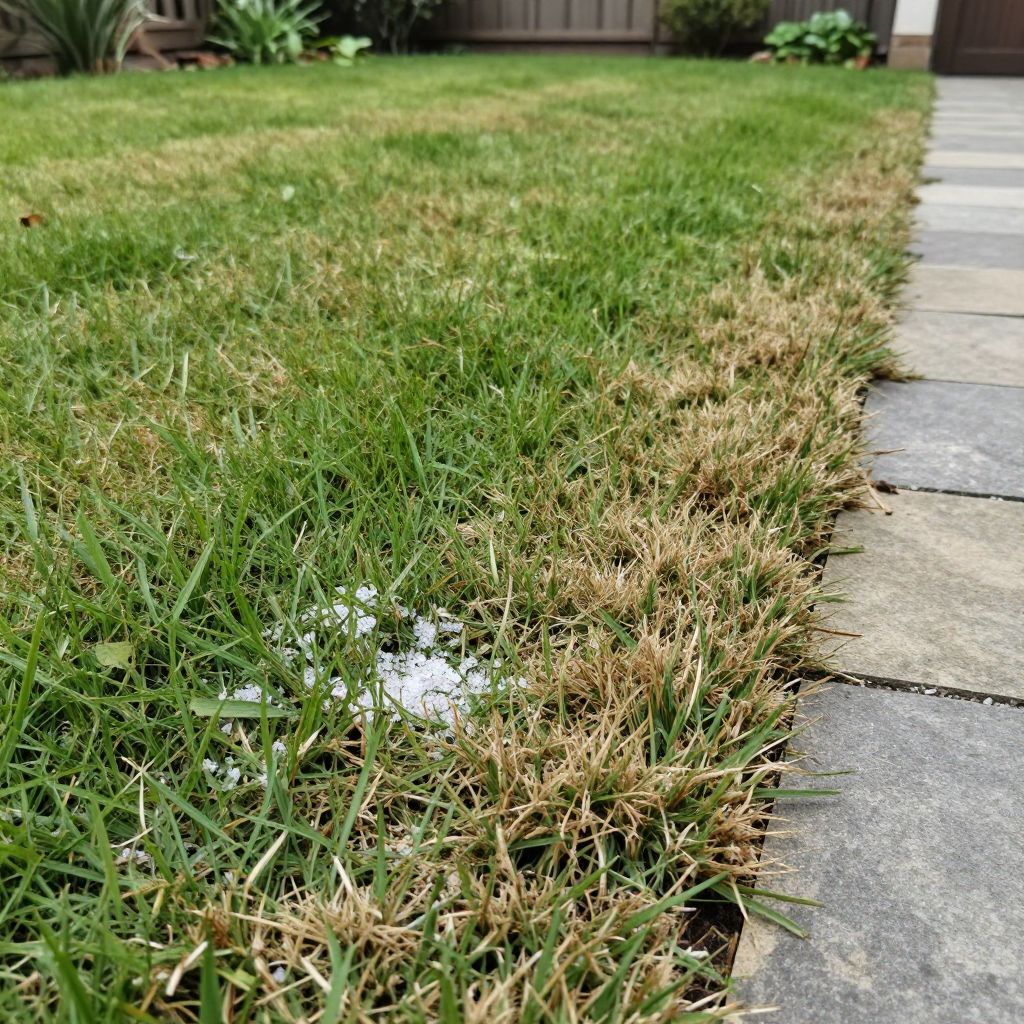
Does salt kill grass? Yes—salt can damage or kill grass, especially when it builds up in the soil or lands directly on leaves and roots. The effect depends on the amount of salt, the grass species, soil drainage, rainfall, and how quickly the area can be flushed with fresh water.
If you are dealing with salted sidewalks, pet urine, road runoff, or a spill, the good news is that grass can sometimes recover if the damage is caught early. The key is to reduce salt exposure, improve drainage, and support regrowth before the turf is permanently lost.
Does salt kill grass?
Salt can kill grass by drawing moisture out of plant cells and making it harder for roots to take up water. It also accumulates in soil, creating stress that causes yellowing, browning, thinning, and eventually dead patches. Light exposure may only scorch blades, but repeated or heavy salt exposure can kill turf.
How salt damages turfgrass
Salt harms grass in two main ways: it dehydrates the plant and disrupts soil conditions. Even when the soil looks wet, salty water can leave roots unable to absorb moisture properly.
Direct leaf burn
If salt lands on grass blades from spray, de-icing runoff, or a spill, the foliage may turn tan or brown at the edges first. This is often the quickest sign of injury.
Root-zone injury
When salt moves into the soil, it affects the root system. Roots may stop growing, become damaged, or die back, which weakens the whole lawn over time.
Soil structure problems
Excess sodium can also harm soil structure, especially in clay soils. Compacted, poorly drained soil makes it harder for rain or irrigation to wash salts below the root zone.
Signs salt is hurting your lawn
Salt damage can look similar to drought or heat stress, so check the location and pattern of symptoms carefully. Damage often appears in strips, patches, or areas near hardscape edges.
- Brown or bleached grass near sidewalks, driveways, roads, or curbs
- Yellowing that starts at the leaf tips or edges
- Thin, stunted growth in affected areas
- Patchy dead spots after winter de-icing or coastal wind exposure
- Soil that stays crusty or seems hard and resistant to water
If only the blades are scorched, the crown and roots may still be alive. If the base of the plant is dry, brittle, and brown, recovery is less likely.
Where salt problems usually come from
Knowing the source helps you fix the problem and prevent it from returning. In home landscapes, salt injury usually comes from a few common places.
De-icing salt
Rock salt and other de-icers can splash onto turf from sidewalks, driveways, and roads. Meltwater often carries salt into the lawn edge, where damage is most obvious.
Pet urine
Dog urine contains salts and nitrogen. Small spots may show dark green growth around a brown center, while repeated use in the same area can kill turf.
Salty irrigation water
In some regions, well water or reclaimed water can contain enough dissolved salts to stress grass over time, especially in hot weather or in poorly drained soil.
Coastal exposure
Sea spray and salty winds can injure exposed lawns, especially on dunes, waterfront properties, or open sites with little windbreak protection.
Can grass recover from salt damage?
Sometimes, yes. Recovery depends on how much salt reached the grass, how long it stayed there, and whether the crown and roots are still alive. Mild damage may improve after flushing and rainfall, while severe injury may require reseeding or patch repair.
Cool-season and warm-season grasses can both be affected, but their recovery speed varies with temperature and active growth. A lawn in active growth has a better chance of filling in damaged areas than one that is dormant or stressed by heat or cold.
What to do if salt has damaged your grass
Act quickly, but avoid overcorrecting. The goal is to dilute and move salt away from the root zone without causing erosion or waterlogging.
- Stop the source if possible. Remove de-icing residue, redirect runoff, or change the pet’s bathroom area.
- Rinse the grass with fresh water if the salt is on the leaves or surface. A gentle soak is better than a forceful spray.
- Flush the soil in the affected area with deeper watering if drainage is good. The water should move salts below the root zone, not sit on top.
- Improve drainage if water puddles. Aeration, topdressing, or soil amendment may help over time.
- Wait before fertilizing. Fertilizer can add more stress to already damaged turf.
- Assess recovery after new growth appears. If the crown is alive, the grass may rebound.
Avoid repeatedly soaking compacted soil. If drainage is poor, extra water may not remove salts effectively and can create more stress for the lawn.
How to tell if a patch is dead or just stressed
Use a simple check before you reseed or replace turf. Gently tug on the grass and inspect the crown at the soil line.
- If the blades pull out easily and the crown is brown and dry, that area is likely dead.
- If the base is still firm and slightly green or pale, recovery may still be possible.
- If only the tips are brown but new growth is emerging, give it time and proper care.
You can also scratch the surface lightly with your fingers or a small hand tool. Living turf usually shows some green tissue near the base, even when the top looks rough.
How to repair salt-damaged grass
Once you know the area is dead or unlikely to recover, repair it during a period when your grass type is actively growing and local weather supports establishment.
For small spots
- Remove dead grass and loosen the top layer of soil.
- Rinse the area if salts may still be present.
- Add a thin layer of quality topsoil or compost if needed.
- Reseed or patch with sod that matches the rest of the lawn.
- Keep the surface evenly moist until new grass is established.
For larger areas
Large damaged sections may need a broader renovation approach. If the problem is recurring, test drainage and consider whether the area needs a better grass selection, a barrier, or a change in how runoff is managed.
How to prevent salt from killing grass
Prevention is much easier than repair. A few practical changes can protect your lawn through winter, pet season, and dry periods.
Reduce de-icing damage
- Use the least amount of de-icer needed for safety.
- Keep salt off the lawn edge when applying it to walks and drives.
- Choose lower-salt alternatives when appropriate for your area.
- After winter storms, rinse the lawn edge if conditions allow and drainage is good.
Protect lawn edges
Edges closest to pavement are usually the first to suffer. A narrow strip of mulch, stone, or a planting bed can help reduce direct salt splash onto turf.
Manage pet urine spots
- Encourage pets to use a designated area.
- Water the spot soon after use when practical.
- Rotate high-traffic pet areas to prevent repeated injury.
Support healthy soil
Healthy soil helps grass cope with stress better. Good drainage, moderate organic matter, and regular aeration where needed can reduce salt buildup and improve root health.
Does one type of grass handle salt better?
Some turfgrasses tolerate salt better than others, but no lawn grass is immune. Salt tolerance varies by species, local climate, mowing height, and soil conditions. If your property regularly faces salty conditions, choose a grass known for better tolerance in your region.
Even a more tolerant grass can fail if the salt load is too high or if the soil cannot drain. That is why site conditions matter as much as the grass type itself.
Common mistakes to avoid
When grass is salt-stressed, a few well-meaning actions can make the problem worse.
- Do not over-fertilize a damaged lawn.
- Do not keep adding water if the soil is already saturated and poorly drained.
- Do not assume brown grass is dead without checking the crown.
- Do not reseed too early if salt is still present in the soil.
- Do not ignore recurring runoff from pavement, gutters, or neighboring areas.
When to call in extra help
If salt damage keeps returning, or if a large section of lawn is declining despite watering and repair, it may be time to test the soil and drainage. A local extension office, turf specialist, or landscape professional can help you identify whether salt, compaction, poor grading, or another issue is the main cause.
For more practical lawn care guidance, you may also want to read about how to fix patchy grass and improving lawn drainage if those topics apply to your yard.
In most cases, the best response to salt damage is quick flushing, better drainage, and prevention at the source. If you act early and protect the root zone, your grass has a better chance to recover and fill back in.