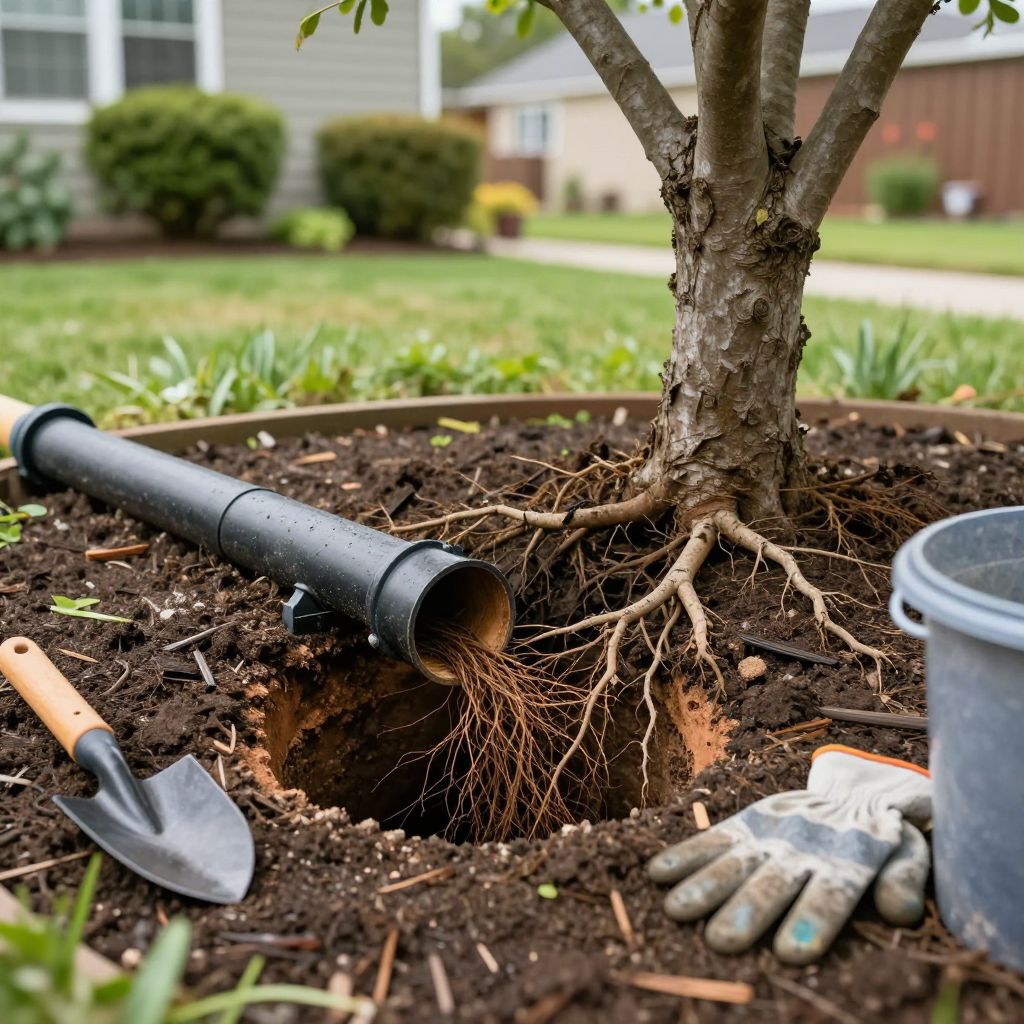
What dissolves tree roots in sewer lines? In most cases, nothing you can safely pour down the drain will truly “dissolve” established roots. Chemical root killers may damage small intrusions, but the real fix is usually mechanical removal, pipe repair, and stopping the tree from finding the line again.
If you garden near sewer or drain lines, the best strategy is prevention: choose the right plants, keep thirsty roots away from vulnerable pipes, and maintain trees so they stay healthy without chasing moisture underground.
What dissolves tree roots in sewer lines?
There is no garden-safe product that reliably dissolves large tree roots inside sewer lines. Some root-killing treatments can kill fine roots at the pipe opening, but they do not remove the blockage by themselves. For a lasting fix, roots usually need to be cut out, flushed, or repaired by accessing the pipe.
Why roots invade sewer lines in the first place
Tree roots are drawn to moisture, oxygen, and nutrients. Sewer lines can leak condensation, wastewater, or tiny amounts of water through joints, cracks, and old pipe connections, which makes them attractive to roots.
This is especially common in older clay, cast iron, Orangeburg, or damaged PVC systems. Roots often enter through small openings first, then thicken inside the pipe and trap debris.
Signs roots may be in the line
- Slow drains in more than one fixture
- Gurgling toilets or sinks
- Recurring backups after clearing
- Wet patches or unusually lush growth above the pipe route
- Tree roots visible near cleanouts or sewer access points
What actually works: practical root control options
For gardeners, the most realistic approach is to combine root removal with long-term prevention. The best method depends on pipe condition, tree size, and how severe the intrusion is.
1. Mechanical clearing
Augers, drain snakes, and root-cutting tools can break up roots inside the pipe. This is often the first step when the line is still structurally sound.
- Pros: immediate relief, no soil contamination, works on active blockages
- Cons: temporary if the leak remains, can miss heavy root masses
If the pipe is fragile, aggressive cutting can worsen damage. That is why a camera inspection is often the smartest next step after repeated clogs.
2. Root-killing treatments
Some products are designed to kill roots inside sewer lines, usually by contacting the roots through the pipe. These are not a cure for the pipe, but they may slow regrowth after mechanical clearing.
Important: Follow the label exactly and use only products approved for sewer use in your area. Never mix chemical treatments, and never assume a stronger dose will work better.
3. Pipe repair or replacement
If roots keep returning, the pipe probably has cracks, separated joints, or collapse. Repairing the line is often the only lasting solution.
Common fixes include spot repair, pipe lining, or full replacement. From a landscaping point of view, this is the point where you may need to protect nearby plants and plan for root-pruning or replanting later.
How to stop tree roots from coming back
Once roots have found a sewer line, they often return unless the leak is sealed and the surrounding planting is managed. Prevention is where gardening choices matter most.
Choose the right trees and shrubs
When planting near utility lines, avoid species known for aggressive, moisture-seeking roots close to pipes. Large shade trees are the biggest concern when planted too near sewer routes.
Instead, place trees well away from buried utilities and favor smaller ornamental trees or shrubs with less invasive root systems for tight spaces. Always check mature size, not just the plant’s current size in the nursery pot.
Respect safe planting distances
Exact distances vary with tree species, pipe depth, and local conditions, but a good rule is to keep large trees well away from sewer lines and known utility corridors. If you are unsure where the line runs, contact your local utility locator before planting.
Do not plant thirsty trees directly above old sewer pipes. Even a young tree can become a problem as it matures.
Improve soil and drainage away from pipes
Healthy garden soil supports roots where you want them. Good drainage, mulching, and proper watering encourage roots to spread through the upper soil rather than diving toward a leaking pipe.
- Use organic mulch, but keep it a few inches away from trunks and stems.
- Water deeply and less often so roots grow outward in the landscape, not just at the surface.
- Avoid overwatering near suspected sewer routes, since constant moisture can encourage root movement.
What not to do
Many homeowners try quick fixes that either do nothing or create a bigger problem. Avoid these common mistakes.
- Do not pour harsh chemicals into drains unless the product is specifically labeled for sewer root control.
- Do not rely on one treatment to solve repeated backups.
- Do not plant fast-growing trees near old sewer lines just because the area looks empty.
- Do not ignore small drainage changes in the garden above the pipe route.
- Do not cut major roots at ground level without understanding whether the tree will become unstable or stressed.
Garden-friendly ways to reduce root pressure near sewer lines
If the sewer line runs through a planted area, you can reduce future problems by adjusting the landscape around it. This is especially useful in established gardens where removing a mature tree may not be practical right away.
Use root barriers carefully
Root barriers can help redirect roots away from sensitive areas, but they must be installed correctly and deep enough for the species involved. They work best as a preventive measure, not as a cure for an already invaded pipe.
Prune and monitor trees responsibly
Regular pruning keeps trees healthy and reduces stress that can encourage aggressive root growth. Remove dead, damaged, or crossing branches and maintain a balanced canopy.
Healthy trees are still capable of root intrusion, but stressed trees may become more opportunistic in searching for water. Good tree care supports stability without encouraging shallow, erratic growth.
Watch for changes after repairs
After the line is cleared or repaired, monitor the area through the next growing season. If the same tree keeps sending roots back, the planting location may simply be too close for that species.
When to call a professional
Some root problems are beyond a simple garden fix. Call a licensed plumber or sewer specialist if backups keep returning, if you suspect pipe collapse, or if you find repeated root intrusion in the same section of line.
You should also get help if the affected tree is large, mature, or close to structures. Digging around big roots or sewer lines without a plan can damage both the tree and the pipe.
How gardeners can prevent future sewer root problems
Good planting design is the long-term answer. The best time to think about sewer roots is before you plant, especially in new gardens or when replacing a tree.
- Find the location of underground utilities before digging.
- Check the mature size and root behavior of each tree or shrub.
- Keep large trees away from sewer routes and old pipe materials.
- Maintain healthy soil moisture without overwatering.
- Inspect problem areas after storms, droughts, or repeated drain issues.
In established landscapes, consider replacing problem trees with smaller ornamentals or shrubs better suited to the space. That choice can protect both your garden design and your sewer line.
Bottom line
If you are asking what dissolves tree roots in sewer lines, the honest answer is that nothing reliably dissolves them in a safe, garden-friendly way. The most effective solution is to remove the roots, repair the pipe, and prevent regrowth with better planting choices and drainage management.
If you are planning new plantings or dealing with a recurring backup, start by locating the sewer line, then choose safer plants and keep large-rooted trees well away from it. For more practical garden planning, look for related advice on tree selection, root barriers, and planting near utilities.