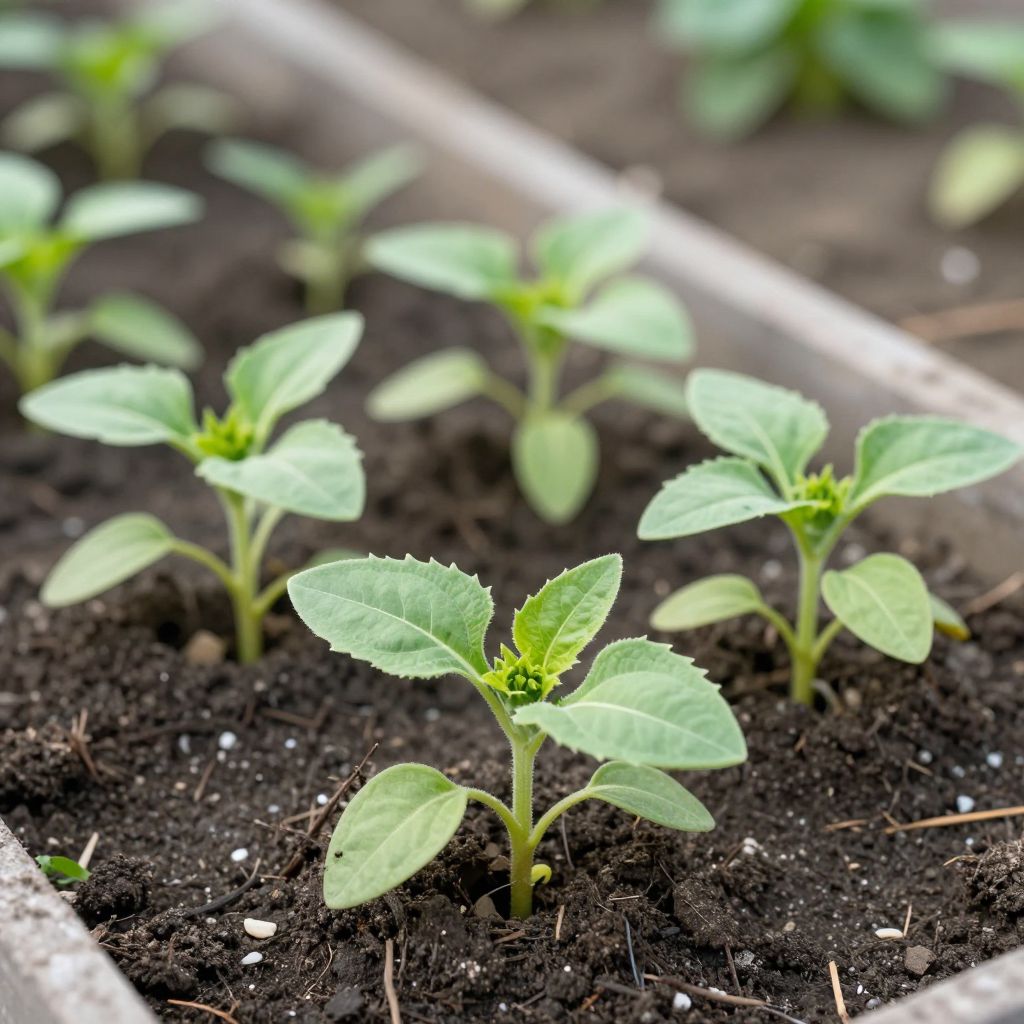
Wondering what do sunflower sprouts look like when they first come up? The earliest sunflower seedlings are easy to miss if you’re expecting a tiny version of the mature plant. They usually emerge as a pair of smooth, oval seed leaves, then quickly produce rougher, broader true leaves with a slightly fuzzy texture.
Knowing the difference between a healthy sunflower sprout and a weed, pest damage, or a failed seed helps you thin, water, and protect young plants at the right time. With a few simple checks, you can tell whether your sunflowers are on track and what to do next.
What do sunflower sprouts look like?
Sunflower sprouts usually appear as two thick seed leaves, called cotyledons, that are oval or spoon-shaped and sit opposite each other on a short stem. Soon after, the first true leaves emerge larger, rougher, and more triangular or heart-shaped, often with a slightly hairy surface.
How to identify sunflower seedlings step by step
Stage 1: the seedling breaks the soil
At first, you may see a bent, pale stem pushing upward with the seed coat sometimes still attached. This stage can look awkward, but it is normal if the stem straightens within a day or two.
Stage 2: cotyledons open
The first visible leaves are the cotyledons. They are smooth, soft, and usually a light to medium green.
- Shape: oval, rounded, or narrow spoon-like
- Texture: smooth, not fuzzy
- Arrangement: two leaves directly opposite each other
- Stem: short, sturdy, and often green
Stage 3: true leaves appear
The next leaves are the real clue that you have a sunflower. They are larger, rougher, and more textured than the first pair, and they may have shallow teeth or a slightly crinkled edge.
- True leaves: wider and more pointed than cotyledons
- Surface: slightly hairy or sandpapery
- Color: usually medium green
- Growth habit: upright and fast-growing in good light
What healthy sunflower sprouts should look like
A healthy sunflower sprout looks compact, firm, and upright. The stem should be strong enough to hold the seed leaves open without flopping over, and the leaves should look evenly colored rather than pale, blotchy, or twisted.
Healthy signs to look for
- Even green color on the leaves
- Short to moderate stem length, not overly stretched
- Leaves opening cleanly and symmetrically
- No chewing holes, slime, or blackened stem base
- New true leaves forming within a reasonable time
If your seedlings are indoors, they should lean only slightly toward the light. A strong lean usually means they need brighter light, not more water.
Common look-alikes and what to watch for
Many gardeners mistake sunflower sprouts for weeds or for weak seedlings that need extra fertilizer. Before you intervene, compare the leaf shape, stem texture, and growth rate.
Sunflower sprouts vs. weeds
Weeds often emerge with different leaf shapes, thinner stems, or multiple seedlings in a clump. Sunflower cotyledons are usually paired and fairly uniform, while weeds tend to vary more in shape and spacing.
Sunflower sprouts vs. leggy seedlings
A leggy sunflower sprout has a long, thin stem and small leaves that seem too far from the soil. This usually happens when seedlings do not get enough light, especially indoors on a windowsill.
Sunflower sprouts vs. damaged seedlings
If leaves are missing, stems are pinched, or the plant collapses at soil level, pests or damping-off may be involved. Healthy sprouts should stand upright and continue producing new growth.
Planting sunflower seeds so the sprouts come up strong
Sunflowers are best started from seed in place or in pots that allow easy transplanting. They dislike root disturbance, so the goal is to give each seed enough room, warmth, and light from the start.
Outdoor sowing basics
- Choose a sunny spot with well-drained soil.
- Loosen the soil and remove stones or debris.
- Plant seeds at a depth about 2 to 3 times the seed’s width.
- Keep the soil evenly moist until germination.
- Thin seedlings if more than one comes up in the same spot.
In cooler climates, wait until the soil has warmed enough for reliable germination. In warmer areas, you may be able to sow earlier, but cold, wet soil can slow sprouting and increase rot.
Indoor sowing basics
If you start sunflower seeds indoors, use deep pots or biodegradable containers to reduce transplant shock. Place them in very bright light once they sprout, because weak light is the main reason seedlings stretch and weaken indoors.
- Use containers with drainage holes
- Keep the mix moist, not soggy
- Move seedlings to stronger light promptly after emergence
- Transplant carefully before roots become crowded
Water, light, and soil needs for young sunflower plants
Sunflower sprouts grow best in loose, fertile soil that drains well. They need steady moisture to germinate, but once established they do not like consistently wet roots.
Watering young sprouts
Water gently so you do not wash away the seed or compact the soil. The surface should stay lightly moist during germination, then begin to dry slightly between waterings once the seedlings are established.
Avoid soaking the soil every day just because the top looks dry. Check the moisture an inch below the surface before watering again.
Light requirements
Sunflowers need full sun outdoors and very bright light indoors. If seedlings are stretching, rotate trays or move them to a brighter location rather than adding more water or fertilizer.
Soil and compost
Moderately rich soil is ideal. Too much compost or high-nitrogen fertilizer can push soft, weak growth, while poor soil can slow early development.
- Use loose soil that drains freely
- Mix in compost if the soil is poor, but do not overdo it
- Avoid heavy, waterlogged beds
How to care for sunflower sprouts after germination
Once the seedlings are up, your main jobs are thinning, watering correctly, and protecting them from pests and weather stress. The first few weeks set the tone for the rest of the plant’s growth.
Thin seedlings if needed
If several seeds sprout in one spot, choose the strongest seedling and snip the others at soil level. Pulling them out can disturb the roots of the one you want to keep.
Protect from cold and wind
Young sunflower stems can be damaged by strong wind or late cold snaps. If weather turns rough, use temporary covers or move containers to a sheltered area.
Support growth without overfeeding
Healthy seedlings usually do not need much fertilizer right away. If the soil is reasonable, focus on light, water, and space first. Overfeeding can create tall, weak plants that flop easily.
Common problems with sunflower sprouts
Seedlings are pale and stretched
This usually means not enough light. Move indoor seedlings closer to a strong light source or outdoors into brighter sun once temperatures are suitable.
Leaves are chewed or missing
Slugs, snails, birds, and insects can damage tender seedlings. Check at dawn or dusk for pests, and use physical protection if needed.
Stem is pinched at the soil line
This can point to damping-off, a fungal problem that often appears in overly wet conditions. Improve drainage, reduce overwatering, and start over if the seedling collapses.
Seed coat stays stuck on the leaves
This happens when the sprout struggles to shed the hull. Mist lightly and wait; if it remains stuck, you can soften it gently, but avoid forcing it off and tearing the tender leaves.
When to transplant or thin sunflower seedlings
Move seedlings only when they are sturdy enough to handle and have a few true leaves. If you started them in small pots, transplant before roots become crowded or wrapped.
- Handle seedlings by the root ball, not the stem
- Water after transplanting
- Keep newly moved seedlings sheltered for a short time if conditions are harsh
For direct-sown plants, thinning early helps prevent competition for light and moisture. Sunflowers grow quickly, and crowded seedlings often end up weaker than a single well-spaced plant.
What sunflower sprouts tell you about future growth
The look of the early sprout often predicts how the plant will perform. A stout, green seedling with strong true leaves usually grows into a better plant than a stretched, weak one, even if both survive.
If your sunflower sprouts look healthy, keep giving them sun, room, and moderate water. If they look pale, floppy, or crowded, adjust light and spacing now rather than waiting for the plant to recover later.
Conclusion
Now that you know what do sunflower sprouts look like, you can spot healthy seedlings early and fix problems before they slow growth. Check for paired cotyledons, then watch for the rougher true leaves that confirm you have a sunflower. If you want the best results, thin crowded sprouts, keep the soil lightly moist, and give them plenty of sun.
For more practical growing help, you may also find it useful to read about seed starting basics and how to care for young vegetable and flower seedlings.