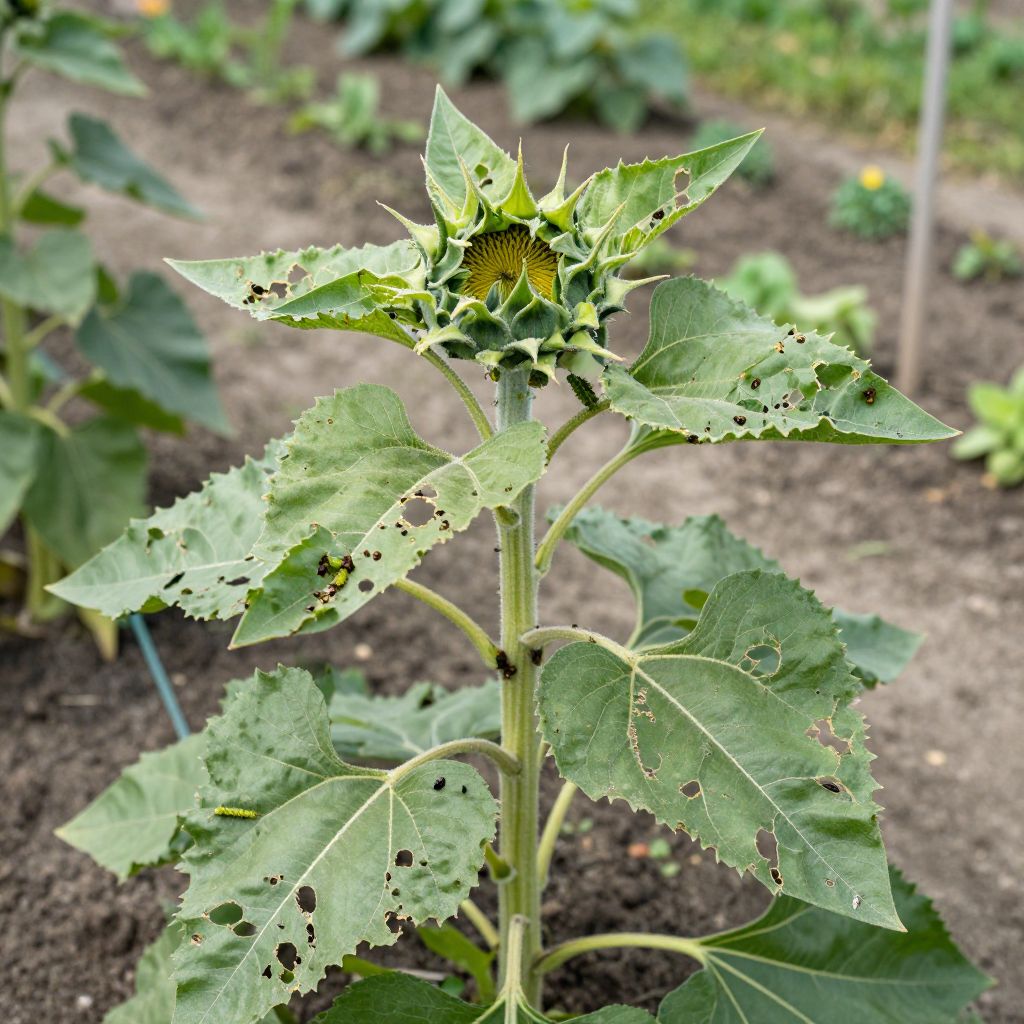
What eats sunflowers? If your seedlings are disappearing, your leaves are ragged, or your flower heads are suddenly full of holes, several common garden pests may be to blame. Sunflowers are tough plants, but they are not pest-proof, and the damage often depends on the plant’s age, weather, and what’s around your garden.
The good news is that most sunflower damage is identifiable and manageable. With a few careful checks, you can tell whether you’re dealing with insects, birds, mammals, or disease-related problems—and then protect your plants without overreacting.
What eats sunflowers?
Sunflowers are eaten by a range of pests, including caterpillars, beetles, slugs, aphids, squirrels, birds, deer, and rodents. Young seedlings are most vulnerable to cutworms and slugs, while mature plants are often damaged by birds and mammals that feed on seeds, petals, or developing heads.
How to tell what’s damaging your sunflowers
Start by looking at the type of damage, the time of day it appears, and which part of the plant is affected. Sunflower problems are often easier to solve when you match the symptom to the culprit.
Common damage clues
- Missing seedlings or stems cut at soil level: cutworms, slugs, or rodents.
- Chewed holes in leaves: beetles, caterpillars, grasshoppers, or rabbits.
- Sticky leaves with curled growth: aphids.
- Large chunks missing from leaves or stems: deer or rabbits.
- Seeds stripped from the head: birds, squirrels, chipmunks, or mice.
- Petals nibbled or flower heads damaged: birds, beetles, or mammals.
Look closely before treating
Check the underside of leaves, the soil line, and the base of the stem. Many pests hide during the day, so inspect plants in the early morning or evening if you suspect nighttime feeding.
Insects that eat sunflowers
Insect damage is often most serious on young plants, but some pests also attack buds, flowers, and seeds. The most effective control is usually early detection combined with physical protection and good garden hygiene.
Cutworms
Cutworms are one of the most frustrating sunflower pests because they can sever seedlings overnight. You’ll usually find a plant lying on the soil surface with the stem chewed through near the base.
- Use cardboard or plastic collars around young stems.
- Clear weeds and plant debris where larvae hide.
- Check seedlings at dusk if damage is recurring.
Slugs and snails
Slugs and snails chew irregular holes in leaves and can destroy very young sunflowers. They are most active in damp, cool conditions and often leave shiny slime trails.
- Water early in the day so soil surfaces dry by evening.
- Remove boards, pots, and dense debris near seedlings.
- Use barriers or traps if pressure is high in your area.
Aphids
Aphids cluster on tender stems, buds, and leaf undersides, sucking sap and leaving sticky honeydew behind. Heavy infestations can distort growth and attract ants.
- Rinse them off with a strong spray of water.
- Encourage lady beetles, lacewings, and other beneficial insects.
- Avoid excessive nitrogen, which can produce lush, aphid-prone growth.
Caterpillars and beetles
Several caterpillars and beetles chew sunflower foliage, buds, or petals. Damage is often scattered and ragged rather than neat and clean.
- Handpick visible pests when practical.
- Inspect buds and flower heads regularly.
- Keep weeds down, since many pests move in from nearby host plants.
Birds, squirrels, and other animals that eat sunflowers
Once sunflower heads begin to mature, birds and mammals often become the biggest problem. They may peck at developing seeds, strip the head, or break stems while reaching the flowers.
Birds
Birds are especially drawn to ripening seed heads. They may also pull at petals or young florets, particularly in small gardens where plants are easy to access.
- Cover heads with lightweight mesh or paper bags once seeds begin forming.
- Harvest heads when seeds are mature if birds are persistent.
- Use visual deterrents only as a short-term aid; they often lose effectiveness.
Squirrels and chipmunks
Squirrels and chipmunks can strip seeds quickly, especially in gardens near trees, fences, or bird feeders. They may also dig around seedlings or snap stems while climbing.
- Protect heads with mesh cages or netting.
- Keep bird seed and fallen seed off the ground nearby.
- Support tall sunflowers with stakes if animals are climbing or pushing them over.
Deer and rabbits
Deer may browse leaves, buds, and young stems, while rabbits usually chew lower growth and seedlings. Both can cause sudden, severe damage if they find your sunflowers palatable.
- Use fencing where pressure is high.
- Choose a garden site with good visibility rather than dense cover nearby.
- Protect young plants until stems become sturdier.
How to protect sunflowers from pests
The best protection depends on the growth stage of the plant. Young sunflowers need defense at the soil line, while flowering plants need protection from seed thieves and stem damage.
1. Start with strong growing conditions
Healthy sunflowers are less likely to suffer severe pest damage. Plant them in full sun with well-drained soil, and avoid overcrowding so air can move around the stems.
- Choose a site with at least 6 to 8 hours of direct sun.
- Work in compost if your soil is poor or compacted.
- Do not keep the soil soggy; wet conditions encourage slugs and weak roots.
2. Protect seedlings early
Most losses happen when plants are small. A few simple barriers can save a planting.
- Set collars around stems to deter cutworms.
- Water in the morning so the surface dries before night.
- Check new seedlings daily for chewing or collapse.
- Remove hiding places such as weeds, mulch piles, and debris near the row.
3. Use physical barriers for larger pests
Netting, cages, and fencing are often more reliable than sprays for birds and mammals. Make sure barriers are secured well enough that pests cannot slip underneath or pull them loose.
- Use fine mesh for birds and squirrels around ripening heads.
- Use sturdy fencing where deer or rabbits are active.
- Support tall varieties with stakes if wind or animals may topple them.
4. Monitor the plants regularly
Walk through your sunflowers every few days, especially after rain or during flowering. Early action is much easier than trying to rescue a badly damaged plant.
- Look at leaves, stems, buds, and seed heads.
- Check both sides of leaves for insects.
- Watch for fresh droppings, tracks, or torn foliage near the garden.
Growing sunflowers so they recover better from damage
Sunflowers can tolerate some leaf loss, but they recover best when their basic needs are met. Good planting and care help them outgrow minor pest pressure and produce stronger stems and larger heads.
Soil and drainage
Sunflowers prefer soil that drains well. Heavy, waterlogged soil weakens roots and makes plants more susceptible to pests and disease.
- Improve clay soil with compost and organic matter.
- Avoid planting in low spots where water collects.
- Use raised beds if your garden stays wet after rain.
Watering
Water deeply rather than lightly and frequently, especially while plants are establishing. Consistent moisture supports steady growth, but the soil should not stay saturated.
- Water at the base to keep foliage drier.
- Let the top layer of soil dry slightly between waterings.
- Adjust more often in hot, windy weather and less in cool, rainy periods.
Feeding
Use compost or a balanced soil amendment if your soil is poor, but avoid overfeeding with nitrogen. Too much nitrogen can create soft, leafy growth that attracts aphids and may delay flowering.
Common sunflower diseases that can look like eating damage
Not every hole or spot is caused by a pest. Some diseases create leaf spots, stem lesions, or wilting that can be mistaken for chewing or insect injury.
Leaf spots and blights
Fungal or bacterial leaf spots often start as dark, irregular marks that expand over time. They do not usually leave clean bite marks, but severe infection can make leaves look tattered.
- Remove badly affected leaves if practical.
- Space plants well for airflow.
- Avoid overhead watering late in the day.
Root problems
If a sunflower wilts even when the soil is moist, the issue may be root rot or another root problem rather than a pest. Poor drainage is a frequent cause.
- Check the soil for sogginess.
- Improve drainage before replanting.
- Do not keep adding water to a wilted plant without checking the roots first.
Practical mistakes to avoid
Many sunflower problems get worse because gardeners react too late or use the wrong fix. A careful, simple approach usually works better than aggressive treatment.
- Do not assume all leaf damage is from insects. Birds, deer, and weather can also be responsible.
- Do not overwater. Wet soil invites slugs and weakens roots.
- Do not crowd seedlings. Tight spacing reduces airflow and makes pest problems harder to spot.
- Do not rely only on sprays. Barriers, cleanup, and regular monitoring are often more effective.
What to do next if your sunflowers are being eaten
Identify the damage pattern first, then match it to the likely pest. Protect seedlings with collars, keep the garden clean, and use mesh or fencing when birds or mammals are the problem. If you catch the issue early, most sunflowers will keep growing and still produce a strong bloom or seed head.
If you want to improve your sunflower patch further, it also helps to read about sunflower growing basics and common garden pests and how to manage them.