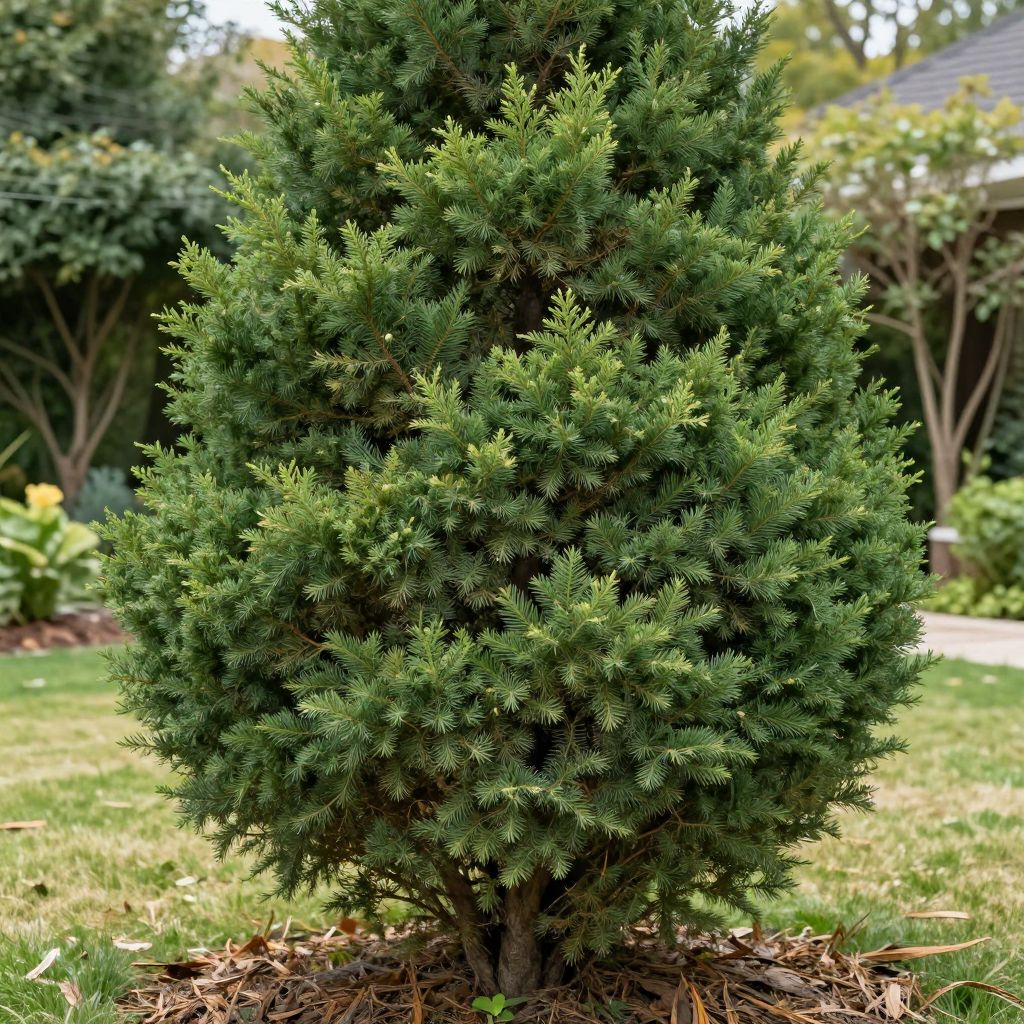
What does a cedar tree look like? If you’re trying to identify one in a yard, park, or nursery, the answer depends on which “cedar” you mean. True cedars and plants commonly called cedars can look similar at a glance, but they have distinct needles or scale-like foliage, cones, and growth habits.
This guide will help you recognize a cedar tree, avoid common look-alikes, and understand the growing conditions these evergreen trees prefer. You’ll also get practical tips for planting and caring for cedars in the landscape.
What does a cedar tree look like?
A cedar tree is usually an evergreen conifer with layered, horizontal branches and foliage that may appear as short needles or soft, scale-like sprays depending on the type. True cedars have upright or spreading cones, aromatic wood, and a graceful, pyramidal to irregular form. Many “cedars” in gardens are actually junipers or arborvitae.
How to identify a cedar tree correctly
The easiest way to identify a cedar is to look at the foliage, cones, bark, and overall shape together. Don’t rely on one feature alone, because several evergreen species are commonly mislabeled as cedar.
1. Check the foliage
- True cedars have clusters of short needles arranged in rosettes on short shoots.
- Junipers and arborvitae often have scale-like leaves pressed close to the twig.
- Needles on true cedars are usually soft-looking, not stiff and sharp.
2. Look at the cones
- True cedar cones are upright on the branches, not hanging down.
- They are barrel-shaped or egg-shaped and eventually break apart on the tree.
- Many look-alikes produce berry-like cones or small round cones instead.
3. Observe the branch structure
- Cedar branches often grow in distinct horizontal tiers.
- Young trees may look narrow and pyramidal.
- Mature trees can become broad, open, and somewhat irregular.
4. Examine the bark
- Older cedars often develop rough, fissured bark.
- Depending on species, the bark may be gray, brown, or reddish-brown.
- Young trees usually have smoother bark than mature specimens.
True cedars vs. trees commonly called cedar
In gardening, the word “cedar” is used loosely. That’s why many people think they’re looking at a cedar when the plant is actually something else. Knowing the difference helps you choose the right care and planting space.
Common true cedars
- Atlas cedar (Cedrus atlantica)
- Deodar cedar (Cedrus deodara)
- Lebanon cedar (Cedrus libani)
Common look-alikes called cedar
- Eastern red cedar (Juniperus virginiana)
- Western red cedar (Thuja plicata)
- Arborvitae (Thuja species and cultivars)
Important: Eastern red cedar is not a true cedar. It is a juniper, even though the common name includes cedar.
What cedar trees look like at different ages
Cedar trees change a lot as they mature, so age matters when you’re identifying them. A young tree may look compact and formal, while an older tree can appear broad, open, and more dramatic.
Young cedar trees
- Usually have a narrow, conical shape.
- Branches are more evenly spaced.
- Foliage may look denser and more symmetrical.
Mature cedar trees
- May develop a wide, spreading canopy.
- Lower branches can droop or thin out over time.
- Old trees often show more character in the bark and branching pattern.
Growing conditions cedar trees prefer
Once you know what a cedar tree looks like, the next step is understanding what it needs to stay healthy. Most cedars do best in full sun, well-drained soil, and enough room to reach their mature size.
Sunlight
- Most cedars grow best in full sun.
- Some can tolerate partial shade, but growth may become thinner or less balanced.
- Too much shade often increases disease risk and weakens branching.
Soil
- Prefer soil that drains well rather than staying soggy.
- Can adapt to a range of soil types if drainage is decent.
- Heavy clay may need organic matter and improved drainage before planting.
Water
- Newly planted trees need regular watering while roots establish.
- Established trees are usually more drought-tolerant, depending on species and climate.
- Overwatering is a common mistake, especially in poorly drained soil.
How to plant a cedar tree
Planting correctly gives a cedar the best chance to establish and grow into a strong landscape tree. The most important factor is drainage, followed by spacing and proper planting depth.
- Choose a site with enough room for the tree’s mature height and spread.
- Test drainage by watering the planting area and seeing how quickly water moves through the soil.
- Dig a hole only as deep as the root ball, but wider than the root ball.
- Set the tree so the root flare sits at or slightly above soil level.
- Backfill with native soil unless your soil is extremely poor; avoid creating a “pot” of amended soil that holds water.
- Water thoroughly after planting to settle the soil.
- Apply a 2- to 3-inch layer of mulch, keeping it a few inches away from the trunk.
Avoid planting too deep. Burying the root flare can stress the tree and lead to decline over time.
Pruning and maintenance
Cedars usually need only light pruning, especially when young. The goal is to maintain structure, remove damaged wood, and keep the tree healthy rather than forcing it into an unnatural shape.
When to prune
- Remove dead, broken, or rubbing branches any time you notice them.
- For shaping, prune lightly during a mild season appropriate to your climate.
- Avoid heavy pruning into old wood if the species does not resprout well.
What to prune
- Dead or diseased branches
- Crossing limbs
- Low branches that interfere with walkways or structures
What not to do
- Do not top the tree.
- Do not remove too much foliage at once.
- Do not shear a cedar into a tight hedge unless the species is suited to that use.
Common cedar problems and how to spot them
Even healthy cedars can run into trouble, especially if they’re planted in the wrong place. Most issues show up first in the foliage, branch tips, or root zone.
Needle browning or drop
- Can be caused by drought, transplant stress, root damage, or seasonal needle shed.
- Check soil moisture before assuming disease.
- Deep watering and mulch often help newly planted trees recover.
Root rot
- Often linked to poor drainage or overwatering.
- Symptoms may include yellowing, thinning foliage, and gradual decline.
- Improving drainage is more effective than adding more water or fertilizer.
Pests
- Spider mites can cause stippling and bronzing in hot, dry weather.
- Bagworms may chew foliage and leave hanging cases on branches.
- Scale insects can weaken trees by feeding on sap.
Winter injury
- Cold wind and drying sun can brown exposed foliage.
- Mulch helps protect roots, but avoid piling it against the trunk.
- Young trees may benefit from wind protection in harsh climates.
How to tell cedar from juniper or arborvitae
If you’re standing in front of an evergreen and wondering what it is, a quick comparison can help. This is especially useful in nurseries, where common names may be inconsistent.
- Cedar: needle clusters or scale-like foliage depending on species, upright cones, layered branches.
- Juniper: often prickly juvenile foliage or scale foliage, berry-like cones, strong aromatic scent.
- Arborvitae: flat sprays of scale-like leaves, small cones, dense narrow or pyramidal form.
If you’re unsure, take a close photo of the foliage and cones. Compare it with the plant tag or a local extension guide for your region.
Can you grow cedar trees in a home landscape?
Yes, if your site matches the tree’s needs and you choose a species that fits your climate and space. Cedars can make excellent specimen trees, windbreaks, or large privacy features, but they are not small foundation plants.
Best uses in the garden
- Specimen tree in a large lawn or open bed
- Windbreak or shelter planting
- Screening in spacious landscapes
Common mistakes in home gardens
- Planting too close to buildings, fences, or power lines
- Choosing a site with poor drainage
- Expecting a mature cedar to stay small without regular, appropriate pruning
Conclusion: use the whole plant, not just one feature
To identify what a cedar tree looks like, look at the foliage, cones, bark, and overall shape together. That approach will help you separate true cedars from junipers and arborvitae, and it will also guide you toward better planting and care decisions.
If you’re planning a new planting, start by checking your soil drainage and available space, then match the tree to your local climate. For more evergreen identification help, you may also find it useful to read about how to identify conifers in the garden and choosing the right evergreen tree for your landscape.