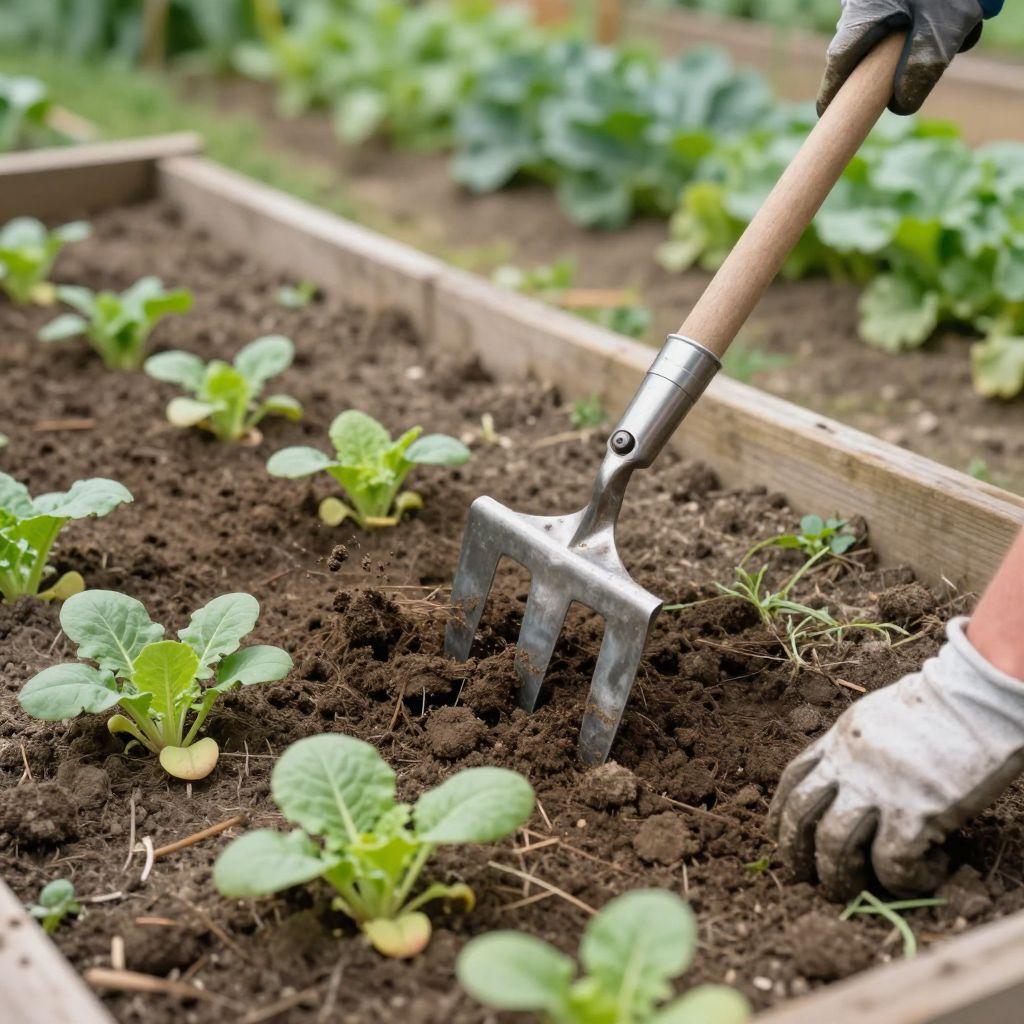
What is a cultivator used for in the garden? If you’ve seen one and wondered whether it’s for digging, loosening, or weeding, you’re not alone. A cultivator is one of the most useful tools for preparing soil and maintaining beds without turning the whole garden over.
Used correctly, it helps break up compacted soil, mix in compost, remove small weeds, and improve the surface texture around plants. The right approach depends on whether you’re using a hand cultivator, a long-handled tool, or a powered machine.
What is a cultivator used for in gardening?
A cultivator is used to loosen and aerate soil, break apart clumps, mix in amendments like compost, and remove young weeds. In beds and borders, it helps keep the top layer of soil open and workable without deep digging. It is especially useful before planting and for light maintenance between established plants.
How a cultivator works
Most cultivators have tines, claws, or rotating blades that disturb the upper layer of soil. That action improves airflow and makes it easier for water to penetrate, while also helping roots spread through loosened ground.
Unlike a shovel or spade, a cultivator is not meant for moving large amounts of soil. Its job is surface-level soil management, not major excavation.
Common types of cultivators
- Hand cultivator: A small three-prong tool for pots, raised beds, and tight spaces.
- Long-handled cultivator: Useful for larger beds when you want to work standing up.
- Rotary cultivator: A wheeled or push-style tool that loosens soil as you move it.
- Powered cultivator or tiller: Best for bigger areas or more compacted ground, though it can be too aggressive for delicate beds.
What is a cultivator used for in the garden?
In practical terms, a cultivator is used for four main jobs: preparing planting areas, mixing in organic matter, controlling small weeds, and refreshing soil around established plants. It is most effective when the soil is slightly moist, not wet and sticky or dry and rock-hard.
1. Preparing soil for planting
Before sowing seeds or transplanting seedlings, a cultivator helps create a loose, crumbly surface. That makes it easier for roots to establish and for seeds to make good contact with soil.
For best results, remove large stones, sticks, and thick roots first. Then work the top few inches of soil until it feels even and airy.
2. Mixing compost and amendments
If you add compost, leaf mold, or other organic matter, a cultivator helps blend it into the top layer. This is useful in vegetable beds, flower borders, and around shrubs that benefit from improved soil structure.
Tip: Work amendments into the top 2 to 4 inches of soil for surface improvement, but avoid disturbing deep roots near established perennials, shrubs, or trees.
3. Removing small weeds
Young weeds are easiest to remove with a cultivator when they are tiny and the soil is loose. A light pass can uproot weeds before they gain a foothold.
This works best on annual weeds and newly germinated seedlings. Deep-rooted perennial weeds may need hand pulling or repeated removal of regrowth.
4. Maintaining beds during the season
Between plantings, a cultivator can refresh the soil surface, especially in vegetable gardens and annual flower beds. It can also help break up a crust that forms after rain or watering.
Use a gentle touch around growing plants. You want to loosen soil, not cut roots.
When to use a cultivator
The best time to use a cultivator is when the soil is workable and not overly wet. If the soil sticks to the tool in heavy clumps, wait for it to dry a little. If it is powdery and hard, lightly watering first can make cultivation easier.
Seasonally, gardeners often use cultivators in early spring before planting, during bed preparation between crops, and in fall when adding compost or cleaning up spent beds. In mild climates, you may use one year-round whenever beds need light maintenance.
Best conditions for cultivation
- Soil is moist but not muddy
- The bed is free of large debris
- Weeds are small and easy to dislodge
- Plants are spaced enough that you can work carefully between them
How to use a cultivator correctly
Using a cultivator well is mostly about timing, pressure, and depth. A light pass is usually better than aggressive digging, especially in established beds.
- Clear the area of stones, sticks, and thick mulch if needed.
- Check soil moisture; it should crumble, not smear.
- Work in short strokes or smooth passes, depending on the tool.
- Loosen only the top layer unless you are preparing a new bed.
- Rake the soil level and remove uprooted weeds or roots.
- Water lightly afterward if planting seeds or transplants.
If you are using a powered cultivator, start with a shallow setting and make a second pass only if needed. Deep, repeated cultivation can damage soil structure and bring buried weed seeds to the surface.
What a cultivator is not for
It helps to know the limits of the tool. A cultivator is not the same as a shovel, spade, hoe, or tiller, even though the jobs can overlap.
- Not for heavy excavation: Use a spade or shovel for digging holes or moving soil.
- Not for cutting large weeds: A hoe or hand-pulling may work better for established weeds.
- Not for deep tilling around roots: Avoid aggressive cultivation near trees, shrubs, and perennials.
- Not for very wet soil: Wet soil compacts easily and can form clods.
Using a cultivator in different garden settings
Vegetable beds
Vegetable gardens often benefit the most from regular cultivation because they are replanted frequently. Use a cultivator to prepare rows, mix compost, and keep the surface loose between crops.
Be careful around shallow-rooted crops such as lettuce, onions, and herbs. Work only where roots are not concentrated.
Flower borders
In ornamental beds, a cultivator helps keep annual beds tidy and open for planting. Around perennials, use it sparingly so you do not disturb crowns or spreading roots.
A hand cultivator is usually the safest choice in crowded borders.
Raised beds
Raised beds are ideal for light cultivation because the soil is usually easier to manage. A hand tool or small long-handled cultivator can loosen the top layer without overworking the bed.
If the soil in a raised bed becomes compacted over time, add compost and gently cultivate rather than repeatedly digging deeply.
Containers and pots
In containers, a small hand cultivator can break crusted soil and mix in fresh potting mix or compost. Use it carefully, because container roots are close to the surface and easy to injure.
If a potting mix has become dense, it may be better to repot with fresh mix rather than trying to fix it with repeated cultivation.
Common mistakes to avoid
- Working soil when it is too wet: This creates clods and compaction.
- Digging too deeply: Deep disturbance can harm roots and soil life.
- Over-cultivating: Too much soil disturbance can dry out beds and encourage more weeds.
- Using the wrong tool: A cultivator is for loosening, not for major digging.
- Ignoring root zones: Be cautious near established plants, especially perennials and shrubs.
Troubleshooting soil problems with a cultivator
Hard, compacted soil
If the soil is tough and dense, start by watering lightly and waiting until it is just workable. Then use a cultivator to loosen the top layer. For severe compaction, you may need to add organic matter over time rather than trying to fix everything in one session.
Weeds keep coming back
If weeds return quickly, you may be bringing buried weed seeds to the surface with repeated cultivation. Try shallow passes only, mulch after weeding, and remove weeds before they set seed.
Soil dries out too fast
Over-cultivated soil can lose moisture quickly. Once you have loosened the bed and planted, consider adding mulch to reduce evaporation and protect the surface from crusting.
Roots are getting damaged
If you notice roots being cut or exposed, stop cultivation closer to the plant and switch to hand weeding. Around established plants, less is usually better.
How a cultivator supports healthy garden growth
A cultivator improves the growing environment by helping water soak in, giving roots room to expand, and making it easier to blend in organic matter. Those benefits are most noticeable in soil that has become compacted, crusted, or tired after repeated planting.
Still, soil health depends on more than one tool. Compost, mulch, good drainage, and careful watering all work together with cultivation to support strong plants.
Conclusion
If you have been wondering what is a cultivator used for, the short answer is that it loosens soil, mixes amendments, and helps manage small weeds. Use it lightly, at the right soil moisture, and in the right places, and it becomes a simple tool for healthier beds and easier planting.
For more practical garden tool guidance, you may also want to read about garden soil preparation and using compost in garden beds.