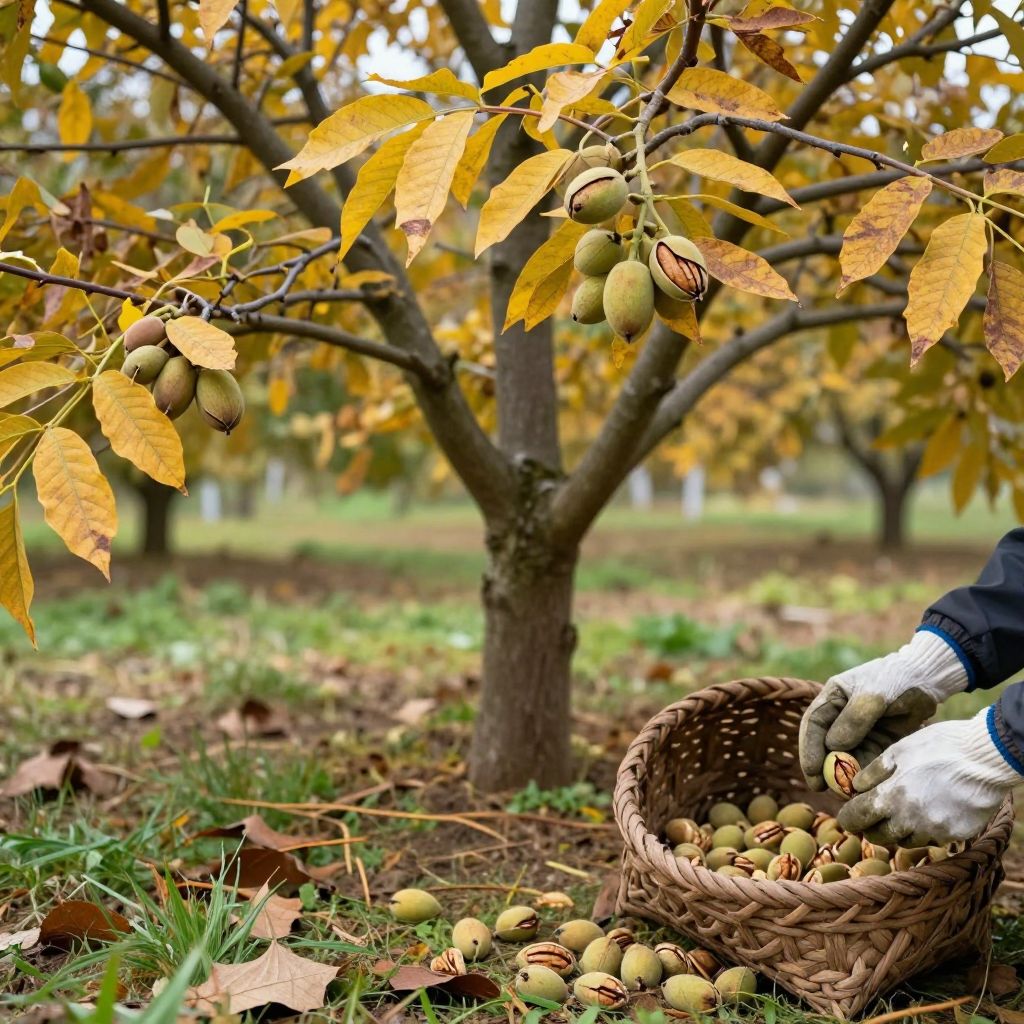
When is pecan season? If you grow pecan trees or want to harvest nuts at the right time, the answer depends on your climate, tree variety, and the year’s weather. In most home gardens, pecans are ready from late fall into early winter, when the husks split and nuts begin dropping.
Knowing the season matters because pecans are easiest to collect, cure, and store when you harvest them at the right stage. It also helps you plan tree care, because healthy pecan trees need the right conditions long before harvest time arrives.
When is pecan season?
Pecan season usually runs from late September through December, with the biggest harvest window often landing in October and November. Exact timing varies by region, cultivar, and weather. In warmer southern areas, nuts may mature earlier; in cooler locations, harvest can stretch later into winter.
How to tell when pecans are ready to harvest
Don’t rely on the calendar alone. Pecans are ready when the shuck splits open and the nut starts to fall naturally, or when nuts shake loose easily from the tree. Mature kernels should be firm, full, and well developed, not soft or shriveled.
Signs your pecans are mature
- The green outer husk splits into sections.
- Ripe nuts drop to the ground on their own.
- The shell inside feels hard and fully formed.
- Kernel color is rich and the nut feels heavy for its size.
If you pick too early, the kernel may be underfilled and harder to dry properly. If you wait too long, nuts can be lost to squirrels, insects, mold, or wet weather.
What affects pecan season timing?
Pecan timing is influenced by temperature, rainfall, tree age, and the variety you grow. Some cultivars mature earlier than others, and young trees may bear irregularly. A warm growing season can speed maturity, while a cool or rainy one may delay it.
Climate and region
Pecans are best suited to long, warm growing seasons. In the southeastern and south-central United States, harvest often begins earlier than in cooler marginal areas. Local extension offices or nearby growers are often the best guide for your area’s typical harvest window.
Tree age and crop load
Young trees may produce only a few nuts, and mature trees can alternate between heavy and light crops. A tree carrying a very large crop may mature a little later because it needs more time to finish filling the kernels.
Weather during the growing season
Hot, dry spells can affect nut fill if the tree is stressed. On the other hand, prolonged rain near harvest can increase disease pressure and make collection harder. A healthy tree with consistent soil moisture usually produces better-quality nuts.
How to harvest pecans the right way
Harvest pecans as they fall, rather than stripping the tree all at once. This reduces damage to branches and lets you collect only mature nuts. In home orchards, many gardeners gather fallen nuts every few days during peak drop.
- Check the ground under the tree every 2 to 4 days during harvest season.
- Pick up nuts with split husks and those that have already fallen.
- Remove leaves, twigs, and damaged nuts.
- Spread the nuts in a single layer to dry in a cool, airy place.
- Store fully dried pecans in breathable containers or sealed storage after curing.
Do not store damp pecans right away. Moisture encourages mold and can ruin flavor and texture. Curing after harvest is one of the most important steps for good-quality nuts.
Simple curing and storage tips
- Dry nuts in a shaded, well-ventilated area.
- Keep them out of direct sun for long periods.
- Use mesh bags, shallow trays, or baskets for airflow.
- Once dry, store in a cool place to preserve flavor.
Growing pecan trees for a better harvest
If you want a reliable pecan season in your own yard, start with the growing conditions pecan trees prefer. Pecans are large, long-lived trees that need full sun, deep soil, and room to spread. They are not a good fit for small spaces or poorly drained sites.
Sunlight and space
Pecan trees need full sun for strong growth and good nut production. Give them plenty of space away from buildings, power lines, and other large trees. Crowding reduces airflow, increases disease risk, and can lower yields.
Soil and drainage
Deep, fertile, well-drained soil is ideal. Pecans dislike standing water, compacted ground, and shallow rocky soil. If your site drains poorly, consider improving drainage before planting rather than trying to fix it later.
Watering young and mature trees
Young pecan trees need regular moisture while they establish roots, especially during dry weather. Mature trees are more resilient, but they still benefit from deep watering during drought. Avoid frequent shallow watering, which can encourage weak roots near the surface.
Mulch and compost
A wide mulch ring helps conserve moisture and reduce competition from grass. Keep mulch a few inches away from the trunk to prevent rot. Compost can improve soil structure, but use it as a soil-building amendment, not as a substitute for proper drainage.
Pruning and maintenance before harvest
Good pruning helps light reach the canopy and makes harvest easier. For most home gardeners, the goal is to remove dead, crossing, or damaged branches and keep the tree open enough for airflow. Heavy pruning is usually best done when the tree is dormant.
What to remove
- Dead or broken limbs
- Branches rubbing against each other
- Low growth that blocks access under the tree
- Suckers or weak shoots with poor structure
Be cautious about removing too much at once. Overpruning can stress the tree and reduce nut production for the next season.
Common pests and diseases that affect pecan season
Pecan harvest can be reduced by insects, fungal diseases, and wildlife. Many problems show up before nuts are ready, so early monitoring is important. Healthy trees are less likely to suffer serious losses.
Common issues to watch for
- Pecan scab, which can damage leaves, shucks, and nuts in wet weather.
- Insect feeding that causes nut drop or poor kernel fill.
- Squirrels and birds, which can strip nuts quickly once they ripen.
- Rodents and insects in stored nuts if cleanup is delayed.
If you see dark lesions, heavy leaf spotting, or repeated premature nut drop, act early. Sanitation, proper spacing, and choosing adapted cultivars are often the most practical long-term defenses for home growers.
Can you grow pecans in a home garden?
Yes, if you have enough room and a suitable climate. Pecans are best for larger properties, small orchards, or landscape settings where a big shade tree is welcome. They are less practical for tight suburban lots because of their size and root spread.
Before planting, ask yourself
- Do you have full sun for the life of the tree?
- Is the soil deep and well drained?
- Do you have room for a very large mature canopy?
- Can you manage fallen nuts and seasonal cleanup?
If the answer is yes, pecans can be a rewarding long-term addition. If not, you may be better off enjoying pecans from a local grower and focusing your garden space on smaller fruit or nut crops.
Final tips for timing pecan season well
Watch the tree, not just the calendar. When the shucks split, nuts begin to fall, and the kernels are fully formed, pecan season is underway. Harvest promptly, dry the nuts well, and store them properly so your crop keeps its flavor and quality.
If you’re planning a pecan tree for your yard, start by checking your local climate, soil drainage, and available space, then compare those conditions with other nut tree growing guides and fall harvest care tips to plan a healthier, more productive garden.