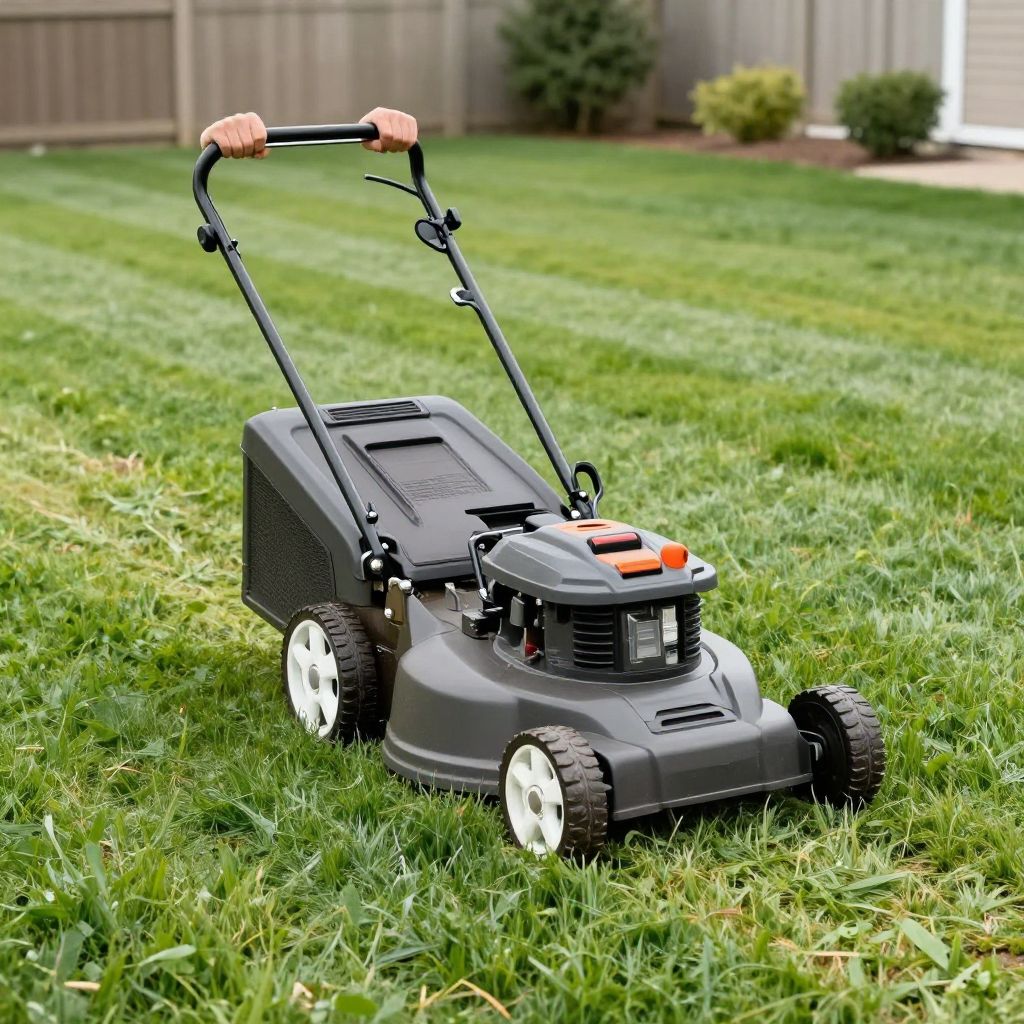
If you’ve been looking at lawn mowers and wondering, “What is a self propelled lawn mower?” you’re not alone. It’s one of the most useful mower types for home lawns, especially if your yard has slopes, thick grass, or a larger mowing area.
In simple terms, a self propelled mower powers its own wheels so you only guide it. That makes mowing easier than pushing a standard mower, but it still needs your control for speed, direction, and cutting height.
What Is A Self Propelled Lawn Mower?
A self propelled lawn mower is a mower with a drive system that turns the wheels and helps move the machine forward. You squeeze a control bar or engage a drive lever, and the mower “pulls” itself while you walk behind it. This reduces effort, especially on uneven ground, tall grass, or medium-to-large lawns.
How a Self Propelled Mower Works
Most self propelled mowers use either a belt-driven or gear-driven system to transfer power from the engine or motor to the wheels. On gas models, the engine powers both the blade and the drive wheels. On battery models, one or more motors may handle cutting and movement.
Front-wheel drive vs rear-wheel drive
- Front-wheel drive: Easier to turn and good for flatter lawns.
- Rear-wheel drive: Better traction on slopes and rougher ground.
- All-wheel drive: Offers the most grip, but is usually more expensive and heavier.
The drive system matters because it affects how the mower handles in real yard conditions. If your lawn has hills, soft spots, or thick turf, traction is often more important than raw speed.
How to Identify a Self Propelled Lawn Mower
If you’re shopping for one or trying to tell a mower type apart, look for a drive control and a transmission system. A standard push mower has no wheel assist, while a self propelled model includes a lever, bail bar, or control handle that engages forward motion.
Common identification clues
- A lever or bar on the handle labeled “drive,” “self propel,” or similar.
- Drive wheels that move without you pushing the mower.
- Speed settings on some models.
- A heavier frame than a basic push mower.
- Different wheel sizes, often with larger rear wheels on rear-wheel-drive models.
If you’re unsure, check the owner’s manual or product label. Manufacturers usually list the drive type clearly, and many models also note whether the mower is push, self propelled, or riding.
Why Home Gardeners Choose Self Propelled Mowers
Self propelled mowers are popular because they reduce physical strain and make mowing more manageable. They can be a smart choice if you want a cleaner cut with less effort, especially when grass growth is fast or the lawn is not perfectly level.
Best situations for a self propelled mower
- Yards with slopes or mild hills
- Lawns with thick or tall grass
- Medium to larger residential lawns
- Gardeners who want less pushing effort
- Lawns with obstacles where controlled movement helps
They are not always the best option for every yard. Very small, flat lawns may be easier to maintain with a lightweight push mower, especially if storage space is limited.
Choosing the Right Self Propelled Mower for Your Yard
The best mower depends on your lawn size, terrain, and how much maintenance you want to do. A mower that feels comfortable in the store may still be awkward in your yard if the wheel drive, deck size, or weight doesn’t suit your conditions.
Key features to compare
- Drive type: Front-wheel drive for easy turning, rear-wheel drive for hills.
- Deck width: Wider decks cover more ground, but can be harder to maneuver.
- Speed control: Helpful if your walking pace varies.
- Cutting height adjustment: Look for easy, centralized adjustment.
- Mulching, bagging, or side discharge: Choose based on your lawn care routine.
- Power source: Gas for longer run time, battery for quieter operation and less maintenance.
For most home gardeners, comfort and traction matter more than extra features. If possible, test the handle height and wheel feel before buying.
How to Use a Self Propelled Lawn Mower Safely
Using a self propelled mower is straightforward, but good technique improves cut quality and reduces wear on the machine. Start with a clear lawn, the right cutting height, and a steady walking pace rather than forcing the mower to move faster than it wants to go.
- Clear sticks, stones, toys, and garden debris from the lawn.
- Set the cutting height based on grass type and current growth.
- Start the mower on level ground if possible.
- Engage the blade and then the drive control.
- Walk at a steady pace and overlap each pass slightly.
- Release the drive and blade controls before turning or backing up, if your model requires it.
Never pull a self propelled mower backward while the drive is engaged unless the manufacturer says it is safe to do so. That can strain the transmission and make the mower harder to control.
Maintenance Tips to Keep It Working Well
A self propelled mower needs regular care to keep the drive system smooth and the cut even. Basic maintenance is similar to other mowers, but the wheel drive and control cables deserve extra attention.
Routine maintenance checklist
- Clean grass clippings from under the deck after use.
- Check the blade for dullness or damage.
- Inspect drive cables for slack, wear, or sticking.
- Keep wheels free of packed grass and debris.
- Follow the manual for oil changes, air filter checks, or battery care.
- Store the mower in a dry place to protect belts, cables, and electrical parts.
If the mower starts to feel like it is dragging, slipping, or moving unevenly, the drive belt or cable may need adjustment or replacement. Addressing small issues early often prevents bigger repairs later.
Common Problems and How to Troubleshoot Them
Even a good self propelled mower can develop performance problems. Most issues are mechanical, maintenance-related, or tied to mowing conditions rather than the mower type itself.
Problem: The mower won’t move forward well
- Check whether the drive control is fully engaged.
- Inspect the drive belt for wear or looseness.
- Look for grass buildup around the wheels.
- Make sure the transmission setting, if present, is correct.
Problem: The mower moves too fast
- Use a lower speed setting if your model has one.
- Choose a mower with variable speed if your walking pace changes often.
- Practice on a flat section before mowing slopes or tight areas.
Problem: It pulls to one side
- Check tire pressure if your mower has pneumatic tires.
- Inspect wheels for debris or uneven wear.
- Make sure the blade is balanced and sharp.
- Confirm the deck is not clogged with wet grass.
Wet grass, overgrown turf, and dull blades make any mower harder to handle. For the cleanest result, mow when the lawn is dry and avoid cutting more than about one-third of the grass blade at a time.
Self Propelled vs Push Mower: Which Is Better?
The better mower depends on your lawn and your comfort level. A push mower is simpler, lighter, and usually less expensive. A self propelled mower is easier to use on larger, thicker, or sloped lawns.
- Choose a push mower if your lawn is small, flat, and easy to maintain.
- Choose a self propelled mower if you want less effort and better handling on varied terrain.
- Choose a battery self propelled mower if you prefer lower noise and simpler start-up.
- Choose a gas self propelled mower if you need longer run time and strong performance in dense grass.
Think of self propulsion as a comfort and control feature, not a replacement for mowing skill. You still guide the mower, plan the pattern, and adjust cutting height to suit the lawn.
Practical Tips for Better Mowing Results
Good mowing habits matter just as much as the mower itself. A self propelled model can help you maintain a healthier lawn if you use it correctly and keep the blade sharp.
- Mow regularly instead of waiting until the grass is too long.
- Change direction occasionally to reduce wheel ruts and grass leaning.
- Raise the cutting height during hot, dry weather if your grass needs extra leaf area.
- Avoid mowing wet soil to prevent compaction and tire marks.
- Use mulching when the clippings are short and dry, or bag them if the lawn is overgrown.
If you’re managing a landscape with trees, beds, or tight corners, a self propelled mower with good maneuverability can save time. Just remember that a wider deck is not always better if it makes trimming around features harder.
Conclusion
So, what is a self propelled lawn mower? It’s a mower that drives its own wheels to reduce the effort of mowing while giving you control over direction and speed. For many home gardeners, it’s a practical upgrade that makes lawn care easier and more comfortable.
If you’re deciding whether one is right for your yard, compare your lawn size, slope, and mowing habits, then look for the drive type and features that match. For more lawn care help, you may also want to read about how to sharpen mower blades and choosing the right mowing height for your grass.
Leave a Reply