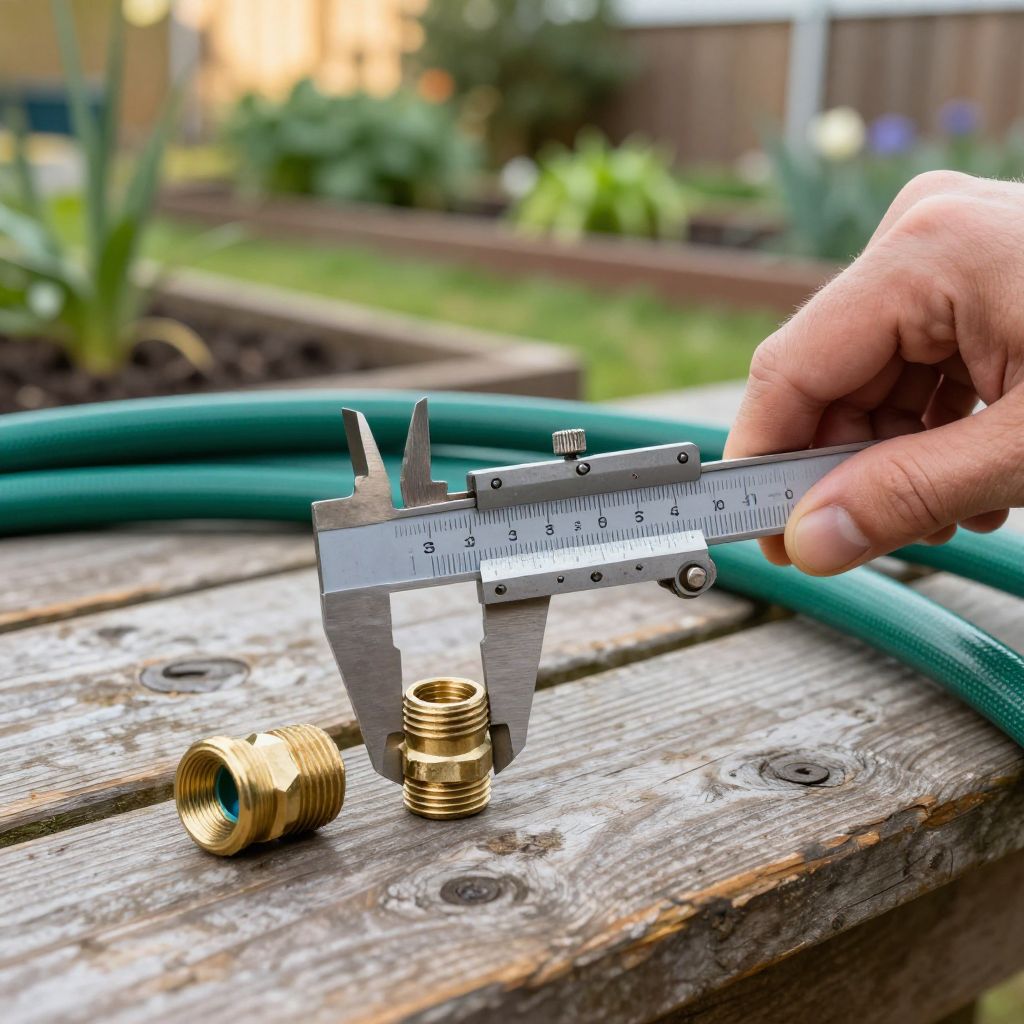
What size is a garden hose fitting? If you’re replacing a washer, buying a new hose, or trying to connect sprinklers and timers, the answer matters more than it first seems. The wrong fitting size can cause leaks, poor water flow, or parts that simply won’t screw together.
Most home garden hoses use a standard thread size, but there are a few common exceptions. Knowing how to identify the fitting, measure it, and match it to your tap or equipment will save time and frustration in the garden.
What size is a garden hose fitting?
The most common garden hose fitting in the U.S. is 3/4-inch GHT (garden hose thread), also called 3/4-inch NH. This is the standard size for most hoses, spigots, sprinklers, and hose-end accessories. The actual outside diameter of the threaded connection is larger than 3/4 inch, so measure carefully rather than guessing by name alone.
How to identify a garden hose fitting
Garden hose fittings are usually easy to recognize once you know what to look for. The end of the hose has a threaded metal or plastic collar, and the connection is typically designed to screw onto a matching male thread on a tap, nozzle, or adapter.
Common hose fitting types
- Female hose end: Has internal threads and usually connects to a faucet or male adapter.
- Male hose end: Has external threads and connects to a female fitting.
- Swivel fitting: Rotates to help you tighten the connection without twisting the hose.
- Quick-connect fitting: Used for convenience, but it still usually attaches to standard 3/4-inch GHT threads at the base.
If you are unsure, look for markings on the fitting itself. Many hose ends, splitters, and adapters are stamped with sizes such as 3/4 in., GHT, or NH.
How to measure the fitting
- Turn off the water and disconnect the hose or accessory.
- Look at the threaded end and identify whether it is male or female.
- Measure the outside diameter of a male thread, or the inside opening of a female fitting.
- Compare the measurement with common hose standards rather than relying on the label alone.
For most gardeners, the simplest check is this: if it fits a standard outdoor faucet in your area, it is probably the common 3/4-inch garden hose thread size.
Why the standard size matters in the garden
Using the correct fitting size helps your watering system work properly. A loose connection can waste water, reduce pressure, and create puddles around beds, patios, or greenhouse paths. A mismatched fitting can also damage threads over time.
This matters whether you are watering raised beds, containers, lawns, or newly planted shrubs. A secure hose connection gives you better control, especially when you are using a sprinkler, wand, soaker hose, or timer.
Problems caused by the wrong size
- Leaking at the tap or hose end
- Cross-threading that strips the fitting
- Poor spray performance from low flow
- Difficulty attaching watering tools or splitters
- Extra wear on washers and hose threads
Common garden hose fitting sizes and where they are used
Although 3/4-inch GHT is the standard, you may still encounter other sizes in irrigation or specialty equipment. These are less common in everyday garden use, but they are worth knowing about if you are expanding your watering setup.
Standard residential hose fittings
- 3/4-inch GHT / NH: Standard for most garden hoses and outdoor faucets.
- 1/2-inch fittings: More common in drip irrigation parts, small tubing, or some imported accessories.
- Metric fittings: Found on some garden equipment outside North America or on certain specialty products.
If you are buying parts online, check whether the product uses garden hose thread, pipe thread, or metric sizing. A fitting that looks close may still not match.
Garden hose thread vs pipe thread: what’s the difference?
One of the most common mistakes is confusing garden hose thread with plumbing pipe thread. They are not the same, even if they seem similar at first glance.
Garden hose thread
Garden hose thread is designed for outdoor watering equipment. It usually seals with a flat washer inside the female fitting, not by tightening the threads themselves.
Pipe thread
Pipe thread is used in plumbing systems and often seals by thread taper and sealant. It is common on indoor plumbing, but it does not directly match most hose ends.
If you try to force one type onto the other, you can damage the fitting and create a leak. When in doubt, use an adapter made for the exact connection you need.
How to choose the right hose fitting for your garden setup
The right fitting depends on what you are connecting. A hose for hand watering, for example, may only need a standard female end and a nozzle. A larger garden irrigation setup may need splitters, reducers, or quick-connects.
Match the fitting to the task
- Tap to hose: Standard 3/4-inch GHT female hose end to male faucet thread.
- Hose to sprinkler: Standard hose thread on both sides or an adapter if needed.
- Hose to timer: Check whether the timer has male or female hose threads before buying.
- Hose to drip system: Often requires a pressure reducer and a specific adapter.
For container gardens and small beds, a simple hose with a spray nozzle may be enough. For larger plantings, a splitter or timer can make watering more consistent, especially during hot, dry weather.
How to avoid leaks and cross-threading
Even the correct size can leak if the connection is dirty, worn, or tightened incorrectly. A good seal depends on clean threads, a good washer, and careful tightening.
Practical sealing tips
- Inspect the rubber washer inside the female fitting.
- Replace cracked or flattened washers before assuming the hose is bad.
- Clean dirt and grit from the threads before reconnecting.
- Start threading by hand to avoid cross-threading.
- Tighten firmly, but do not overtighten with tools unless the fitting is designed for it.
A worn washer is one of the most common causes of leaks. Replacing it is often cheaper and easier than buying a new hose.
Signs you need a replacement fitting
- Threads are visibly stripped or cracked
- The connection leaks even with a new washer
- The fitting wobbles or will not seat properly
- Metal corrosion or heavy plastic wear is present
Seasonal and practical gardening considerations
Hose fittings matter more at certain times of year. In spring, you may reconnect hoses after storage and discover cracked washers or brittle plastic from winter exposure. In summer, frequent use can wear threads faster. In cold climates, freezing water left in fittings can split them.
Cold-weather care
- Drain hoses before frost or freezing temperatures.
- Disconnect hoses from outdoor taps before winter.
- Store fittings indoors if possible to reduce cracking.
- Check for damage before the first watering in spring.
For gardeners in hot, sunny climates, UV exposure can also shorten the life of plastic fittings. If your hose sits outside all season, choose sturdier materials and inspect them regularly.
When to use adapters in the garden
Adapters are useful when your watering tools do not match the standard hose thread. They let you connect different sizes or thread types without replacing every piece of equipment.
Common adapter situations
- Connecting a hose to a drip irrigation line
- Joining a hose to an imported accessory with metric threads
- Connecting a hose to a pressure regulator or filter
- Adapting a faucet with unusual plumbing threads
Choose an adapter that clearly states both ends of the connection. If one side is hose thread and the other is pipe thread, the product should say so.
Quick checklist before you buy a hose fitting
Before you head to the garden center or order online, use this simple checklist to avoid mismatched parts.
- Identify whether the fitting is male or female
- Check for 3/4-inch GHT or NH markings
- Confirm whether your accessory uses hose thread or pipe thread
- Look at the washer condition
- Measure the fitting if the size is unclear
- Match the fitting to the exact tool or tap you plan to use
If you are still unsure, bring the old fitting or a photo to the store. That is often the fastest way to get the right match.
Common mistakes gardeners make with hose fittings
Most hose fitting problems come from small oversights rather than major equipment failures. A few careful habits can prevent repeated leaks and wasted water.
Mistakes to avoid
- Forcing a fitting that almost matches
- Using tape or sealant where a washer should do the sealing
- Ignoring worn rubber washers
- Mixing hose thread and pipe thread without an adapter
- Leaving hoses pressurized in freezing weather
Good watering equipment should make garden care easier, not harder. If a connection takes effort every time, it is usually the wrong fit or a worn part.
Final thoughts: get the size right, then water with confidence
For most gardeners, the answer to what size is a garden hose fitting is 3/4-inch GHT. Once you know that standard, you can choose the right hose, nozzle, splitter, or adapter with much less guesswork. Check the thread type, replace worn washers, and match fittings carefully to keep your watering system leak-free.
If you want to keep improving your garden setup, consider reading more about choosing the right watering tools for your garden and how to maintain hoses and irrigation equipment.