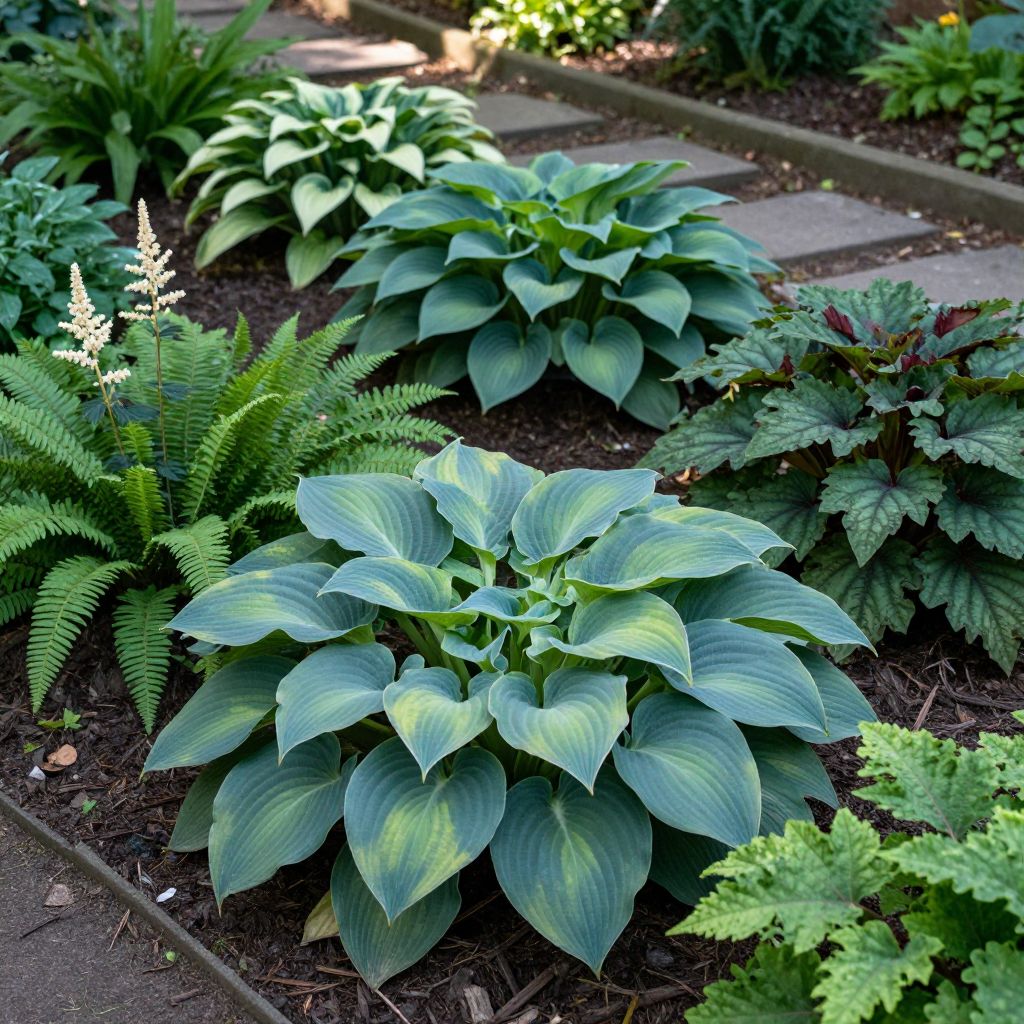
What should you plant with hostas so the bed looks full, balanced, and healthy? The best companions are plants that enjoy similar shade, moisture, and soil conditions, while also adding contrast in leaf shape, color, and texture. Good pairings can help hide hosta dieback, reduce bare spots, and make a shady border look intentional.
The trick is choosing plants that thrive in part shade to shade without competing too aggressively for water and space. Once you match the site and layer plants by height, hostas become the anchor of a very attractive low-maintenance planting.
What to plant with hostas?
Plant shade-loving companions that prefer rich, evenly moist soil and similar light levels, such as astilbe, ferns, heuchera, brunnera, hellebores, Japanese forest grass, and spring bulbs. The best choices add contrast in texture or bloom time without crowding hostas or drying out the root zone.
Best companion plants for hostas
1. Ferns
Ferns are one of the easiest companions for hostas because they share the same woodland feel and growing conditions. Their feathery fronds contrast beautifully with the broad, bold leaves of hostas.
- Good fit: Japanese painted fern, lady fern, autumn fern
- Why it works: Fine texture against large leaves
- Best use: Fill in behind or beside hostas in shady borders
2. Heuchera
Heuchera, often called coral bells, adds color where hostas provide structure. Their foliage can range from lime to burgundy, giving you a strong contrast in mixed shade beds.
They do best in part shade with good drainage, so avoid placing them where water sits after rain.
3. Astilbe
Astilbe pairs well with hostas because it brings airy plumes of flowers above the leafy mound. It likes moist, humus-rich soil and partial shade, which makes it a natural companion in many gardens.
- Plant astilbe where the soil stays consistently moist
- Choose varieties that fit your bed height, from compact to tall
- Deadhead spent plumes if you want a tidier look
4. Brunnera
Brunnera macrophylla, or Siberian bugloss, is valued for its heart-shaped leaves and small blue spring flowers. It works especially well in front of or among hostas because it creates a softer, lighter layer at ground level.
5. Hellebores
Hellebores are excellent for adding early-season interest before hostas fully emerge. Their evergreen or semi-evergreen foliage helps keep the bed looking full through winter and early spring.
They prefer rich soil and dappled shade, making them a strong long-term companion in woodland-style plantings.
6. Japanese forest grass
Japanese forest grass, or Hakonechloa macra, brings movement and a graceful arching habit that contrasts with the rounded form of hostas. It is especially effective along paths, edges, or in containers near a shaded patio.
Use it sparingly so it acts as an accent rather than taking over the composition.
7. Spring bulbs
Early bulbs such as snowdrops, crocus, and daffodils can be planted among hostas to extend the season. They bloom before hostas leaf out fully, so they use the same space without much competition.
- Best for: early color in deciduous shade
- Planting tip: tuck bulbs between hosta crowns, not directly into them
- Benefit: hosta foliage later hides bulb leaves as they fade
8. Lungwort
Lungwort, or Pulmonaria, is another shade perennial with spotted foliage and early flowers. It handles similar conditions to hostas and helps fill the front of the bed with low, attractive foliage.
How to choose the right companion plants
Before you plant anything near hostas, check the light, moisture, and soil in that spot. Hostas are flexible, but companion plants are usually less forgiving if the site is too dry, too sunny, or too compacted.
- Match the light: Most hosta companions prefer part shade, morning sun, or bright filtered shade.
- Check moisture: The bed should stay evenly moist, not soggy.
- Look at mature size: Give each plant room to spread without smothering the hosta.
- Think about texture: Mix broad leaves with fine, airy, or grassy foliage.
- Plan for seasonality: Combine spring bloomers, summer foliage, and plants with winter structure.
Plants to avoid near hostas
Some plants are poor companions because they want very different conditions or grow too aggressively. Avoid placing drought-loving perennials, aggressive groundcovers, or large shrubs too close unless you can manage the spacing carefully.
- Sun-lovers: Lavender, sedum, and many Mediterranean herbs usually need more sun and drier soil
- Thirsty spreaders: Mint and some running groundcovers can crowd hostas quickly
- Heavy root competition: Large trees and shrubs can dry out the soil and steal moisture
How to plant hostas with companion plants
Good planting design matters as much as plant choice. Hostas and their companions look best when you layer them by height and leave enough room for mature spread.
Step-by-step planting guide
- Prepare the bed: Loosen the soil to a depth of about 8 to 12 inches if possible.
- Add organic matter: Mix in compost to improve structure and moisture retention.
- Check drainage: If water pools after rain, raise the bed or improve drainage before planting.
- Set the hostas first: Place hostas as the main focal plants, then arrange smaller companions around them.
- Leave space: Allow for mature spread so plants do not overlap too tightly.
- Water in well: Soak the root zone after planting to settle the soil.
- Mulch lightly: Use 2 to 3 inches of organic mulch, keeping it away from crowns.
Spacing tips
Spacing depends on the mature size of the plants you choose, but the general rule is simple: do not plant so tightly that air cannot move between leaves. Good airflow helps reduce slug damage and leaf disease.
For larger hostas, leave enough room for the clump to reach its full width. For smaller companions like brunnera or heuchera, place them where they can fill gaps without being buried by the hosta’s outer leaves.
Soil, water, and mulch for a healthy hosta bed
Hostas and most of their best companions prefer soil that is rich, loose, and able to hold moisture without becoming waterlogged. Compost is usually the most useful amendment because it improves both fertility and texture.
Soil basics
- Best soil: Moist, humus-rich, well-drained soil
- Helpful amendment: Compost or leaf mold
- Avoid: Heavy clay that stays wet or dry, sandy soil that dries too fast
Watering guidance
New plantings need regular watering until roots establish, but the exact schedule depends on weather and soil type. In general, water deeply when the top inch or two of soil begins to dry, especially during warm or windy periods.
Once established, hostas usually prefer steady moisture rather than frequent shallow watering. Water at the base of the plants if possible to keep foliage drier and reduce disease pressure.
Mulching
Mulch helps conserve moisture, suppress weeds, and keep roots cooler. Organic mulch such as shredded bark, leaf mold, or composted leaves works well in shade gardens.
Keep mulch a little away from the crown of each plant so stems do not stay damp and rot.
Design ideas for hosta companion plantings
Woodland border
Use hostas as the main mass, then weave in ferns, brunnera, and hellebores for a natural woodland look. This style works well under deciduous trees or along shaded fences.
Shady foundation bed
If you are planting near a house, combine hostas with heuchera and astilbe for color and seasonal interest. Choose plants with different heights so the bed does not look flat.
Path edge or front border
Smaller hostas mixed with lungwort or Japanese forest grass can soften a walkway. Keep taller plants farther back so they do not block the view or crowd the path.
Container grouping
Hostas can also work in large containers, especially in shade. Pair them with heuchera or a small fern, and make sure the pot drains well and stays evenly moist.
Common problems when planting with hostas
Too much sun
Many companion plants will scorch if the site gets hot afternoon sun. If leaves bleach, crisp, or curl, move the plant or provide more shade.
Too little moisture
Hostas and their companions can look tired quickly in dry soil. If the bed dries out fast, add more organic matter, mulch, or consider drip irrigation.
Overcrowding
One of the most common mistakes is planting too many species too close together. Crowding reduces airflow, makes maintenance harder, and can lead to smaller leaves and more slug damage.
Slug and snail damage
Hostas are famous for attracting slugs and snails, especially in damp shade. Reduce hiding spots, water in the morning, and remove damaged leaves to keep the bed cleaner.
Check the undersides of leaves and around mulch for feeding damage, especially after rainy weather.
Pruning, dividing, and seasonal care
Hostas are low-maintenance, but they still benefit from a little seasonal attention. Remove tattered leaves as needed, especially after frost, hail, or slug damage.
Dividing hostas
When a hosta becomes crowded or you want more plants, division is a practical way to propagate it. The best time is usually when the plant is dormant or just starting active growth, depending on your climate.
- Lift the clump carefully with a spade or garden fork
- Divide it into sections with healthy roots and shoots
- Replant promptly and water well
End-of-season cleanup
In colder climates, hosta foliage dies back in fall. You can cut it back after it yellows and collapses, then remove debris to reduce overwintering pests and diseases.
Leave hellebores or evergreen companions in place to keep the bed attractive through winter.
Simple planting combinations that work well
- Classic shade mix: Hosta + fern + astilbe
- Color contrast: Hosta + heuchera + brunnera
- Woodland edge: Hosta + hellebore + Japanese forest grass
- Early-season interest: Hosta + spring bulbs + lungwort
Conclusion
If you are wondering what to plant with hostas, focus on companions that like the same shade, moisture, and rich soil, then mix textures for contrast. Start with a few reliable choices such as ferns, heuchera, astilbe, or brunnera, and give each plant room to mature. With the right pairing, your hosta bed will look fuller, healthier, and more polished through the season.
For more shade-garden ideas, you may also find it helpful to read about shade-loving perennials and how to improve garden soil with compost.